
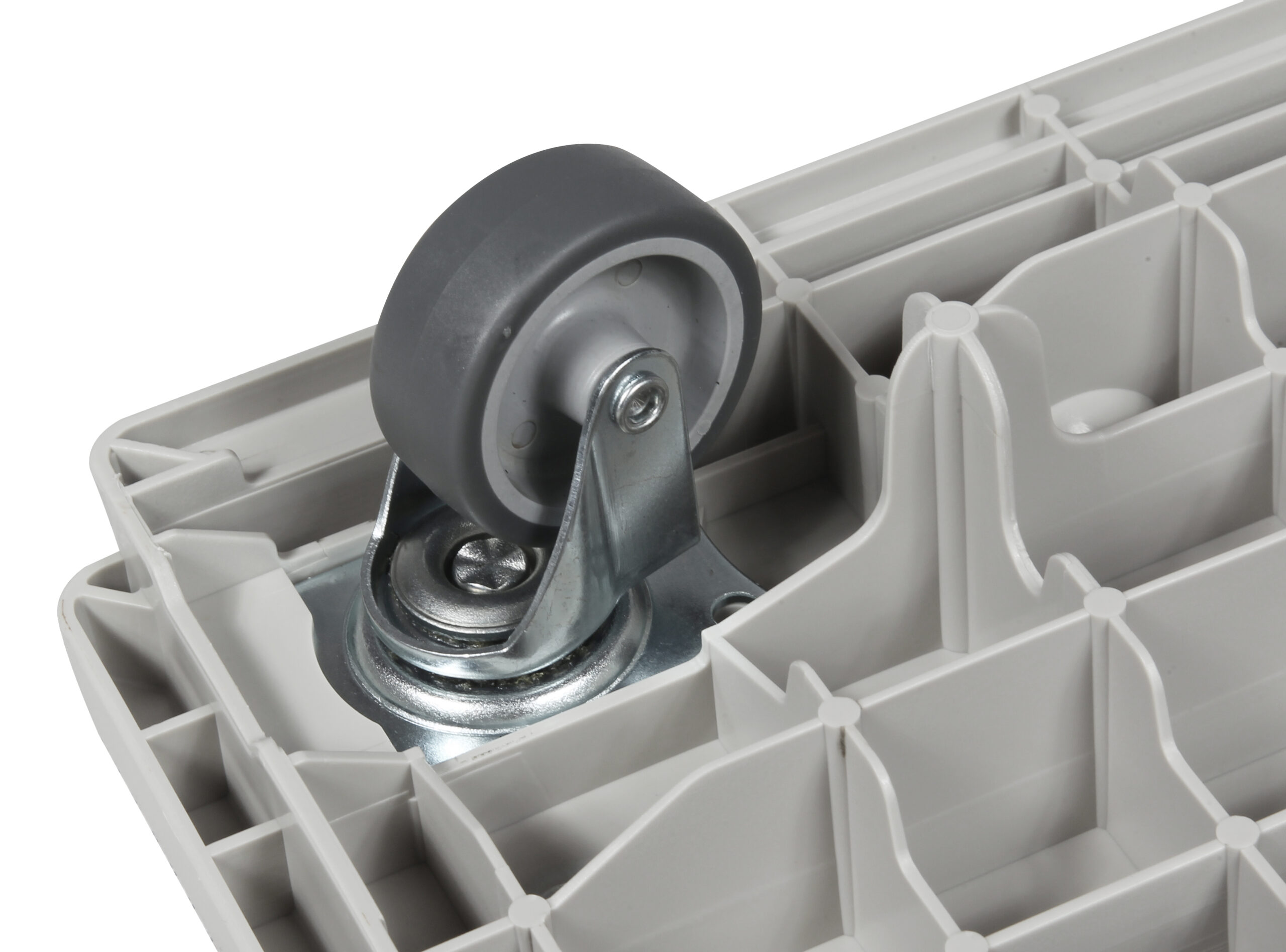
Caster and wheel types vary by industry because every workplace has different load, hygiene, floor, and vibration requirements. Manufacturing and warehousing teams often need strength and durability, food and pharmaceutical facilities need corrosion resistance and cleanability, while sensitive equipment areas may need shock absorption and vibration control.
This guide organizes caster and wheel options by application environment so buyers can compare the main use cases before choosing a wheel material, load class, or special caster design.
Robust Casters and Wheels for Manufacturing and Warehousing
Heavy-duty casters and wheels are indispensable equipment in factories, warehouses, and other industrial settings, engineered to bear and transport hefty loads. Their core strength lies in their exceptional load-bearing capacity, typically categorized into the following tiers:
Medium-Duty Casters
With a load capacity ranging from 450 to 5,000 pounds, medium-duty casters are well-suited for general factory and warehouse environments. Common materials include cast iron, semi-steel, and polyurethane.
Cast iron casters offer cost-effectiveness and remarkable durability, though relatively heavy. Semi-steel wheels strike a balance between weight and strength. Polyurethane wheels, albeit with slightly lower load capacity, boast excellent wear resistance, corrosion resistance, and shock absorption properties.
Extra-Heavy-Duty Casters
Designed to handle extremely heavy loads ranging from 1,600 to 20,000 pounds, extra-heavy-duty casters often feature a dual-wheel design, providing maximum load capacity with minimal overall height.
Commonly crafted from cast steel and cast iron, these casters can withstand harsh environments involving high temperatures, chemicals, and metal debris. Some extra-heavy-duty casters also incorporate V-groove wheels for rail guidance, reducing rolling resistance.
Super-Heavy-Duty Casters
At the pinnacle of heavy-duty casters, super-heavy-duty models can support loads exceeding 50,000 pounds, primarily used in ultra-heavy industries like steel and shipbuilding. Typically constructed from cast steel or forged steel, these casters often employ dual-wheel or quad-wheel designs to ensure sufficient load capacity and stability.
In addition to their outstanding load-bearing performance, super-heavy-duty casters exhibit exceptional wear resistance, impact resistance, and corrosion resistance, enabling long-term use in harsh environments. Some models even feature braking systems for enhanced operational safety.
Whether medium-duty, extra-heavy-duty, or super-heavy-duty, manufacturing and warehousing casters should be selected by total load, floor conditions, movement frequency, and the need for braking or rail guidance. A related product example is Inford’s heavy-duty outdoor caster, which can help readers connect the selection logic to an actual caster configuration. Matching the duty level to the real workload helps improve movement efficiency and reduce premature wheel wear.e logistics. Selecting and using the appropriate heavy-duty casters can significantly improve work efficiency, reduce labor costs, and ensure the safe transportation of goods.
Stainless Steel Casters for Food Processing and Pharmaceutical Industries
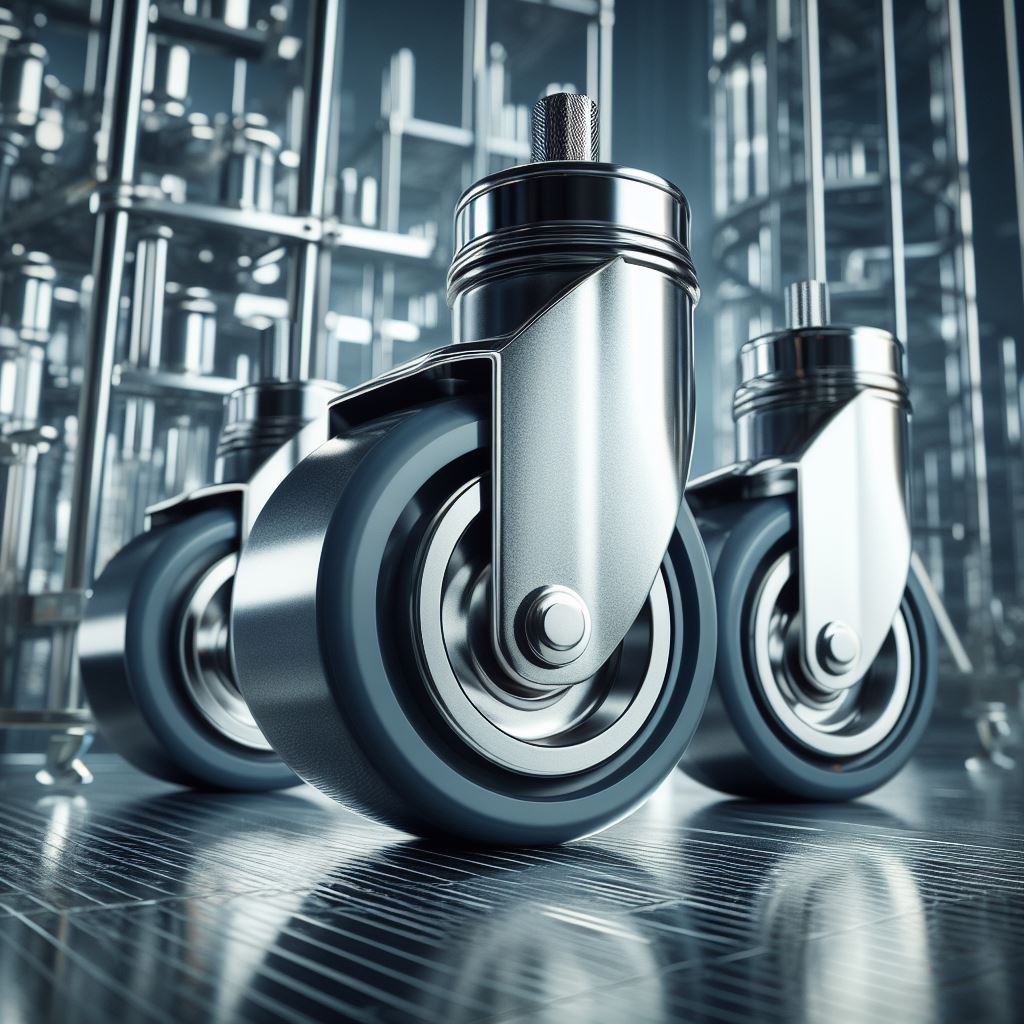
In environments with stringent hygiene requirements, such as food processing, pharmaceuticals, and biological laboratories, stainless steel casters are essential equipment. They offer the following unique advantages:
Superior Corrosion Resistance
Stainless steel inherently possesses excellent corrosion resistance, effectively preventing corrosion caused by chemicals, moisture, salts, and other factors. This characteristic is crucial in environments that require frequent cleaning and disinfection.
High Heat Resistance and Waterproofing
In addition to corrosion resistance, stainless steel casters also exhibit heat resistance and waterproofing properties, enabling their long-term use in humid, high-temperature environments and meeting various demanding conditions.
Seamless and Smooth Design
To meet sterile and easy-to-clean requirements, stainless steel casters typically feature a seamless design with smooth surfaces, free of crevices, facilitating thorough cleaning and disinfection.
Exceptional Chemical Stability
Some stainless steel casters incorporate phenolic resin wheels, which offer superior chemical stability, enabling them to withstand various corrosive chemicals. This feature makes them highly suitable for laboratory environments.
Although stainless steel casters usually cost more than standard industrial casters, they are often the better fit where cleaning, moisture, chemicals, and hygiene control are part of daily operations. In food processing, pharmaceutical, and laboratory settings, caster choice should support both mobility and contamination control.
Shock-Absorbing Casters for Sensitive Equipment and Electronics
Shock-absorbing and vibration-damping casters are the perfect choice for precision instruments and equipment, minimizing the impact of vibrations on their operation. Their primary applications include:
Precision Measurement Instruments
Highly sensitive measurement instruments, such as Atomic Force Microscopes (AFM) and Scanning Probe Microscopes (SPM), are extremely susceptible to vibrations. Using shock-absorbing casters effectively blocks vibrations from the ground, ensuring accurate measurement data.
Precision Manufacturing Equipment
In industries like semiconductor manufacturing and precision machining, even minor vibrations can lead to processing errors. Therefore, these equipment must be installed on shock-absorbing casters to isolate external vibrations.
Laboratory Instruments
Instruments in biological, chemical, and medical laboratories are also highly sensitive to vibrations. Shock-absorbing casters create a stable working environment for these instruments, preventing interference with experimental data.
Shock-absorbing and vibration-damping casters operate on two main principles:
Air Suspension
By introducing compressed air into the caster’s interior, the wheels achieve a “floating” state, enabling low-frequency vibration isolation and effectively blocking ground vibrations.
Flexible Materials
Casters made from soft materials like polyurethane and solid rubber exhibit excellent shock absorption and cushioning properties. Additionally, pneumatic casters achieve a cushioning effect through inflation, making them suitable for use on uneven surfaces.
For sensitive instruments and electronics, caster selection should focus on vibration control as much as mobility. Shock-absorbing and vibration-damping casters can help protect measurement accuracy, reduce handling risk, and keep precision equipment stable during movement or repositioning.
How to Match Caster Types to an Industry
Start by identifying the main risk in the working environment. Heavy manufacturing may need higher load capacity and impact resistance. Food and pharmaceutical spaces may need stainless steel construction and smooth, cleanable surfaces. Precision equipment areas may need vibration damping, softer wheel materials, or pneumatic designs.
After the main risk is clear, compare wheel material, load rating, mounting style, brake requirement, and maintenance access. This practical sequence helps narrow a broad caster catalog into a smaller group of caster and wheel types that fit the actual industry use case.