
Dining room chair casters should make chairs easier to move without creating a new problem for the floor, the chair frame, or the people using the room. The best caster for a dining chair depends on floor type, chair leg design, wheel material, stem size, movement control, and how often the chair is moved.
A caster that works on carpet may feel wrong on hardwood. A hard wheel that rolls easily may mark a softer floor. A caster with the wrong stem can wobble, loosen, or damage the chair leg. This guide explains how to choose dining room chair casters by floor surface, material, mounting style, and installation checks.
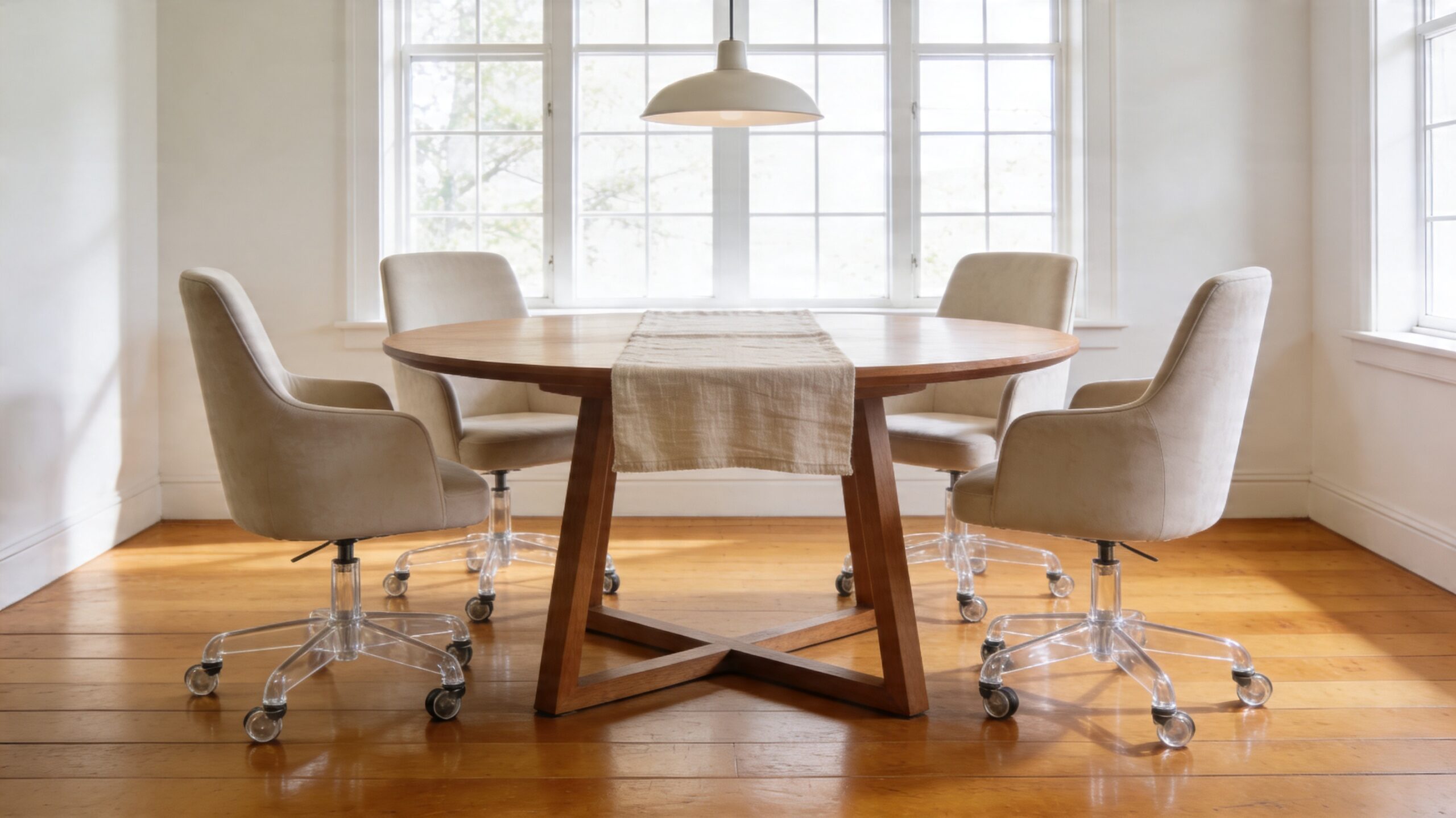
Why Add Casters to Dining Room Chairs?
Dining chairs are often pulled out, pushed in, and moved for cleaning. Casters can make those movements easier, especially for heavier chairs, mixed-use dining spaces, or households where chairs are moved many times a day.
Useful benefits include:
- Floor protection: rolling can reduce dragging damage when the wheel material matches the floor.
- Ease of movement: chairs can be repositioned with less lifting and less scraping.
- Cleaning convenience: chairs can be moved away from the table more quickly for sweeping or mopping.
- Flexible use: dining chairs can also support homework, craft, office, or meeting use when they move smoothly.
The key is matching the caster to the floor and chair. A poor fit can cause marks, wobble, unstable height, or unwanted rolling.
Best Caster Types for Dining Chairs by Floor Type
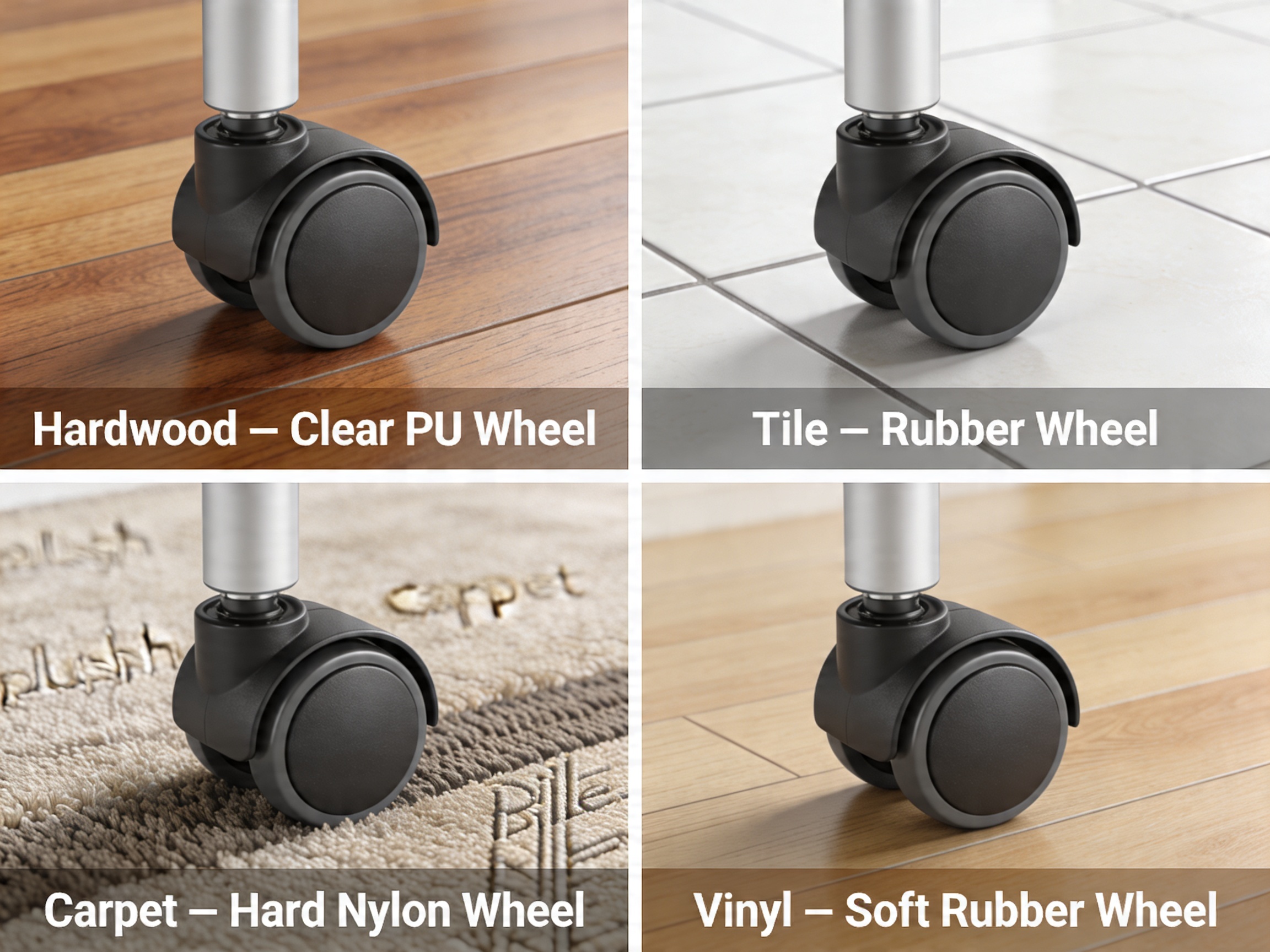
Floor material should be the first filter when choosing dining room chair casters.
Hardwood Floors
Hardwood needs a wheel that spreads load gently and avoids sharp edges or hard tread contact.
- Compare first: soft polyurethane, TPR, or non-marking rubber.
- Check: tread softness, non-marking compound, wheel edge shape, and whether the axle or bracket can contact the floor as the wheel wears.
- Avoid: exposed metal, hard plastic, or unsuitable nylon wheels on delicate finishes.
Tile and Stone Floors
Tile and stone are hard, but grout lines and edges can create impact points.
- Compare first: soft PU or rubber wheels that can absorb small transitions.
- Check: wheel diameter, tread width, and how the chair behaves when crossing grout lines.
- Avoid: very small hard wheels that can catch or create harsh impacts.
Carpet and Area Rugs
Carpet increases rolling resistance. A caster that is too soft may sink into the pile and become harder to move.
- Compare first: larger, harder wheels that roll through the carpet more easily.
- Check: carpet pile height, rug edges, and whether the chair needs to move often.
- Related guide: for carpet-specific selection, see Inford’s caster wheels for carpet guide.
Vinyl and Laminate Floors
Vinyl, LVT, and laminate can be sensitive to narrow contact pressure and repeated turning.
- Compare first: soft PU or TPR wheels with a suitable tread width.
- Check: chair weight, wheel width, floor finish, and whether chairs remain loaded in one position for long periods.
- Avoid: narrow hard wheels that concentrate load on a small contact patch.
Top Caster Materials for Kitchen and Dining Use
| Material | Where it often fits | Main checks before purchase |
|---|---|---|
| Soft polyurethane | Hardwood, vinyl, laminate, dining chairs moved frequently | Non-marking compound, tread hardness, wheel width, and floor finish |
| TPR or rubber | Quiet movement, tile, stone, customer-facing dining spaces | Floor marking, chemical cleaning, load, and long-term deformation |
| Nylon or hard plastic | Carpet or rugs where rolling resistance is the main issue | Noise, floor marking, and use on hard floors |
| Felt or glide hybrid | Light decorative chairs that need sliding more than rolling | Wear, dirt pickup, and whether the chair needs free movement |
For a broader material comparison, review Inford’s caster wheel material guide.
Caster Stem Types and Chair Compatibility
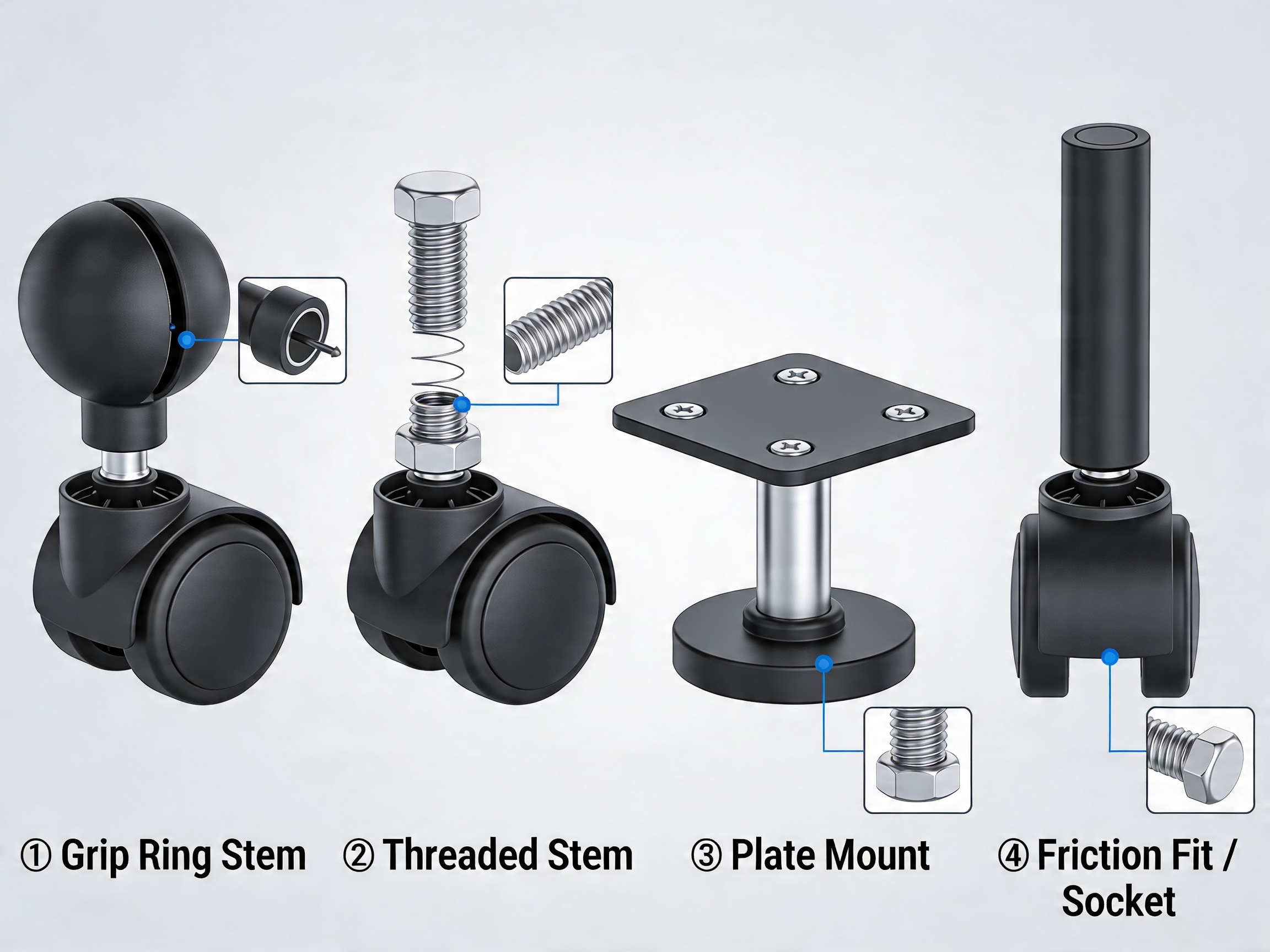
Before purchasing dining room chair casters, identify the chair leg structure and the existing glide or foot.
Grip Ring Stem
A grip ring stem presses into a socket in the chair leg. It can work well when the socket diameter and depth match the caster stem.
- Check: socket diameter, socket depth, and whether the grip ring seats firmly.
- Risk: a loose fit can wobble or pull out during use.
Threaded Stem
A threaded stem screws into a matching insert. This can feel secure when thread size and length match correctly.
- Check: thread diameter, thread pitch, stem length, and insert condition.
- Related guide: see Inford’s threaded stem casters article for stem-matching details.
Plate Mount
A plate mount attaches to the underside of the chair leg or frame. It can be useful when the chair has a flat mounting area and enough wood or metal structure for screws or bolts.
- Check: plate size, screw position, material thickness, and whether drilling will weaken the chair.
- Risk: small chair legs may not provide enough mounting area.
Friction Fit or Push-In
Friction-fit casters can work for light furniture, but they need a close match between stem and hole.
- Check: hole diameter, material condition, and whether the chair leg has cracked or widened.
- Risk: old or damaged sockets may not hold a push-in caster reliably.
For measurement basics, use Inford’s caster wheel measurement guide before ordering replacements.
Installation Guide: Adding Casters to Dining Chairs
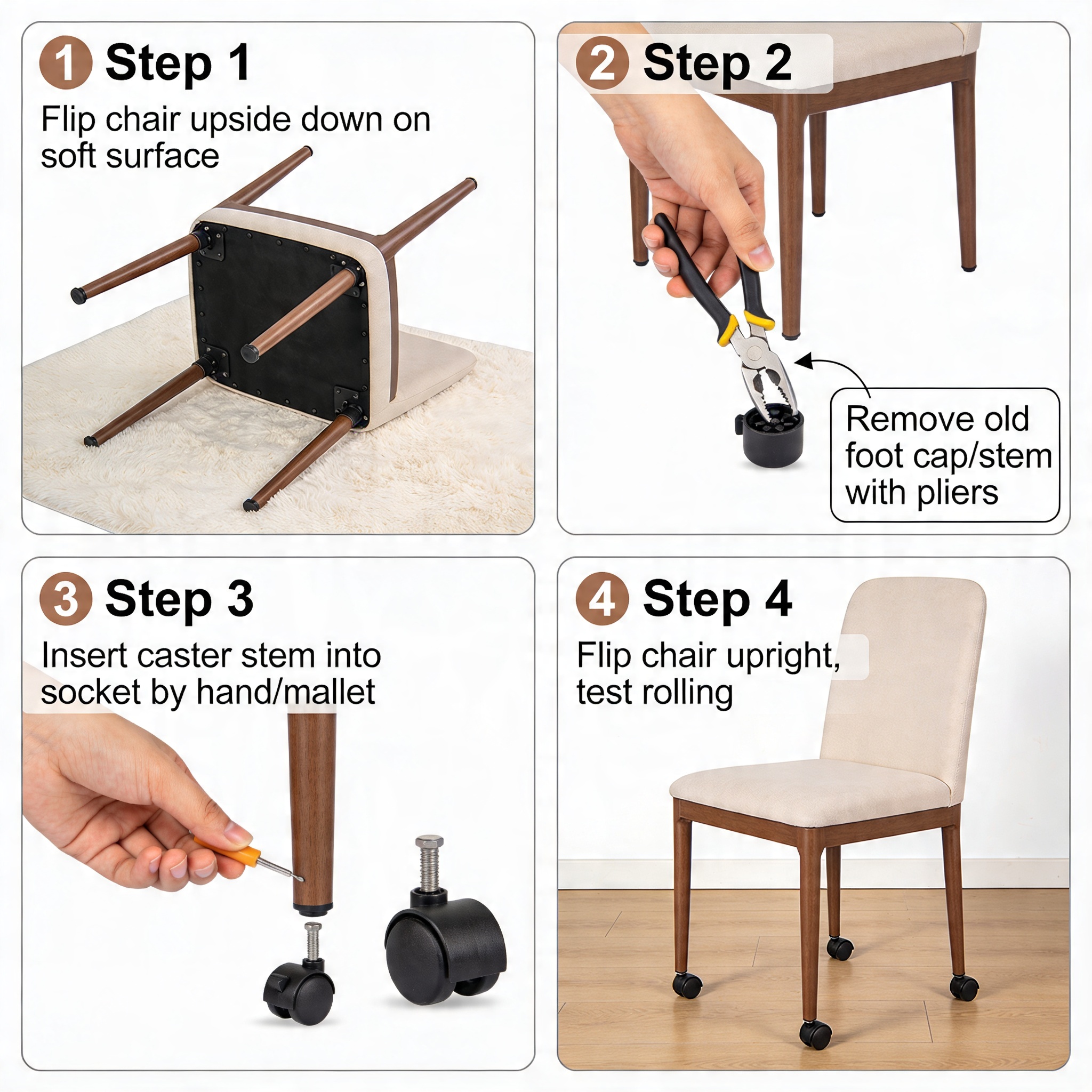
Step 1: Remove existing glides or caps
Turn the chair upside down on a soft surface. Remove the existing glide, foot, or old caster and clean the socket or mounting area.
Step 2: Measure before ordering
Measure the wheel diameter, stem diameter, stem length, mounting plate, or threaded insert. Do not assume chairs from different brands use the same size.
Step 3: Test one caster first
Install one caster and check fit, wobble, swivel movement, chair height, and floor contact before installing the full set.
Step 4: Install the remaining casters
Install all casters evenly. Use suitable hand tools and avoid striking the caster directly with a hard metal tool.
Step 5: Test on the real floor
Place the chair upright and test rolling, turning, sitting stability, and floor marking on the actual floor surface.
How to Prevent Unwanted Chair Rolling
Some dining spaces need easier movement for cleaning, but not free rolling during meals. Consider:
- Locking casters: useful when chairs need to stay parked on smooth floors.
- Friction or resistance casters: useful when the chair should move only with deliberate force.
- Lower-profile wheels: useful when chair height and stability matter.
- Glide alternatives: useful when the chair mostly needs floor protection rather than rolling.
If brakes are needed, compare brake styles in Inford’s swivel caster with brake guide.
Dining Chair Caster Buying Checklist
Before ordering, record:
- floor type: hardwood, tile, stone, carpet, rug, vinyl, or laminate;
- chair leg type: hollow socket, threaded insert, flat bottom, or existing glide;
- stem size, socket depth, mounting plate size, or thread size;
- chair weight, user weight range, and whether the chair is used daily;
- wheel material, wheel diameter, tread width, and non-marking requirement;
- whether the chair needs locking, resistance, or free rolling.
Floor Test Before Full Installation
Test one chair before converting the full dining set. This keeps a small fitting problem from becoming a room-wide floor or stability issue.
- Start on a hidden area: roll the chair over a less visible part of the floor and inspect for marks, drag lines, color transfer, or unusual noise.
- Check loaded movement: test the chair empty and with a person seated, because wheel behavior can change when the caster is carrying real load.
- Turn as well as roll: swivel the chair in place and make short turns, since floor marks often appear during turning instead of straight rolling.
- Inspect chair height: make sure the added wheel height still works with the table apron, seat comfort, and arm clearance if the chair has arms.
- Look for uneven contact: if one wheel does not touch the floor consistently, the chair may rock or concentrate load on fewer casters.
After the first test, remove the caster and inspect the socket, screw holes, or threaded insert. If the mount has loosened, cracked, or widened, choose a different mounting method or repair the chair before installing the remaining casters.
Home vs Commercial Dining Chair Caster Needs
Dining chair caster selection changes when the same chair is used in a restaurant, cafeteria, senior living dining room, hotel breakfast area, or office pantry. Commercial spaces usually move chairs more often, clean floors more frequently, and need easier maintenance than a typical home dining room.
| Use environment | What matters most | Practical selection notes |
|---|---|---|
| Home dining room | Floor protection, chair height, quiet movement | Prioritize floor-compatible tread, correct stem fit, and a low enough profile for table clearance. |
| Kitchen or breakfast nook | Cleaning, moisture exposure, frequent short moves | Check wheel material against cleaning chemicals, spills, and floor transitions between kitchen and dining areas. |
| Restaurant or cafe seating | Durability, noise control, fast repositioning | Compare wheel tread, bearing quality, brake needs, and how easily staff can inspect or replace worn parts. |
| Senior living or assisted dining | Controlled movement, stability, ease of seating | Consider locking or resistance options when chairs must move for caregivers but stay predictable during seating. |
For commercial use, do not select casters only by appearance. Confirm load, mounting strength, brake access, cleaning routine, and replacement availability with the supplier before placing a larger order.
Common Dining Chair Caster Problems and Fixes
If dining room chair casters do not perform well after installation, the problem is usually caused by fit, floor match, or movement control rather than the wheel alone.
- Chair wobbles: recheck stem size, socket depth, plate alignment, and whether all four casters are installed at the same height.
- Chair rolls too freely: compare brake, resistance, or lower-profile options, especially on smooth tile, vinyl, or polished concrete.
- Chair feels hard to move: inspect wheel diameter, carpet pile, dirt buildup, and whether the tread is too soft for the surface.
- Floor shows marks: clean the wheel tread, test a softer non-marking material, and check whether metal hardware is contacting the floor.
- Caster loosens over time: inspect the chair leg, socket, insert, or screw holes rather than forcing the same caster back into a damaged mount.
Frequently Asked Questions
Q: What size casters do I need for dining room chairs?
There is no single size for every chair. Measure the existing socket, stem, threaded insert, or mounting plate before ordering. Wheel diameter should also match floor type and chair height.
Q: Will dining chair casters scratch hardwood floors?
They can if the wheel material is too hard, dirty, narrow, or poorly matched to the finish. Use non-marking soft PU, TPR, or suitable rubber and test on the actual floor.
Q: Can I put casters on any dining chair?
Many chairs can accept casters, but leg design matters. Thin legs, damaged sockets, fragile frames, or chairs that become too tall after wheel installation may need a different solution.
Q: Are locking casters worth it for dining chairs?
They can be useful on smooth floors, in homes with children, or where chairs should stay parked during meals. They are less important when the chair is moved only for cleaning.
Q: What should I check after installation?
Check wobble, rolling direction, brake function if included, floor marks, chair height, and whether all four casters contact the floor evenly.
Key Takeaways
- Dining room chair casters should be chosen by floor type, chair leg structure, mounting size, and movement control.
- Soft PU, TPR, or rubber are often considered for hard floors; harder wheels may roll better on carpet.
- Stem compatibility matters as much as wheel material. Measure before ordering.
- Locking or resistance casters can help when chairs roll too freely on smooth floors.
- Test one caster on the actual chair and floor before installing the full set.
Find Suitable Casters for Your Dining Chairs
Inford can compare wheel material, stem type, mounting size, tread width, and brake options for dining chair and furniture caster applications.
→ Request Chair Caster Guidance | → View Caster Products | → Explore Furniture Mobility Solutions