
Exhibitors and AV production companies lose more time and equipment to bad casters than almost any other overlooked component. A flight case that won’t roll smoothly through a convention center loading dock, or a locking wheel that fails mid-setup, turns a tight show schedule into a logistics crisis. This guide covers exactly what to specify for flight case, road case, and portable exhibition display casters — a niche but high-turnover category where the right wheel spec directly protects expensive equipment and show deadlines.
Why This Category Needs Its Own Specification Logic
Flight case and exhibition casters sit in an unusual middle ground: they need to be compact and low-profile enough to fit standard case hardware footprints, quiet and non-marking enough for hotel ballrooms and convention center flooring, and durable enough to survive being loaded and unloaded from trucks dozens of times per touring season. Standard industrial caster wheels are built for stationary or slow-moving warehouse use — flight case casters need a different balance of size, tread softness, and mounting compatibility.
Standard Sizing and Mounting Patterns
Flight case and road case casters are almost always sized between 2 and 6 inches in diameter, with 3, 4, and 5 inch being by far the most common sizes across the pro audio, AV, and touring industry. Larger wheels in the 5-6 inch range roll more easily over uneven surfaces like loading dock ramps, gravel lots, and cobblestone, and generally handle heavier cases with less rolling resistance than smaller wheels.
The Two Dominant Mounting Plate Standards
Nearly all flight case casters use one of two industry-standard bolt patterns, and matching this correctly is the single most common point of failure when ordering replacement casters:
| Mounting Pattern | Plate Size | Bolt Spacing | Typical Application |
|---|---|---|---|
| Standard EU/pro-audio pattern | 100-105mm x 80-85mm | 80mm x 60mm | Speaker cabinets, subwoofers, most flight cases |
| Compact/US pattern | 92-100mm x 60-80mm | 72mm x 45mm | Smaller road cases, mixing board cases |
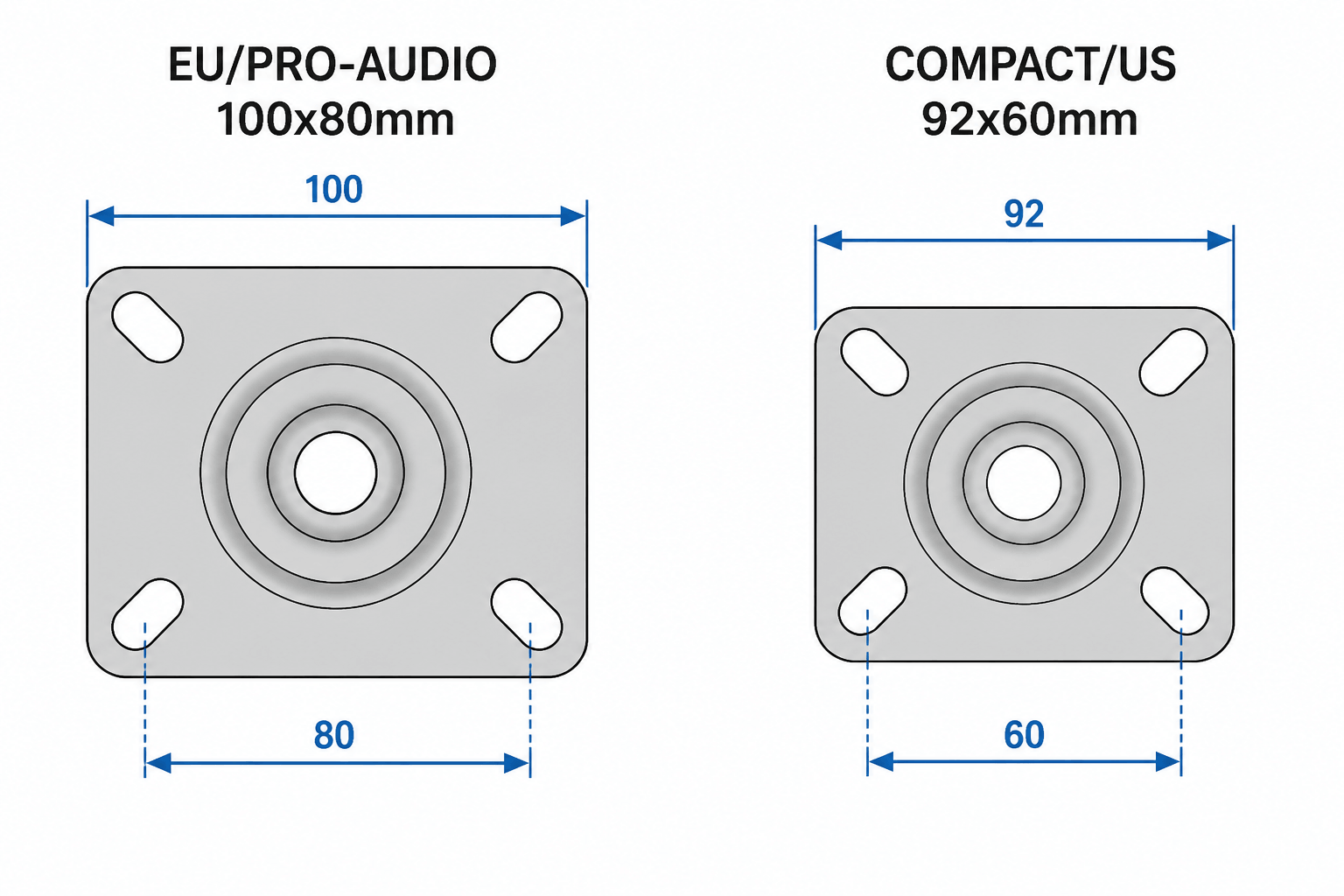
Always measure your existing case’s bolt pattern before ordering replacements — a plate that’s even a few millimeters off won’t align with existing mounting holes, and drilling new holes into a case frame weakens the structure and voids most case warranties.
Material Selection: Why Elastic Rubber Dominates This Category
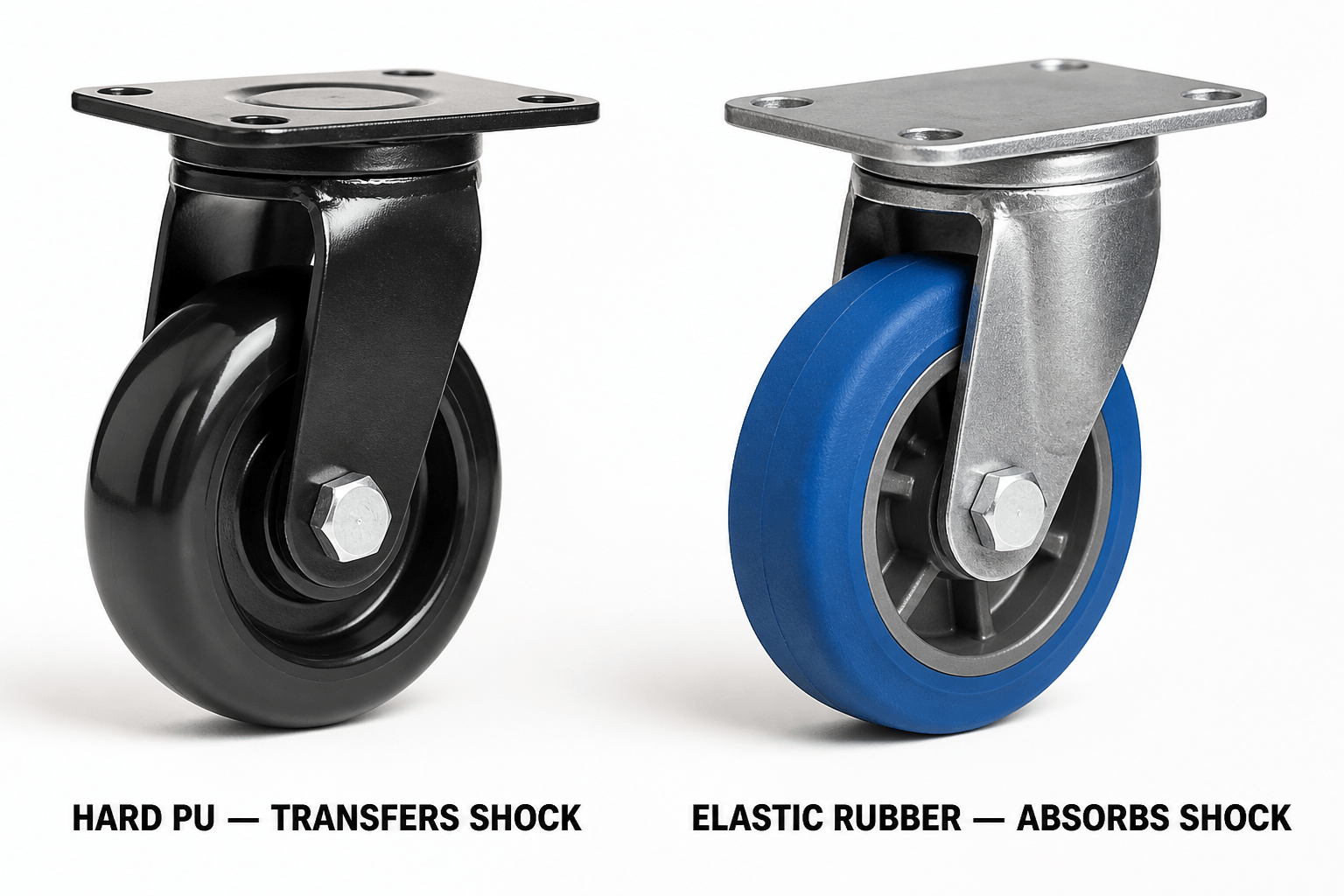
The overwhelming standard for flight case and road case wheels is vulcanized elastic rubber, typically in the 55-65 Shore A hardness range, often recognizable by its distinctive blue tread color across major European and North American manufacturers. This material choice isn’t cosmetic — it’s a deliberate performance tradeoff specific to this application.
| Tread Hardness | Rolling Resistance | Cushioning | Best For |
|---|---|---|---|
| 65 Shore A (standard elastic rubber) | Low | Good | General touring cases, moderate loads |
| 55 Shore A (soft compound) | Slightly higher | Excellent | Sensitive equipment cases, noise-priority venues |
Softer 55 Shore A compounds with a thicker tread cushion are specifically marketed for operational comfort and noise reduction — a meaningful factor in hotel ballrooms, convention halls, and any venue where rolling noise during setup or teardown could disturb an adjacent event. The performance ratings published by major manufacturers consistently show this rubber tread category scoring at or near maximum on soundproofing (quiet operation) while maintaining solid ratings for rolling and wear resistance — directly relevant to our broader guide on quiet caster wheels for hospital and office environments, where similar material logic applies.
Why Not Polyurethane or Hard Rubber?
Standard hard PU or nylon wheels roll efficiently but transmit far more shock and vibration into the case and its contents — a real concern for audio equipment, lighting fixtures, or display electronics riding inside. Elastic rubber’s cushioning absorbs impact from uneven loading dock surfaces and truck ramps, protecting sensitive cargo in a way that harder tread materials simply don’t match at this size and load range. For a broader comparison of tread material tradeoffs outside this specific niche, our polyurethane vs rubber caster wheels guide covers the underlying material science.
Load Capacity Expectations by Wheel Size
| Wheel Diameter | Typical Load Capacity (per caster) | Common Application |
|---|---|---|
| 3 inch (75mm) | 80-150 kg | Small mixer cases, light AV gear |
| 4 inch (100mm) | 100-220 kg | Standard flight cases, subwoofer cabinets |
| 5 inch (125mm) | 120-220 kg | Heavier touring cases, larger speaker cabinets |
| 6 inch (150mm) | 200+ kg | Extra-heavy road cases, industrial display crates |
For multi-caster case setups, apply the standard load-distribution logic covered in our caster wheel load capacity guide — total case weight plus contents, divided across the number of casters, with a safety margin for uneven floor contact during transport.
Swivel, Fixed, and Recessed Configurations
Swivel vs Rigid Mix
Most flight cases use four swivel casters for full maneuverability, though some large touring cases use a mixed configuration of swivel casters at one end and rigid casters at the other to improve straight-line stability when pushed long distances through venue corridors.
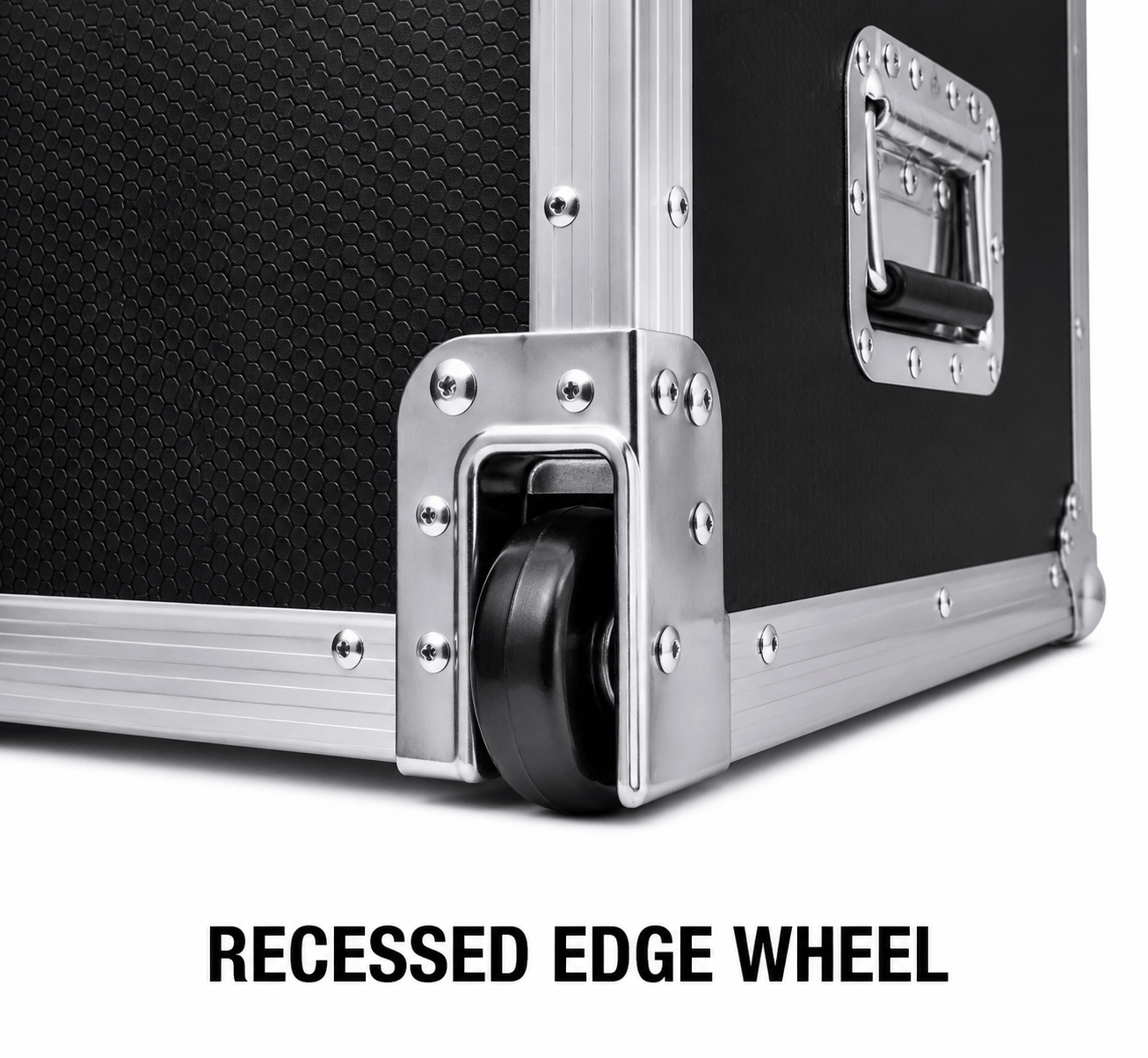
Recessed Edge Wheels for Tilt-and-Roll Cases
Pull-style tilt-and-roll cases — the kind with a retractable handle, designed to be tipped back and pulled like luggage — use recessed edge wheels mounted into the case corner rather than standard plate-mount casters, typically requiring two wheels per case for proper tilt-and-roll function. This is a distinct hardware category from standard four-caster flight cases and should be specified separately if you’re designing or sourcing this case style.
Locking Mechanisms
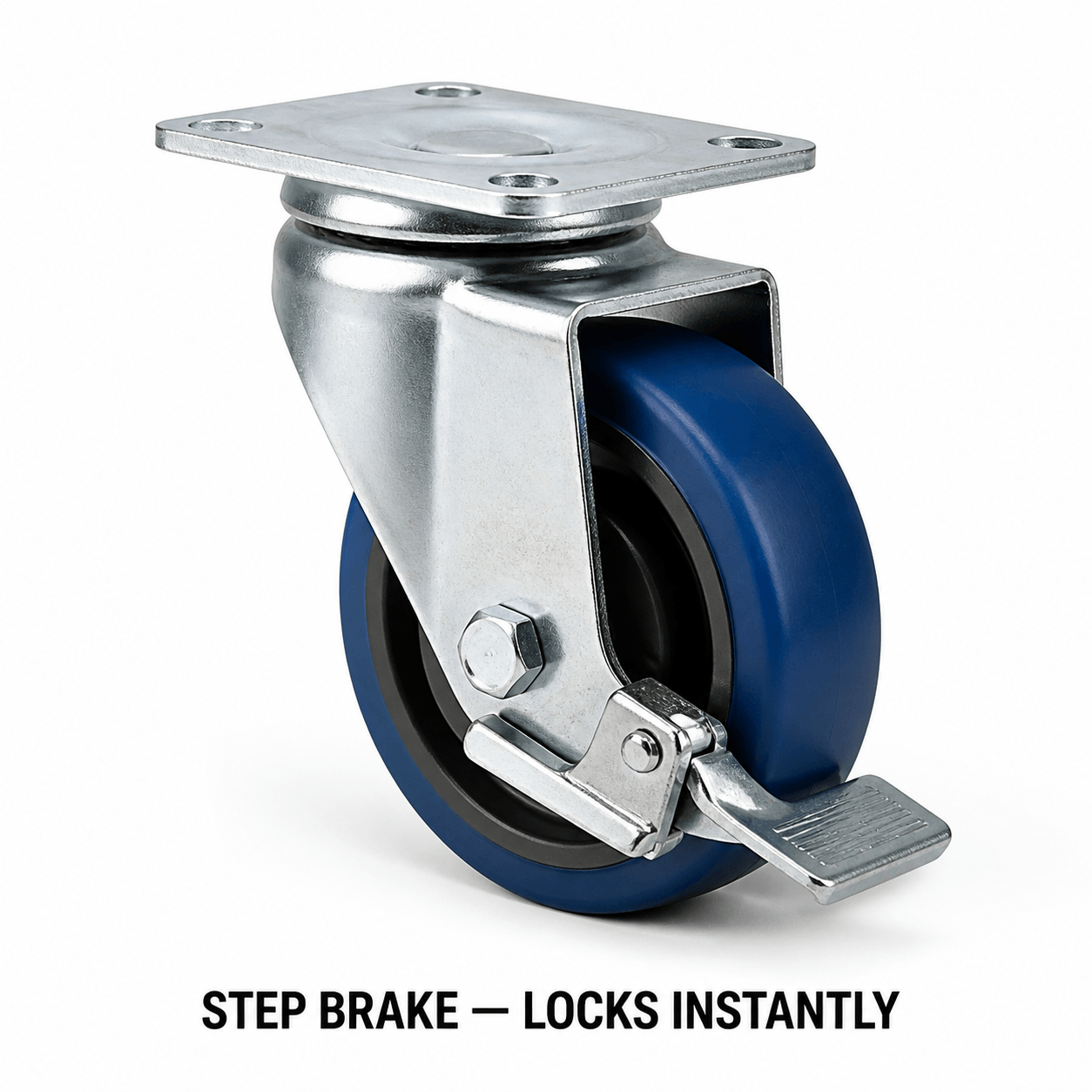
Braked casters — usually two of the four, positioned diagonally — are standard practice on flight cases to prevent unwanted movement once the case is positioned on stage, in a booth, or in a truck during transport. Step-brake designs that lock with a simple foot action are the most common configuration in touring and exhibition use, since crews need to lock and unlock cases quickly without bending down or using tools.
Bearing and Swivel Construction
Better flight case casters use double ball-bearing swivels — two rows of bearings in the swivel section rather than one — for smoother rotation under repeated loading and unloading cycles, along with roller bearings in the wheel itself to handle the abuse of touring use. Corrosion-resistant zinc-plated steel caster forks are the standard frame material, since flight cases frequently travel through humid climates, outdoor loading areas, and get exposed to weather during load-in and load-out.
Common Specification Mistakes
- Ordering by wheel diameter alone without measuring the existing mounting plate bolt pattern, leading to cases that need new holes drilled.
- Choosing hard PU or nylon wheels for cost savings, then discovering excessive vibration transfer to sensitive equipment inside the case.
- Skipping brakes entirely on cases that will sit in position for extended periods (stage monitors, booth furniture), leading to unwanted drift.
- Using standard mounting hardware in cases that see frequent outdoor exposure, resulting in corroded, seized casters within one or two touring seasons.
- Selecting rigid casters on all four positions for a case that needs tight maneuverability in crowded loading docks or booth aisles.
Trade Show & Flight Case Caster Checklist
- Measured existing mounting plate size and bolt spacing before ordering replacements
- Selected elastic rubber tread (55-65 Shore A) rather than hard PU or nylon for shock absorption and noise control
- Confirmed load capacity per caster against total case weight, contents, and safety margin
- Decided on swivel-only vs mixed swivel/rigid configuration based on maneuverability needs
- Specified recessed edge wheels separately if designing a tilt-and-roll pull-style case
- Included diagonal braked casters for cases that need to stay stationary once positioned
- Confirmed double ball-bearing swivel and roller-bearing wheel construction for touring durability
- Verified corrosion-resistant zinc-plated hardware for cases with outdoor or humid climate exposure
Get a Custom Quote for Flight Case Casters
If you’re outfitting flight cases, road cases, or portable exhibition displays for touring or trade show use, share your case dimensions and load requirements with our team for a matched wheel and mounting recommendation — contact us to start your quote.