
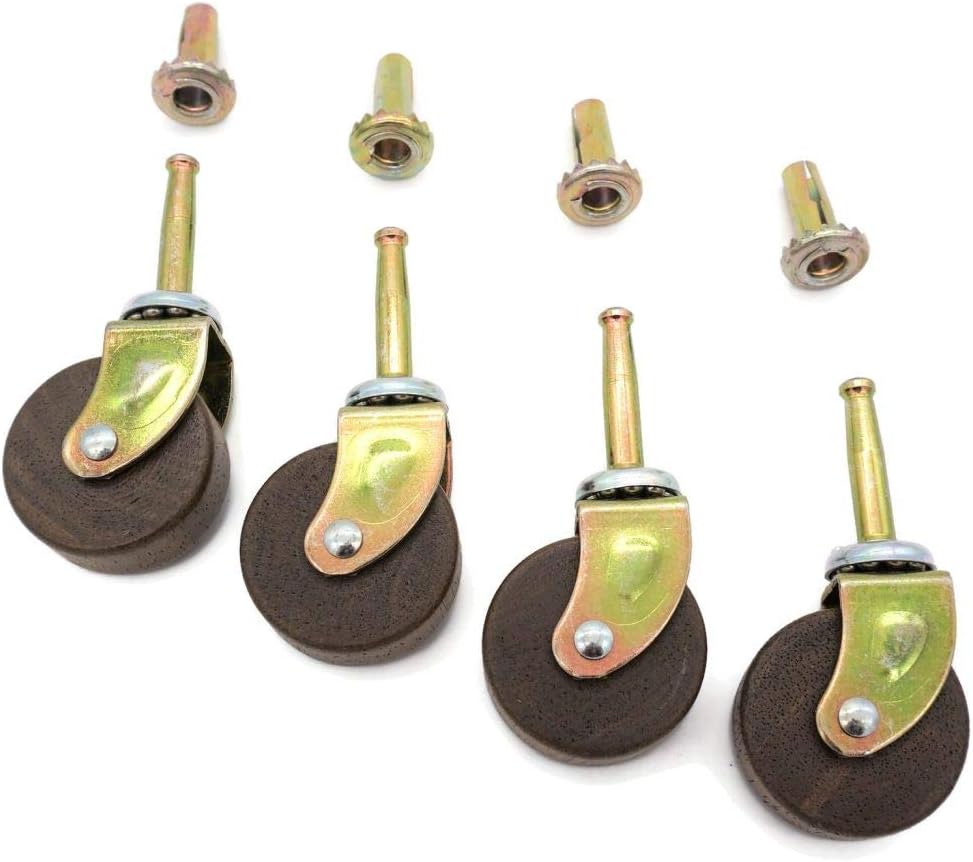
Use this caster incoming inspection checklist to verify delivered parts against the purchase order, approved drawing, and agreed quality requirements before releasing them for assembly or stock. Copy the tables into a spreadsheet or document to create an editable receiving record.
Complete one record for each part number, configuration, and traceable lot. Record actual measurements and observations—not just checkmarks. Inspection methods, tolerances, sampling, and acceptance criteria must come from the applicable specification or quality agreement; this template does not establish universal pass/fail limits.
Establish the Inspection Requirements Before Checking Parts
Collect the purchase order, current approved drawing, relevant specification, packing list, and any required lot-specific documentation. Record the revision of each controlling document.
Before inspecting, confirm:
- Whether the delivery contains complete casters, replacement wheels, or both.
- The required mix of swivel, rigid, braked, and directional-lock configurations.
- Which characteristics require measurement, functional checks, or document verification.
- Whether inspection is 100% or follows an approved sampling plan.
- Who can authorize release, rejection, or acceptance of a documented deviation.
If a required dimension has no tolerance, or a functional requirement has no defined test method, obtain clarification before recording that characteristic as conforming. An approved reference sample may support appearance or assembly comparisons, but should not replace dimensional requirements unless the agreement explicitly allows it.
Receiving Record: Shipment and Inspection Details
Leave fields blank until the relevant information is available. Use “N/A” only when an item genuinely does not apply, with a brief reason.
| Field | Entry |
|---|---|
| Receiving record number | |
| Receipt date / inspection date | |
| Supplier / manufacturing site, if required | |
| Purchase order / line number | |
| Delivery note / packing list number | |
| Ordered part number and configuration | |
| Supplier part number | |
| Drawing number / revision | |
| Specification or quality agreement / revision | |
| Supplier lot or batch identification | |
| Quantity ordered / received | |
| Number of cartons or pallets | |
| Packaging condition on arrival | |
| Required certificates or reports / references | |
| Inspection plan / revision | |
| Lot size / sample size | |
| Sampling method / acceptance and rejection rules | |
| Sample identification / carton locations | |
| Measuring equipment IDs / calibration status | |
| Inspector |
Keep distinct supplier lots separate in the record, even when they arrive on the same shipment. If traceability is missing, record that condition rather than assigning an unsupported batch identity.
Caster Incoming Inspection Checklist
The acceptance-basis column identifies where the requirement should come from. Enter the actual document reference, limit, or approved condition in the working record before making a pass/fail decision.
Identity, Condition, and Dimensions
| Inspection item | What to check and record | Method | Acceptance basis |
|---|---|---|---|
| Part identity | Part number, configuration, wheel size, mounting type, and brake or lock option | Compare labels, packing list, and delivered parts | Purchase order and approved part specification |
| Quantity and configuration mix | Total received and quantities of each caster variant | Count and reconcile by part number | Purchase order and packing list |
| Packaging and transport condition | Crushed cartons, moisture, exposed parts, damaged packaging, or loose components | Inspect before unpacking; photograph damage | Agreed packaging requirements; record any suspected product impact |
| Wheel tread condition | Cuts, cracks, separation, embedded debris, flat areas, or other visible irregularities | Visual examination under defined inspection conditions | Approved appearance criteria or defect reference |
| Wheel center and bracket condition | Cracks, distortion, corrosion, coating damage, sharp edges, or visible assembly damage | Visual examination; use a defined edge-check method where required | Drawing, finish specification, and agreed defect criteria |
| Material and finish identification | Specified tread, wheel center, bracket material, and finish | Check part identification and required material documentation | Approved bill of materials or specification |
| Wheel diameter and width | Actual dimensions at the specified measurement locations | Suitable caliper, gauge, or fixture | Drawing dimensions and tolerances |
| Overall mounting height | Distance between the specified mounting datum and supporting surface | Height gauge or suitable fixture | Drawing and specified loading condition |
| Top plate interface | Plate length and width, hole spacing, hole diameter, and slots where applicable | Caliper, gauges, or approved checking fixture | Approved mounting drawing |
| Stem or central mounting interface | Stem diameter and length; thread size, pitch, and engagement features; retaining features as applicable | Suitable dimensional and thread gauges | Approved mounting drawing |
| Swivel clearance envelope | Required clearance for the rotating fork, wheel, and brake pedal | Drawing check or approved assembly fixture | Equipment interface drawing and clearance requirements |
| Assembly hardware | Axle, fasteners, retainers, guards, seals, and other specified components | Visual and assembly check; torque verification only under an approved procedure | Assembly drawing and inspection instructions |
| Labels and accessories | Required markings, traceability labels, mounting hardware, sockets, spacers, or instructions | Compare delivered contents with the order | Purchase order and packaging specification |
Wheel diameter, mounting height, plate dimensions, and bolt-hole spacing are separate characteristics. A matching wheel diameter does not establish mounting compatibility. Caster dimensional references distinguish these measurements explicitly.
Appearance alone does not establish polymer grade, hardness, electrical properties, or chemical resistance. When these characteristics are purchase requirements, use the specified documentation or an agreed verification method.
Movement, Brakes, and Locks
Secure the caster in an appropriate fixture before functional inspection. Use the load, surface, orientation, actuation sequence, and number of cycles specified in the inspection procedure. An unloaded hand check should be recorded as an unloaded check, not as proof of loaded performance.
| Inspection item | What to check and record | Method | Acceptance basis |
|---|---|---|---|
| Wheel rotation | Binding, rubbing, intermittent resistance, unusual noise, or other observed behavior | Rotate under the specified inspection condition | Approved functional criteria |
| Swivel movement | Movement through the required range; interference or binding | Secure the mounting interface and swivel through the required travel | Approved functional criteria |
| Wheel or swivel play | Measured movement at the specified location and loading direction | Indicator or approved fixture | Specified method and allowable play |
| Wheel brake | Engagement, release, and restriction of wheel rotation | Operate and check under the defined conditions | Required brake function and approved test method |
| Directional lock | Engagement at the specified orientation or positions; release and restored swivel movement | Align, engage, check, and release | Drawing and functional specification |
| Combined wheel and swivel lock | Both required motions restricted when engaged; both restored when released | Check wheel rotation and swivel movement separately | Approved locking-function requirements |
| Pedal and actuator clearance | Access, travel, interference, and operation in the intended mounting arrangement | Approved fixture or equipment fit check | Equipment interface requirements |
| Starting, rolling, or swivel force, if required | Separate measured result for each specified force | Approved force-measurement procedure | Defined load, floor, speed, orientation, units, and limits |
A wheel brake restricts wheel rotation; a directional lock restricts swivel motion at defined orientations; a combined wheel and swivel lock acts on both motions. Check the ordered function rather than treating every pedal-operated mechanism as equivalent. These are distinct caster functions in technical references.
Do not infer brake holding performance on a slope from pedal engagement alone. If holding force or slope performance is a purchase requirement, use a separately approved test with defined conditions and suitable restraints.
Individual Inspection Results
Use one row for each measured characteristic on each inspected sample. Add rows as needed. Keep the requirement, result, and decision together so another reviewer can reproduce the judgment.
| Sample ID | Checklist item / characteristic | Requirement and document reference | Method / equipment ID | Actual result and units or observation | Status | Evidence / defect reference |
|---|
Use these status terms consistently:
- Pass: inspected and meets the applicable requirement.
- Fail: inspected and does not meet the applicable requirement.
- Not inspected: no inspection result is available.
- Pending: a result, requirement, or supporting document needs resolution.
- N/A: the characteristic does not apply; record why.
For dimensions, record numerical results and units rather than “OK.” For visual defects, record the location, extent, affected sample IDs, and photograph reference. Keep the number of nonconforming units separate from the number of defects: one caster may have several defects.
Lot Disposition and Nonconformance Record
Do not release a lot solely because the checklist has been completed. Apply the approved lot-acceptance rules and resolve outstanding requirements.
| Field | Entry |
|---|---|
| Quantity inspected | |
| Number of nonconforming units found | |
| Defect types and affected sample IDs | |
| Nonconformance report number | |
| Quantity placed on hold | |
| Hold location / identification | |
| Supplier notification / response reference | |
| Authorized sorting, rework, or return instructions | |
| Reinspection method and results reference | |
| Approved deviation reference / quantity / restrictions | |
| Final disposition | |
| Quantity released / returned / otherwise dispositioned | |
| Disposition authority / date | |
| Release authorization / date |
Place unresolved or nonconforming material on hold and identify it physically and in the inventory system. Do not mix it with released stock.
Record one final disposition: release, return or reject, authorized sorting or rework, or acceptance under a specifically approved deviation. A deviation should identify the affected requirement, lot, quantity, restrictions, and approving authority. Preserve the original inspection results after rework or reinspection.
Keep Receiving Inspection Separate from Performance Qualification
This checklist supports receiving acceptance; it does not independently establish load capacity, service life, or suitability for a particular machine.
If a load rating is a purchase requirement, verify that the supporting specification or report identifies the ordered wheel or complete caster, configuration, rating basis, and applicable conditions. Do not substitute a wheel-only rating for a complete-caster rating, or treat static and dynamic ratings as interchangeable.
For requirements such as electrical resistance, corrosion performance, cleaning-agent compatibility, or endurance, record the required evidence and its product coverage. Perform additional receiving tests only when an approved procedure defines the method and acceptance criteria.
Retain the completed record with its drawings, inspection results, photographs, supplier responses, and release authorization. This keeps each receiving decision traceable to the delivered lot and the requirements used to accept it.