
Every caster spec sheet claims a load rating, but not every claim is backed by an actual standard. If you’re specifying casters for OEM equipment, medical devices, or industrial machinery, understanding which standard your supplier tests against — and what that standard actually requires — is the difference between a defensible engineering decision and a guess dressed up as a number. This guide breaks down the three major standard families governing caster wheels worldwide: ISO 22877-22884, ANSI ICWM-2018, and DIN EN 12527-12533.
Why Standards Matter More Than the Number on the Spec Sheet
A “500 kg load rating” means nothing on its own — the real question is what test protocol produced that number, at what speed, over how many cycles, and under what obstacle conditions. Two suppliers can publish the same load figure while one tested to a recognized international standard and the other simply estimated based on material strength calculations. For OEM buyers, referencing the correct standard in your purchase specification is also what gives you legal and technical recourse if a caster fails to perform as rated in the field.
The ISO 22877-22884 Family
This is the most widely referenced international standard series for casters and wheels, developed to give manufacturers, specifiers, and end users a common technical language and testing basis across borders.
| Standard | Title | Scope |
|---|---|---|
| ISO 22877:2004 | Vocabulary, symbols and multilingual dictionary | Defines terminology and symbols used across the entire series |
| ISO 22878:2004 | Test methods and apparatus | Specifies the physical test methods and equipment used to verify performance |
| ISO 22879:2004 | Castors for furniture | Requirements and test criteria for general furniture applications, excluding swivel chairs |
| ISO 22880:2004 | Castors for swivel chairs | Requirements for chair casters, with or without braking devices |
| ISO 22881:2004 | Wheels and castors for manually propelled institutional equipment | Covers institutional/medical equipment with manual propulsion, including central-locking devices |
| ISO 22883:2004 | Applications up to 1.1 m/s (4 km/h) | Manually propelled or power-towed industrial casters at low speed; excludes furniture, chairs, hospital beds |
| ISO 22884:2004 | Applications over 1.1 m/s up to 4.4 m/s (16 km/h) | Higher-speed manually propelled or power-towed industrial applications |
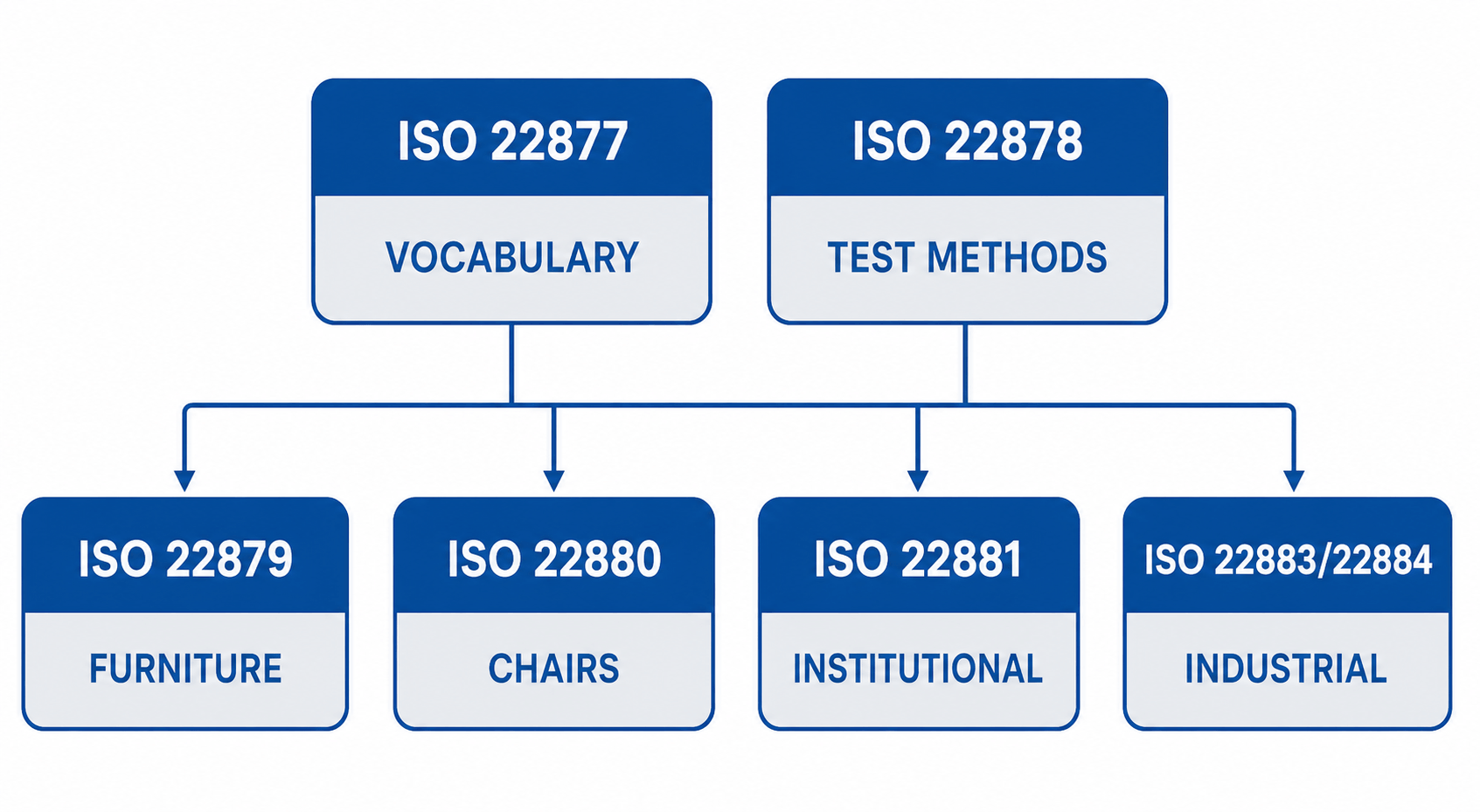
Notice the structure: ISO 22877 and 22878 are foundational (vocabulary and test methods), while 22879 through 22884 are application-specific standards that each define technical requirements, dimensions, and acceptance criteria for a particular use case. When a supplier says a caster is “ISO tested,” always ask which specific number in this series applies — a furniture caster tested to ISO 22879 has gone through a different, generally less rigorous protocol than an industrial caster tested to ISO 22884.
Why the Speed Classification Matters
ISO 22883 and 22884 split industrial casters by operating speed — up to 4 km/h versus 4 to 16 km/h — because higher speed introduces different dynamic stresses on the wheel, bearing, and swivel assembly. If your equipment is power-towed or moves faster than a slow walking pace (common in AGV and automated cart applications), specifying to ISO 22884 rather than 22883 is the technically correct choice, and a supplier who doesn’t distinguish between the two in their documentation may not have tested at your actual operating speed at all. This connects directly to our guide on AGV and AMR caster wheels, where speed-dependent wheel behavior is a recurring specification issue.
ANSI ICWM-2018: The US Industry Standard
In the United States, the Institute of Caster and Wheel Manufacturers (ICWM), an industry group under the Material Handling Institute (MHI), maintains the ANSI ICWM standard — first released in 2004, updated in 2012, and most recently revised in 2018. This standard gives manufacturers, specifiers, and users a common basis for evaluating safety, durability, and structural adequacy across four defined equipment categories:
- Furniture chair casters
- Industrial casters (split into at-or-under 2.5 mph and over 2.5 mph classes)
- Institutional and medical equipment casters
- Business machine and shopping cart casters
What ANSI ICWM Actually Tests
The standard’s testing framework covers durability (dynamic) testing — rolling and swiveling performance against more than 5,000 barrier-crossing cycles with direction changes — brake fatigue testing, brake efficiency testing, and static load testing, each with defined minimum acceptance levels based on accumulated field and test experience. That barrier-crossing cycle count is significantly higher than the cycle counts referenced in some ISO application standards, which is worth confirming directly if your equipment operates in continuous, high-cycle conditions like retail shopping carts or hospital transport equipment.
A Notable 2018 Update
The 2018 revision added a dedicated test section for business machine and shopping cart casters — a category that previously lacked its own standardized test path — and removed dynamic and impact testing requirements for industrial casters rated above 5,000 lbs, since those tests were determined to be impractical at that load class. If you’re sourcing extra-heavy-duty industrial casters, understanding this exemption means a “no dynamic test data available” answer from a supplier for a 5,000+ lb caster may be standard-compliant rather than a red flag — but you should still request the static load test results, which remain required.
DIN EN 12527-12533: The European Standard
DIN EN 12527 defines the test apparatus and methods used to evaluate wheels and casters in Europe, including how to test electrical resistance (relevant for ESD-rated casters) and how wheel brakes or swivel brakes are assessed under dynamic and static conditions. Like the ISO series, DIN EN 12527 is a foundational test-methods standard, with subsequent numbered standards in the 12528-12533 range applying those methods to specific caster categories.
DIN EN 12533 specifically governs heavy-duty wheels and casters for mechanical or power-driven applications operating between 1.1 and 4.4 m/s (4 to 16 km/h) — the same speed band as ISO 22884 — though it explicitly excludes drive wheels and pneumatic-tire wheels from its scope. If your equipment is being sold into European markets, DIN EN certification (often referenced alongside CE marking) is generally the expected documentation rather than ISO or ANSI alone, even though the underlying test philosophy is similar across all three frameworks.
Comparing the Three Frameworks
| Factor | ISO 22877-22884 | ANSI ICWM-2018 | DIN EN 12527-12533 |
|---|---|---|---|
| Primary region | International | United States | Europe |
| Foundational test-methods standard | ISO 22878 | Integrated into main document | EN 12527 |
| Speed-based classification | Yes (up to / over 4 km/h) | Yes (at-or-under / over 2.5 mph) | Yes (EN 12533 covers 4-16 km/h) |
| Covers ESD/electrical resistance testing | Not explicitly separated | Not the primary focus | Yes, explicitly in EN 12527 |
| Heavy-duty exemptions | Not specified in same way | Yes, 5,000+ lb dynamic/impact exemption | Not specified in same way |
What This Means for Your Purchase Specification
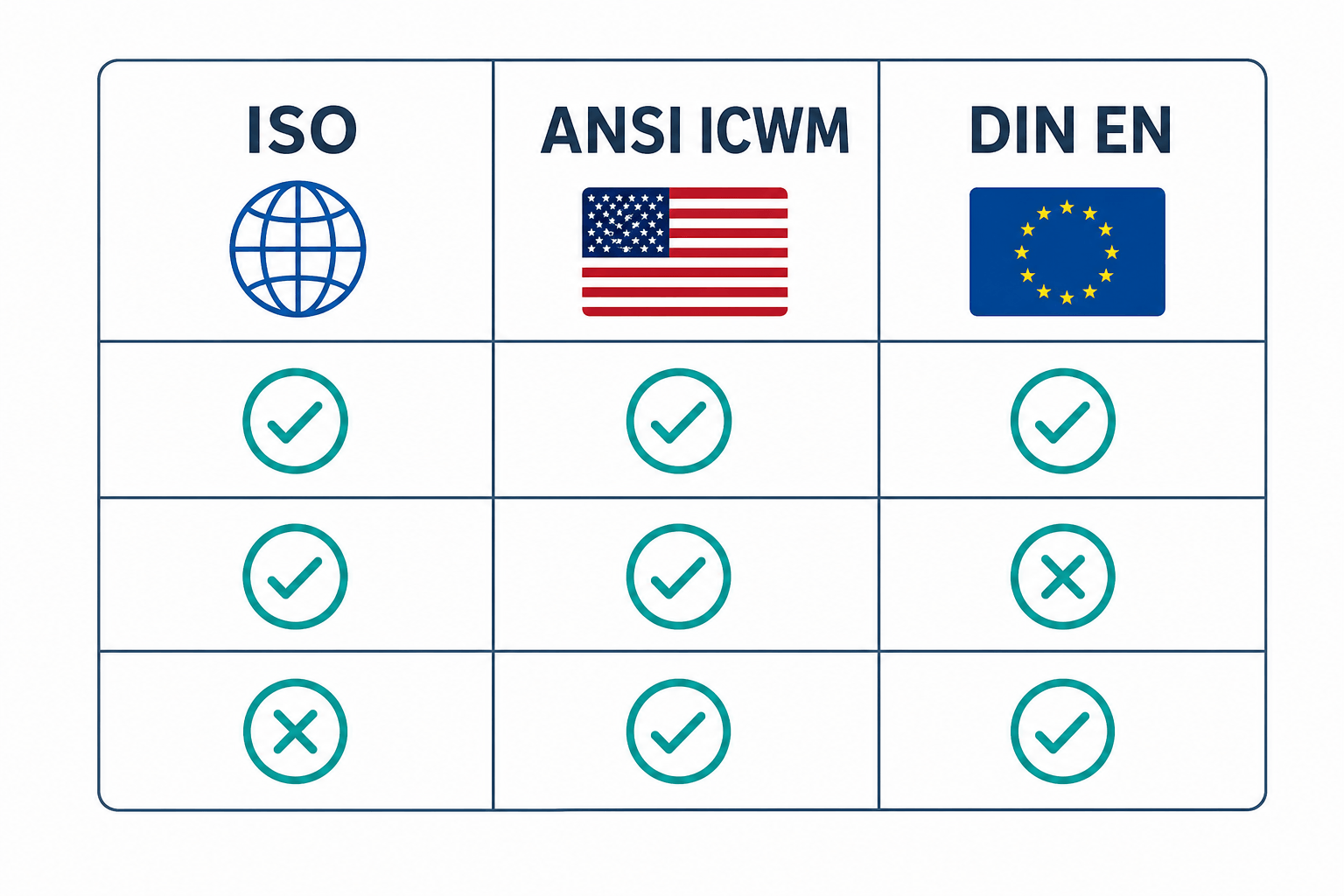
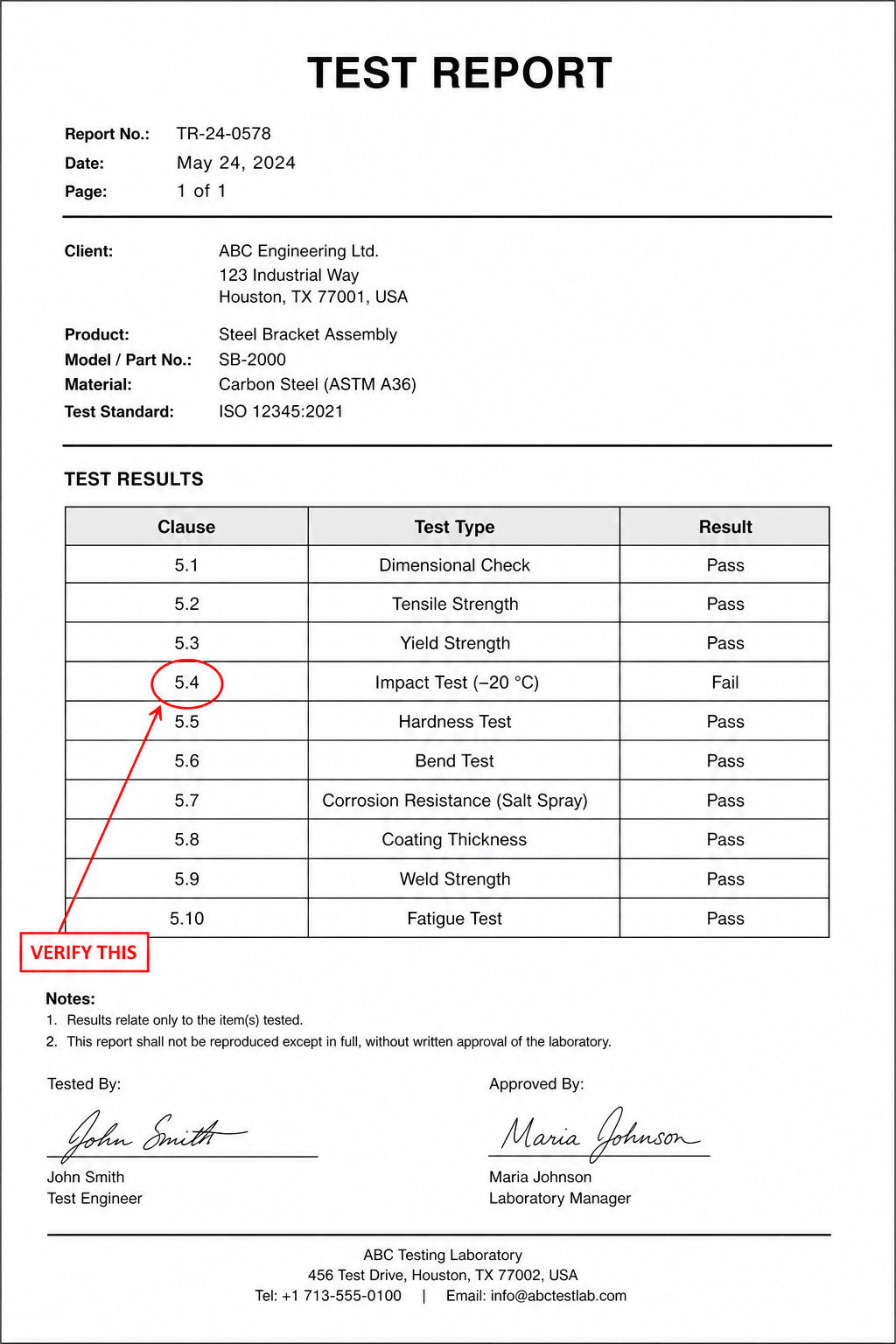
When writing an RFQ or purchase spec for OEM or industrial casters, name the specific standard and number — not just “ISO tested” or “meets industry standards” — and request the actual test report referencing that standard’s clause numbers. This is the same discipline we recommend in our guide on choosing an OEM caster manufacturer, where independently verifiable test data is one of the core supplier evaluation criteria. If your equipment ships to multiple regions, you may need suppliers who can document compliance across more than one framework — a caster tested only to ANSI ICWM may need supplementary DIN EN testing before it can be marketed with full technical backing in the EU.
Standards Verification Checklist
- Identified which specific ISO 2287X, ANSI ICWM category, or DIN EN 125XX number applies to your equipment type and operating speed
- Requested the actual test report referencing standard clause numbers, not just a compliance statement
- Confirmed operating speed classification matches the standard cited (e.g., ISO 22883 vs 22884, ANSI at-or-under vs over 2.5 mph)
- For EU-market equipment, verified DIN EN 12527-12533 documentation is available alongside or in place of ISO/ANSI data
- For ESD-sensitive applications, confirmed electrical resistance testing was performed per EN 12527 or equivalent
- For heavy-duty casters over 5,000 lbs, understood which dynamic/impact test exemptions may legitimately apply under ANSI ICWM-2018
- Cross-referenced the standard cited in supplier documentation against the official ISO/ANSI/DIN registry to confirm it exists and applies to the claimed category
Need Help Verifying Supplier Compliance?
If you’re evaluating caster suppliers and need help interpreting ISO, ANSI ICWM, or DIN EN test documentation, our technical team can review supplier reports against your equipment’s operating requirements — contact us for a compliance consultation.