
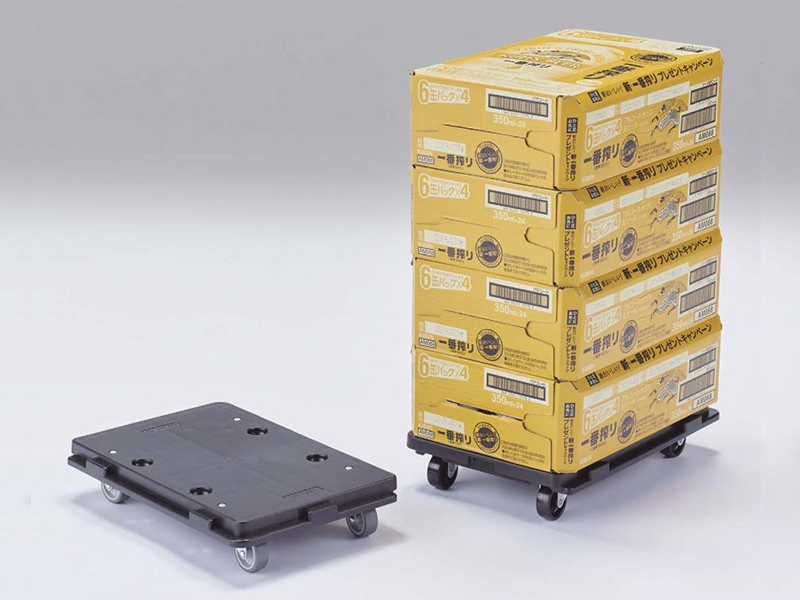
Caster wheels for push hand trolleys affect how safely and easily a loaded trolley moves through aisles, loading areas, retail floors, workshops, warehouses, and mixed indoor-outdoor routes. The right wheel choice reduces push effort, improves steering control, protects floors, and helps prevent premature wear.
A trolley caster should be selected by load, wheel material, wheel diameter, bearing type, floor condition, swivel or rigid layout, brake requirement, and maintenance access. This guide explains the practical choices instead of treating every trolley wheel as interchangeable.
Understanding Push Hand Trolleys
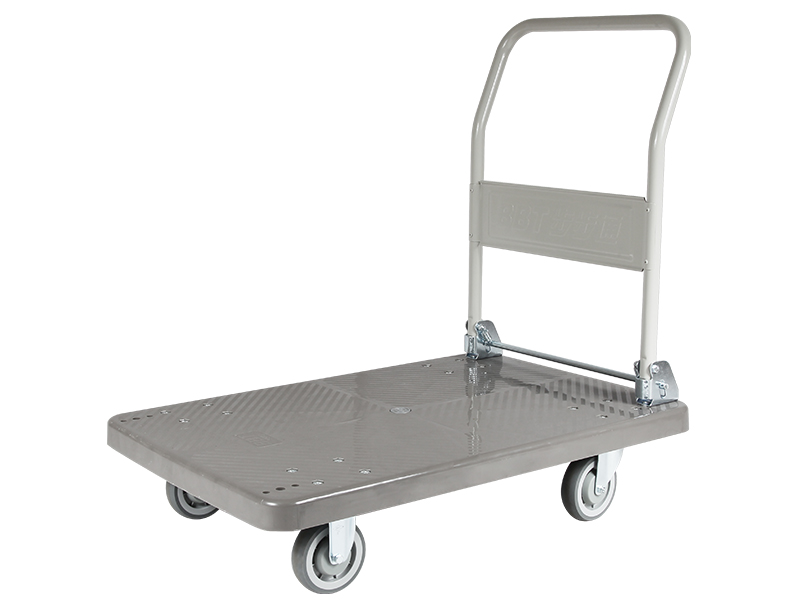
Push hand trolleys, also known as push carts or platform trucks, are used to move goods and materials in warehouses, factories, retail stores, workshops, and service areas. A trolley may look simple, but wheel selection changes the real user experience: starting force, turning radius, noise, braking, floor protection, and stability under load. Caster wheels are the working interface between the trolley and the floor. If the caster is undersized, uses the wrong material, or has the wrong layout, the trolley may become hard to push, difficult to steer, noisy, or unsafe under load. For load calculation, review Inford’s caster wheel load capacity guide.
Key Considerations for Caster Wheels in Push Hand Trolleys
When choosing caster wheels for push hand trolleys, several factors must be checked together.- Load capacity: Include trolley weight, goods, temporary overload, and uneven load distribution. Underrated wheels can wear early or make the trolley unstable.
- Wheel material: Match the wheel to floor protection, noise, chemicals, moisture, abrasion, and shock absorption. For a material comparison, use the caster wheel material guide.
- Maneuverability: Tight aisles need swivel control, while long straight routes may need rigid casters for tracking.
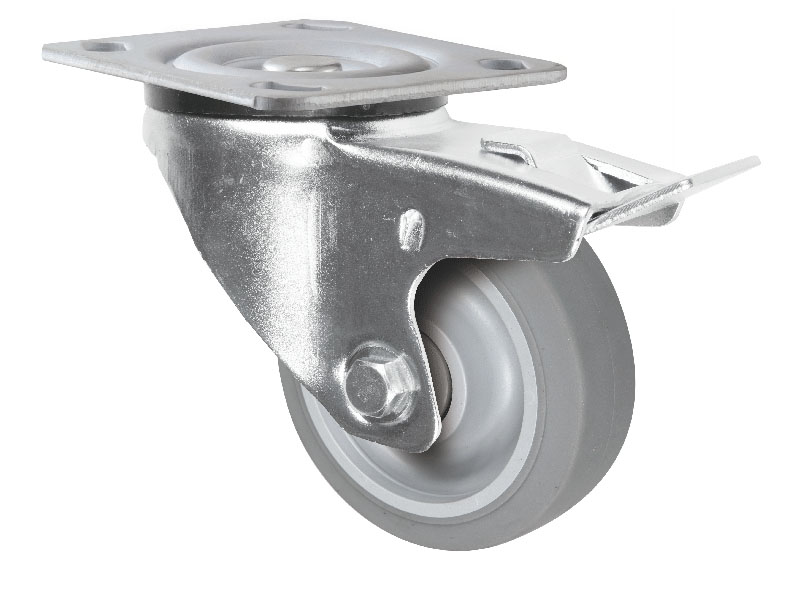
- Brake requirement: If the trolley is parked on slopes, loading zones, or busy work areas, consider brake or total-lock options. See Inford’s swivel caster with brake guide.
- Floor and route: Check thresholds, rough concrete, outdoor paths, ramps, debris, and wet areas before selecting wheel diameter and tread type.
Types of Caster Wheels Suitable for Push Hand Trolleys
Several caster structures can be used on push hand trolleys, and the best layout depends on the route.- Swivel casters: useful for turning, positioning, and moving through narrow spaces.
- Rigid casters: useful for straight tracking and better directional control over longer routes.
- Two swivel plus two rigid casters: a common trolley layout that balances turning ability with straight-line tracking. For layout details, review the rigid caster vs swivel caster guide.
- Dual-wheel casters: useful where load distribution and stability are important, but they still need correct floor and load matching.
- Pneumatic tire casters: useful for rough surfaces or outdoor routes where shock absorption matters. Compare with the pneumatic tire casters guide.
Swivel Caster With Metal Total Brake
Benefits of Correct Caster Wheels for Push Hand Trolleys
The benefit comes from correct matching, not simply from choosing the most expensive wheel.- Lower push effort: correct wheel diameter, material, and bearing can make loaded trolleys easier to start and steer.
- Better stability: proper load rating and caster layout help reduce tipping, wobble, and uneven wear.
- Floor protection: suitable tread material can reduce marking, noise, and surface damage.
- Less downtime: wheels matched to the route and load are less likely to fail early.
- Safer parking: brakes or total-lock casters can help keep trolleys controlled during loading and unloading.
Conclusion
Selecting caster wheels for push hand trolleys should be based on load, floor, movement path, wheel material, brake needs, and maintenance conditions. Swivel casters help with maneuverability, rigid casters help with tracking, and many trolley layouts need both. Before choosing a final caster, calculate the load, inspect the route, decide whether brakes are required, and match the wheel material to the floor. This approach creates a safer and more useful trolley than selecting wheels by size or price alone.Push Hand Trolley Caster Selection Checklist
- Calculate trolley weight, carried goods, and uneven load distribution.
- Map the route: smooth floor, rough concrete, ramp, threshold, outdoor path, or narrow aisle.
- Choose wheel material for floor protection, noise, load, and environment.
- Decide the caster layout: all swivel, two swivel plus two rigid, or directional-lock options.
- Confirm whether brakes or total locks are needed for loading, unloading, or parking.
- Check bearing type, mounting plate or stem, fastener strength, and maintenance access.
Common Mistakes to Avoid
- Choosing a wheel only by diameter without checking total load.
- Using hard wheels on floors that need protection or lower noise.
- Using all swivel casters when straight tracking is more important than tight turning.
- Ignoring brake needs on ramps, loading areas, or crowded workspaces.
- Replacing worn wheels without checking whether load, floor, or layout caused the wear.
FAQ About Caster Wheels for Push Hand Trolleys
What caster layout is best for a push hand trolley?
A common layout is two swivel casters and two rigid casters because it balances turning and straight tracking. Tight-space applications may use more swivel control, while longer routes may need better tracking.
Do trolley caster wheels need brakes?
Brakes are useful when the trolley is parked during loading, unloading, or use on slopes and busy work areas. Total-lock casters can help control both wheel rotation and swivel movement.
Which wheel material is best for push hand trolleys?
The best material depends on floor type, load, noise limits, chemicals, outdoor exposure, and shock requirements. Rubber, polyurethane, nylon, and pneumatic tire wheels each fit different use cases.