Hidden Caster Wheels vs Traditional Casters: The Great Mobility Battle
Hidden Caster Wheels vs Traditional Casters: The Great Mobility Battle
Choosing between hidden caster wheels and traditional casters depends on the application, not only the appearance of the wheel. A furniture project may prioritize a concealed look and quiet movement, while a utility cart or industrial frame may need simple installation, easier inspection, or a higher safety margin. This guide compares hidden caster wheels vs traditional casters by load capacity, maneuverability, installation, maintenance, noise, cost, and design fit.
Feature
Hidden Caster Wheels
Traditional Casters
Appearance
Recessed or concealed below the base
Visible below the object or equipment frame
Typical selection priority
Clean design, compact movement, quiet rolling
Simple mounting, service access, broad availability
Load planning
Must match the hidden mounting structure and wheel rating
Must match wheel rating, bracket strength, and mounting plate or stem
Maneuverability
Often useful in compact furniture or display layouts
Rigid and swivel versions can be selected for straight-line control or turning
Installation
Requires accurate recess, housing, or base preparation
Usually easier to mount with plate, stem, or bolt-hole hardware
Maintenance
Protected appearance, but access depends on the hidden housing
Easy visual inspection and replacement
Best For
Furniture, office layouts, hospitality fixtures, medical or display equipment where appearance matters
Carts, racks, workbenches, storage equipment, and industrial frames where visibility is acceptable
What Are Hidden Caster Wheels?
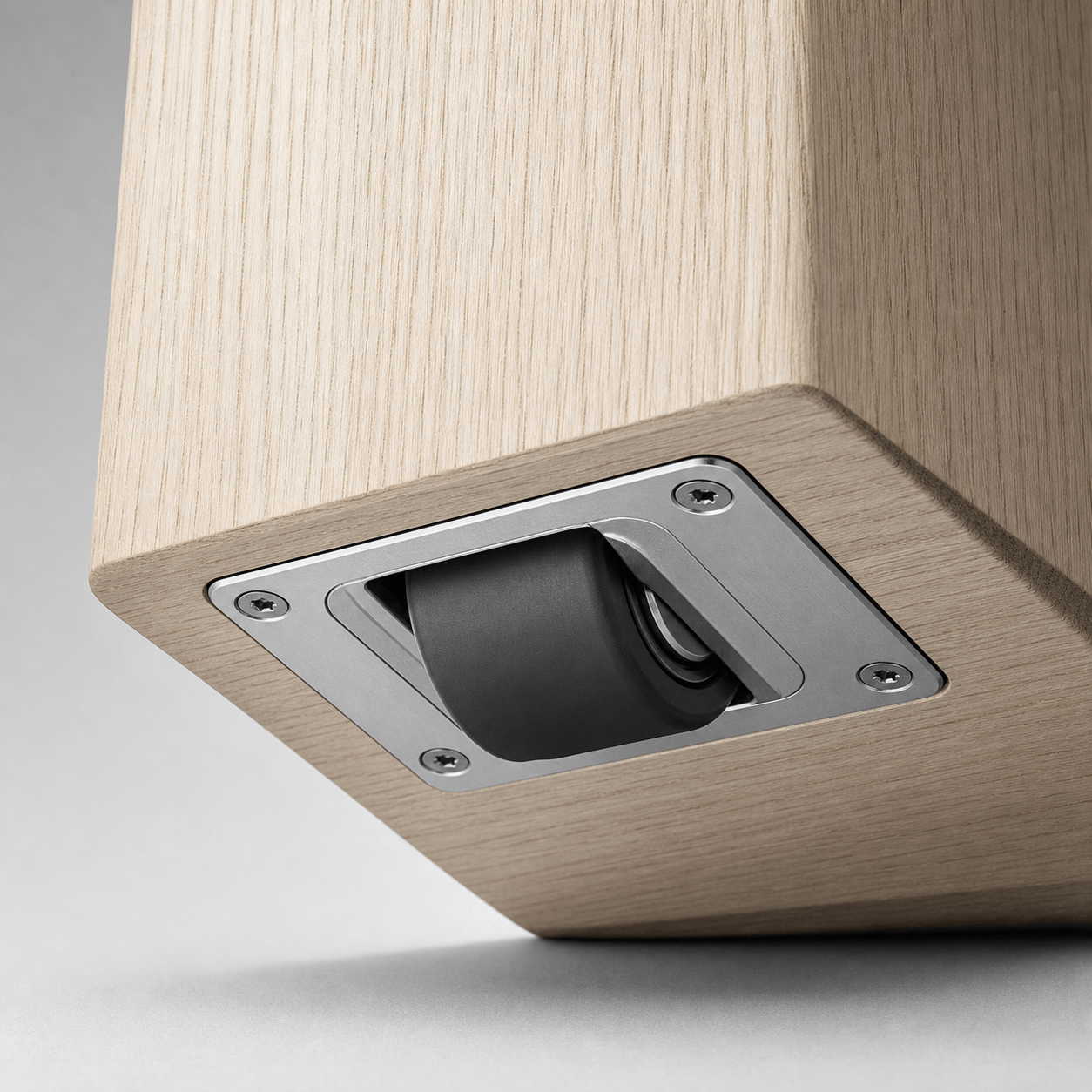
Hidden caster wheels — also called concealed casters, flush-mount casters, or under-mount casters — are mobility hardware installed beneath furniture or equipment so the wheels remain invisible during normal use. Unlike exposed traditional casters, they sit recessed within a housing built into the object’s base, preserving a clean, minimalist silhouette while still allowing easy repositioning on demand.
hidden caster closeup
Common applications include modern office desks, boardroom conference tables, TV cabinets, kitchen islands, hotel lobby furniture, and hospital equipment carts. They are engineered for environments where aesthetics and quiet operation are as important as load-bearing performance. If you want a deeper overview of the product category, see our guide to hidden casters.
Load-Bearing Capacity
Traditional Casters
Load capacity in traditional casters varies by wheel material, bracket design, bearing structure, mounting method, and the way the equipment is pushed. Light furniture casters and industrial steel-frame casters should not be compared by wheel diameter alone. Buyers should calculate the total equipment weight, expected load, number of load-bearing casters, floor conditions, and safety factor. For a deeper explanation, see Inford’s caster wheel load capacity guide. The practical limiting factor is the swivel mechanism — poor-quality bearings or an undersized frame will fail under load long before the wheel itself shows wear.
Hidden Caster Wheels
Hidden caster wheels also need careful load planning because the wheel is only one part of the structure. The recess, housing, fasteners, base material, and contact surface all affect performance. For furniture and display equipment, the safest approach is to confirm the rated load of the caster and the strength of the hidden mounting area before production or installation.
Industry Testing Standards
Both types must pass recognized load tests before reaching market. In Europe, EN 12527 governs furniture casters: a static test applies rated weight for a defined period without allowable deformation, while a dynamic test simulates rolling over floor irregularities. In the United States, BIFMA X5.1 sets the benchmark for office furniture casters. Reputable hidden caster manufacturers run additional in-house validation cycles to confirm performance under concealed-mount conditions, where load paths differ from standard plate- or stem-mount configurations.
Flexibility and Maneuverability
Traditional Casters
Rigid traditional casters excel at straight-line movement and are well suited to factory aisles, guided movement, and equipment that should not drift sideways. Swivel casters improve turning with 360-degree rotation and work reliably in open spaces. If the choice is mainly about directional control, compare the tradeoffs in Inford’s rigid caster vs swivel caster guide. The trade-off: the swivel mechanism stiffens under sustained heavy loads or without regular lubrication, reducing directional responsiveness over time and making tight navigation increasingly difficult.
Hidden Caster Wheels
Most concealed casters use a precision swivel design with a tighter turning radius than equivalently rated traditional casters, specifically engineered for confined spaces. High-quality sealed bearings deliver effortless 360° rotation even under maximum rated load. A solid-oak desk fitted with hidden furniture casters, for example, can be repositioned with one hand in a compact home office — a level of ease that standard industrial swivel casters of the same rating rarely achieve.
Real-World Example: Healthcare Settings
Hospital beds and gurneys typically use large traditional swivel casters that perform adequately in wide corridors but struggle in narrow doorways (standard ICU doorways run 90 – 95 cm). Modern medical equipment carts fitted with flush-mount casters are lower-profile and more responsive, enabling clinical staff to navigate crowded ward layouts precisely without manually repositioning equipment at every corner — a meaningful time and safety benefit in high-acuity environments.
Aesthetics and Design Integration
Traditional Casters
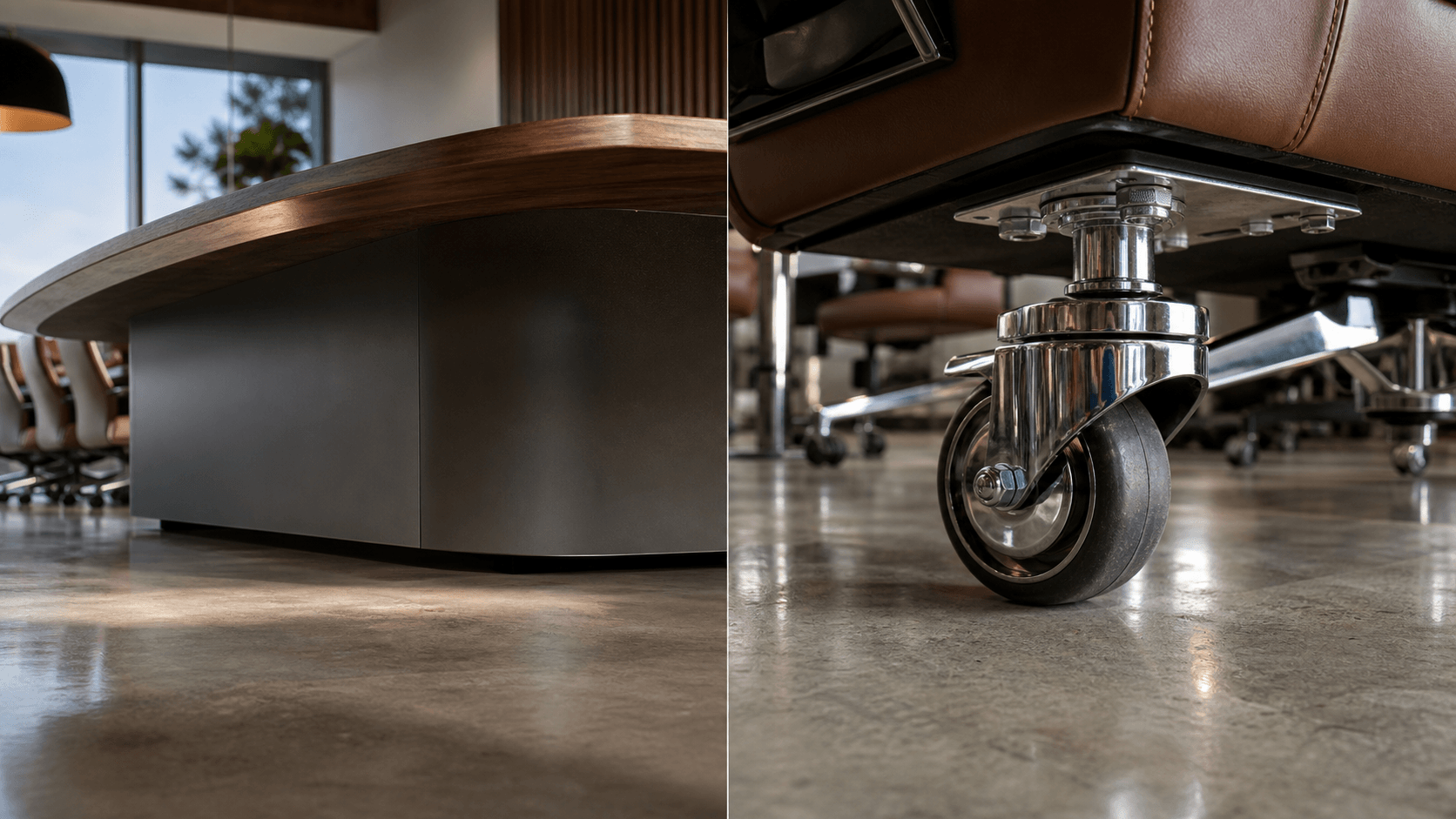
Exposed casters are a functional necessity that can visually undermine high-end furniture. In a contemporary living room or executive boardroom, large black rubber casters break the clean lines of modern cabinetry or statement tables. Even in industrial environments, visible mounting plates and wheel assemblies contribute to a less finished appearance — acceptable for utility use, but a mismatch for showrooms, hotels, or design-forward commercial interiors.
caster comparison
Hidden Caster Wheels
Flush-mount casters disappear by design. When correctly recessed into furniture legs or base frames, they produce a floating visual effect — the piece appears to hover just above the floor with no visible hardware. Leading manufacturers offer finishes including brushed stainless steel, matte black, and anodized aluminum, allowing the caster to integrate with the furniture’s own hardware family. This is why interior designers and contract furniture brands consistently specify hidden furniture casters over traditional alternatives for hospitality, corporate, and residential projects where the hardware itself is part of the design language.
Durability and Long-Term Performance
Traditional Casters
Low-cost plastic household casters fail quickly on hard flooring — flat spots and cracking are common within 6 – 12 months of regular use. Industrial-grade steel and polyurethane casters last significantly longer but depend on consistent bearing lubrication; neglected swivel mechanisms seize or develop severe play within 1 – 2 years of daily operation under load. The saving grace of traditional casters is that replacement components are widely stocked and inexpensive, making field repair straightforward even without specialized tools.
Hidden Caster Wheels
Concealed caster wheels are constructed from high-strength alloys or reinforced engineering polymers with fully sealed internal bearings that resist dust, grit, and moisture — the primary drivers of premature failure in open-bearing casters. In workshop, kitchen, or commercial flooring environments where debris accumulates rapidly, the enclosed housing provides a decisive durability advantage. Expected service life is substantially longer than comparable traditional casters, though field replacement is more involved due to the recessed installation geometry.
Noise Level
Traditional Casters
Hard-wheel traditional casters — nylon, hard polypropylene, cast iron — generate significant rolling noise on tile, hardwood, polished concrete, and similar hard surfaces. The vibration transmits through the floor and the furniture piece itself, amplifying in open-plan offices and healthcare environments. Swivel mechanisms with worn or dry bearings add an intermittent squeaking or grinding sound. Even soft-rubber traditional casters can produce a low rolling rumble on uneven or textured flooring.
Hidden Caster Wheels
Hidden casters for furniture use soft polyurethane or rubber-compound wheels engineered for quiet rolling and floor protection simultaneously. Factory-lubricated, sealed bearings in the swivel mechanism eliminate squeaking entirely under normal operating conditions. Advanced models incorporate elastomeric damping inserts in the wheel core or within the mounting frame, absorbing vibration before it reaches the floor or the furniture surface. This makes them the specified choice for libraries, recording studios, executive offices, and medical environments where ambient noise is a primary design constraint.
Cost and Value Analysis
Upfront vs Total Cost of Ownership
Cost should be evaluated by the full application, not only by the unit price of the wheel. Traditional casters are often easier to buy, mount, inspect, and replace, which can reduce service time for utility carts or workshop equipment. Hidden caster wheels can justify the extra installation work when the finished product must keep a clean visual profile, roll quietly, or protect the floor in a customer-facing environment. Material choice also changes long-term value; compare polyurethane, rubber, nylon, and other wheel materials in Inford’s caster wheel material selection guide.
Choosing the Right Caster for Your Application
Choose traditional casters for warehouses, utility carts, garage storage shelving, workshop benches, temporary event builds, or any application where upfront budget and rugged function take clear priority over aesthetics and noise
Choose hidden caster wheels for home office desks, boardroom tables, kitchen islands, display cabinetry, hotel lobby furniture, retail fixtures, and hospital equipment carts — any environment where appearance, quiet operation, floor protection, and low maintenance deliver measurable value
Choose heavy-duty concealed casters specifically for commercial or industrial furniture that must combine a premium appearance with load ratings above 200 kg per caster — server room equipment, industrial workbenches, and heavy-duty storage systems in design-sensitive environments
Installation
Traditional Casters
Standard casters use either a mounting plate (four screws into the base) or a stem (3/8-inch or 1/2-inch diameter) that presses or threads into a pre-drilled socket in the furniture leg. Most mass-market furniture with caster provisions accepts standard stem casters without modification. Plate-mount casters require only a drill and screwdriver — typical installation time is 5 – 10 minutes per unit. Visible mounting hardware is the only aesthetic compromise.
Hidden Caster Wheels: DIY vs Professional Installation
Installing recessed casters or flush-mount systems on existing furniture requires routing or chiseling a precisely dimensioned pocket in the leg or base to accept the caster housing. For furniture built from new, this pocket is incorporated at the production stage. High-load commercial installations or complex industrial builds should use professional installation to guarantee correct alignment, load transfer, and locking-mechanism accessibility. For simpler furniture pieces — TV stands, dining tables, kitchen carts — most manufacturers provide drilling templates and detailed instructions suitable for confident DIY installers.
Maintenance Requirements
Maintenance Task
Traditional Casters
Hidden Caster Wheels
Bearing lubrication
Every 3 – 6 months under regular use
Sealed — typically not required
Wheel inspection for wear
Monthly for heavy-use environments
Quarterly
Debris clearing (hair, thread, grit)
Frequent — open design accumulates debris
Rare — enclosed housing blocks ingress
Swivel mechanism check
Monthly under load
Bi-annually
Typical replacement interval
1 – 3 years (light-duty) / 3 – 7 years (industrial)
5 – 10+ years depending on load and use
Traditional casters with open swivel mechanisms collect hair, thread, and floor debris — one of the most common causes of reduced rotation efficiency and accelerated bearing failure in office and residential settings. Routine manual cleaning is required to maintain performance. Concealed casters largely eliminate this problem through their enclosed housing design, though when internal wear does eventually occur, servicing requires more careful access compared to a standard plate-mount caster.
Frequently Asked Questions
What are hidden caster wheels called?
Hidden caster wheels are commonly referred to as concealed casters, flush-mount casters, under-mount casters, or recessed casters. The British English variant is hidden castors or concealed castors. All terms describe the same product category: casters engineered to be invisible or minimally visible during normal use while providing full rolling mobility on demand.
Can hidden casters support heavy furniture?
Yes. Commercial-grade hidden casters for furniture are rated for 200 – 500 kg per caster, and heavy-duty industrial concealed casters exceed 1,000 kg per caster. Always verify the combined capacity — multiply individual caster rating by the number of casters — and ensure it comfortably exceeds the furniture’s static weight plus any dynamic load added during use.
Are concealed casters harder to maintain than traditional casters?
No — they require less routine maintenance. Sealed bearings and enclosed housing eliminate the need for periodic lubrication and manual debris removal that open traditional casters require. When internal components do eventually wear, accessing them may involve partial disassembly of the housing, but this is infrequent given the extended service life of quality concealed casters.
What is the best hidden caster for a kitchen island?
For a kitchen island, look for hidden locking casters rated at a minimum of 100 kg per caster, with soft polyurethane wheels to protect tile and hardwood flooring. A side-accessible or foot-pedal locking mechanism is preferable for kitchen ergonomics. Choose stainless steel or zinc alloy construction for corrosion resistance in the moisture-rich kitchen environment.
What is the difference between hidden casters and flush-mount casters?
The terms are largely interchangeable in the industry. Flush-mount casters specifically emphasizes that the caster sits level with — or recessed below — the furniture base surface when viewed from the side, while hidden casters is the broader commercial term used across furniture, medical, and industrial applications. Both refer to casters designed to keep wheels out of sight during normal use.
Are there hidden retractable casters?
Hidden retractable casters are a specialized variant where the caster mechanism retracts fully into the furniture leg when not in use, allowing the object to rest solidly on its base or feet. They are activated by pressing down on the furniture or via a separate lever, deploying the wheels when mobility is needed. This makes them ideal for pieces that spend most of their time stationary but need to be repositioned occasionally, such as heavy storage cabinets or professional audio equipment racks.
Practical Selection Checklist
Before choosing hidden caster wheels or traditional casters, define the job the caster must perform. The better option is the one that fits the load, floor, mounting structure, movement path, maintenance access, and design requirement at the same time.
Choose hidden caster wheels when the project needs a cleaner furniture profile, quieter movement, compact repositioning, or a concealed base.
Choose traditional casters when fast installation, broad hardware choice, easier inspection, or frequent replacement matters more than appearance.
Check load capacity against total equipment weight, number of casters, safety factor, and mounting strength.
Check wheel material against floor protection, rolling noise, chemicals, debris, and movement frequency.
Check maintenance access before selecting a recessed or enclosed caster design.