
Pool is a game built on precision. Every angle, every surface, every piece of equipment contributes to the quality of play — and that includes the hardware most players never think twice about. Pool table caster wheels, also called pool table rollers or pool table castors, are one of the most practical yet underappreciated components of any serious game room setup. Whether you’re asking “can you put wheels on a pool table?” for the first time, or you’re already using casters and want to get more out of them, this guide takes you from the basics all the way to pro-level techniques.
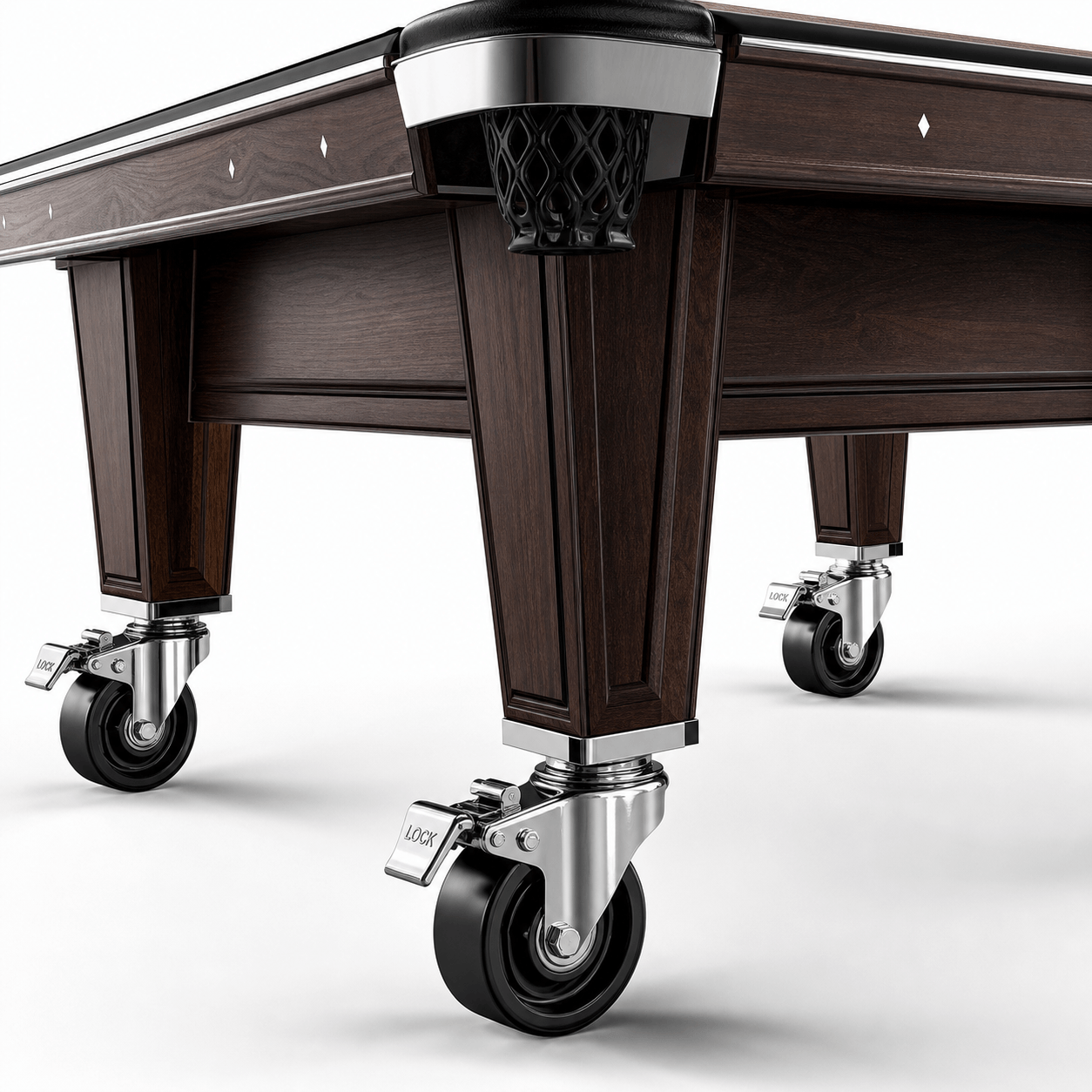
What Are Pool Table Caster Wheels?
Pool table caster wheels are heavy-duty rolling assemblies mounted to the base or legs of a pool table, allowing you to reposition the table without lifting it. A complete set typically includes four wheels — one at each corner leg — and most modern versions come with integrated locking brakes to keep the table perfectly stationary during play.
They go by several names: pool table wheels, pool table rollers, pool table castors, or simply casters for pool table. Regardless of the terminology, they all serve the same core function: making a 500–1,000 lb slate table movable by a single person.
Can You Put Wheels on a Pool Table?
Yes — and it’s one of the best upgrades you can make to a game room. Standard pool tables don’t come with wheels from the factory, but aftermarket caster wheels for pool table legs are widely available and designed to bolt or clamp directly onto most table leg styles. The key requirement is matching the load-bearing capacity of the casters to the weight of your specific table, particularly if you have a heavy slate-bed model.
Can You Put a Pool Table on Casters?
Absolutely. Putting a pool table on casters is common in multipurpose spaces — home game rooms, sports bars, recreation centers, and schools — where the table needs to be moved regularly to free up floor space. The main considerations are choosing the right wheel type for your floor surface and ensuring all four casters are rated for the table’s total weight.
Types of Pool Table Caster Wheels
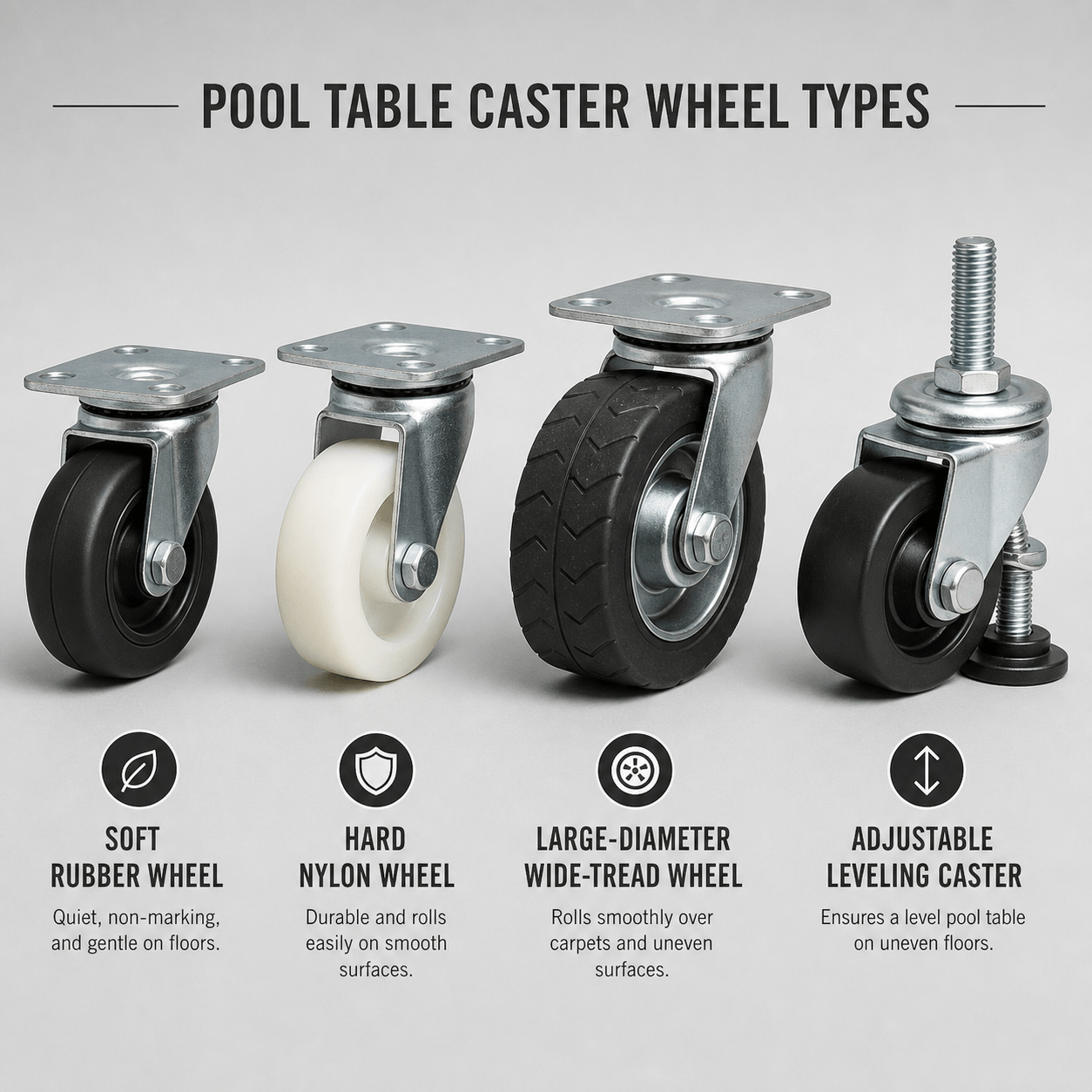
Not all pool table wheels are the same. Understanding the different types helps you choose the right product and use it correctly.
Standard Swivel Casters
The most common type. Each wheel rotates 360 degrees, allowing movement in any direction. Ideal for repositioning a table in an open room without a fixed travel path.
Rigid (Fixed) Casters
These wheels only move in a straight line. Less flexible than swivel casters, but they provide better stability and are less likely to drift under load. Sometimes used in pairs with swivel casters — rigid at the back, swivel at the front.
Locking Casters (Pool Table Wheels with Locks)
Pool table wheels with locks include a brake mechanism that, when engaged, prevents any rolling movement. This is the recommended type for any pool table that will actually be used for play. Without locked wheels, even the slightest nudge can shift the table mid-game. Brakes come in two styles: lever-operated (flipped by hand) and pedal-operated (pressed by foot).
Pool Table Dolly Wheels
A pool table dolly is a separate wheeled platform that the entire table sits on, rather than wheels attached directly to individual legs. Dollies are common for moving pool tables across longer distances or between rooms. They distribute weight more evenly and are particularly useful for very heavy tables. Pool table dolly wheels are often larger in diameter and designed for heavier loads than standard leg-mounted casters.
Leveling Casters
These are adjustable-height casters that allow you to fine-tune the levelness of the table by raising or lowering individual wheels. They’re the most functional choice for rooms with uneven floors.
How to Install Caster Wheels on a Pool Table
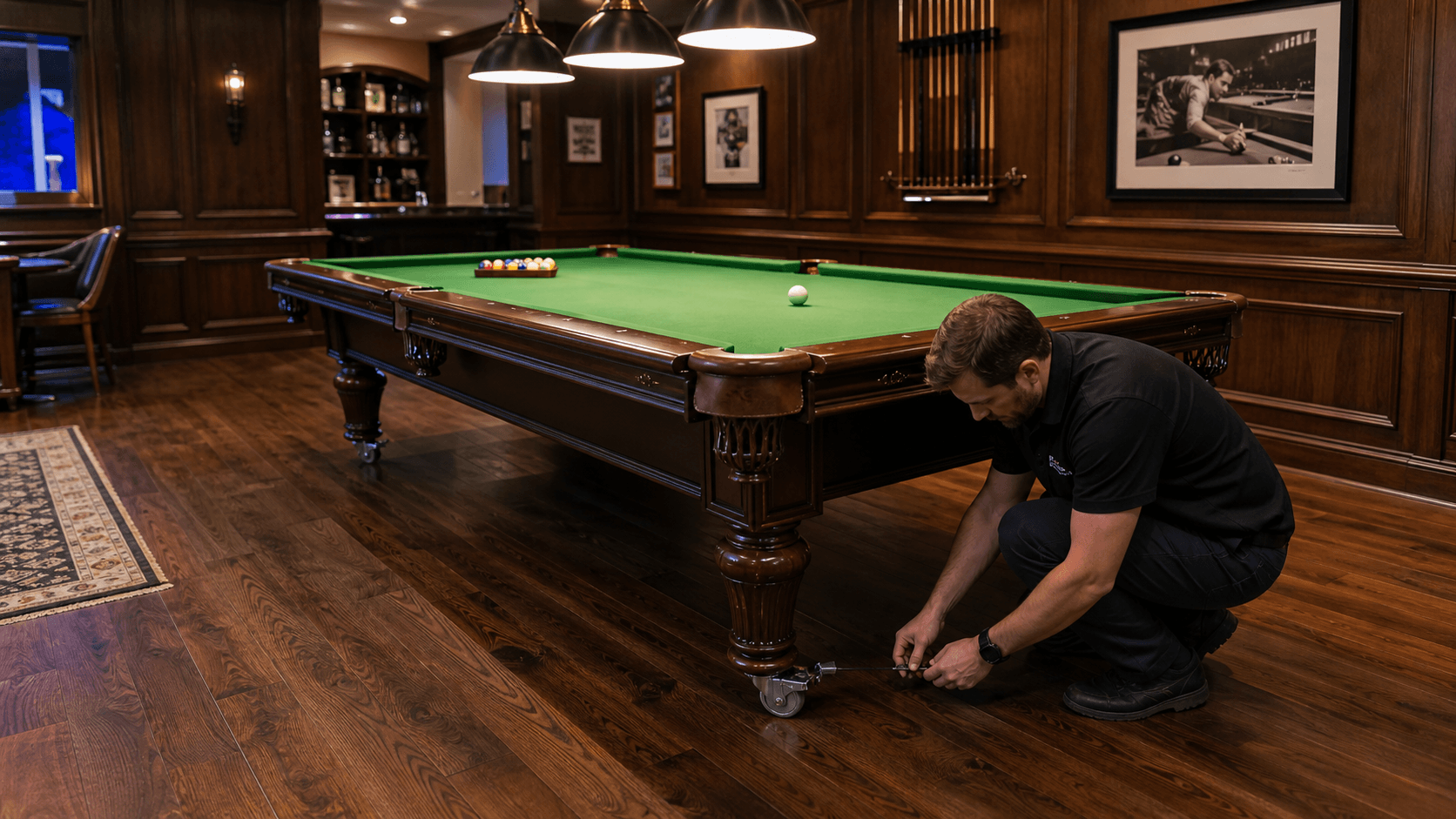
Installing casters for a pool table is a straightforward process that most people can complete without professional help.
What you’ll need:
- A set of caster wheels rated for your table’s weight
- A wrench or socket set
- A rubber mallet (optional)
- A helper for safety
Step-by-step installation:
- Clear the table surface — Remove all balls, accessories, and the cover. The table will be tilted slightly during installation.
- Lift one corner at a time — With a helper supporting the table, lift one leg off the floor just enough to access the mounting point. Use a rubber mallet or wooden block as a temporary prop if needed.
- Attach the caster bracket — Align the caster’s mounting plate with the bolt holes on the leg base. Thread in the bolts by hand first, then tighten with a wrench. Do not over-torque.
- Repeat for all four legs — Work corner by corner, keeping the table as level as possible.
- Test before fully loading — Once all four casters are installed, gently rock the table to check for wobble. Engage all locks and confirm the table doesn’t shift.
Important: Always verify the combined weight rating of all four casters exceeds the total weight of your pool table. A standard 8-ft slate table weighs 700–1,000 lbs, so each caster should be rated for at least 300 lbs.
How to Remove Caster Wheels
Removing pool table caster wheels is necessary for deep maintenance, caster replacement, or preparing the table for long-distance transport.
Step-by-step removal:
- Engage all brakes first — Before doing anything, lock every wheel to prevent the table from rolling.
- Lift one corner safely — With a helper, raise one leg slightly. Place a stable support (wooden block, rubber mat) under the leg before you begin unbolting.
- Unscrew the mounting bolts — Use the appropriate wrench size to remove the bolts from the mounting plate. Keep bolts in a labeled bag so you don’t lose them.
- Slide the caster off — Once the bolts are removed, the caster bracket should slide or pull free. If it’s stuck due to accumulated grime, gently tap it loose with a rubber mallet.
- Inspect the leg base — Before installing new casters, check the leg base for damage, stripped threads, or rust.
- Repeat for all four corners.
Removing caster wheels is also the right move before any long-distance move or storage period longer than a few months.
Basic Usage: Moving Your Pool Table Safely
Inspect Before You Move
Before rolling the table anywhere, take 60 seconds to inspect each wheel:
- Check for cracks or chips in the wheel material
- Confirm axles are straight — a bent axle causes wobble and uneven rolling
- Clear any debris (pebbles, grit, hair) caught in the wheel housing or around the axle
This quick check prevents floor damage and wheel failure mid-move.
Release the Brakes
Flip lever-style brakes to the “open” position, or press and release pedal brakes. If a brake feels stiff, wiggle it gently — never force it, as this can crack the housing or strip the mechanism.
Move Slowly and Deliberately
Stand with feet shoulder-width apart, grip the table edge firmly with both hands, and push with steady, even pressure. Sudden force causes the table to veer and can knock accessories off the surface or strain the leg joints. If the table drifts sideways, apply slightly more pressure on the lagging side.
For turning, push one side more than the other rather than pulling — pulling puts stress on the joint where the caster attaches to the leg.
Advanced Techniques
Fine-Tuning Shot Angles with Caster Wheels
This is where pool table wheels become a genuine competitive tool. In pool, a few inches of table repositioning can open up a clear line on a difficult bank shot, change the cue ball’s exit angle, or create room to stand for a better stroke.
To make precise micro-adjustments:
- Engage three of the four brakes, leaving only one wheel unlocked on the side you want to pivot
- Use both hands — one on the table edge, one on the adjacent side — for controlled rotation
- Adjust no more than 2–3 degrees at a time, then re-evaluate from the shooting position
High-quality pool table rollers allow adjustments as fine as 1–2 degrees, which can be the difference between a makeable shot and a miss. This technique is especially useful in tight rooms where cue extension room is limited.
Leveling the Table Using Adjustable Casters
A level table is the foundation of fair, consistent play. On an unlevel surface, balls will drift toward the lower side, making precise positional play nearly impossible.
How to level using adjustable caster wheels:
- Place a precision bubble level on the table surface — check both lengthwise and across the width
2. Identify which corner(s) are low
- On low-side wheels with threaded shafts, turn counter-clockwise to raise the wheel; clockwise to lower it
4. Make quarter-turn adjustments at a time, rechecking the level after each adjustment
5. Repeat until the bubble centers in all directions
For severely uneven floors: Combine caster height adjustment with thin shims (hardwood or plastic) placed directly under the lowest casters. Mark each adjustment point before you begin so you can track changes accurately.
Choosing the Right Caster Wheels for Your Floor
Just as you’d choose different footwear for different terrain, the right pool table wheels depend on your floor surface. The wrong match causes floor damage, poor rolling, and premature wheel wear.
Hardwood and Laminate Floors
Best choice: Soft polyurethane or soft-rubber wheels
Soft polyurethane wheels grip smooth surfaces without leaving scratches or scuff marks. They roll quietly, which matters in a home game room. Avoid hard nylon or metal wheels on hardwood — even a single roll can leave a permanent gouge.
Concrete Floors
Best choice: Nylon or metal-reinforced rubber wheels
Concrete is abrasive and unforgiving. Hard nylon casters handle the rough texture without getting ground down, and metal-reinforced rubber provides the load-bearing strength needed for heavy slate tables on hard floors. These wheels also resist oil and chemical spills common in basement or garage setups.
Carpeted Floors
Best choice: Large-diameter, wide-tread wheels
Carpet fibers grab at small, narrow wheels and make rolling extremely difficult. Larger-diameter wheels (3 inches or more) roll over carpet pile rather than into it. A wide tread distributes the table’s weight across more fiber area, reducing the chance of wheels sinking in or getting stuck. Some casters designed for carpet use a grooved tread pattern that actively clears fibers as the wheel turns.
Tile and Stone Floors
Best choice: Soft rubber or thermoplastic rubber (TPR) wheels
Tile and stone are hard but often slippery. Soft rubber provides the grip needed to prevent the table from sliding on smooth tile, while also cushioning against the hardness to reduce noise and vibration.
Weight and Load Considerations
Always factor in table weight when selecting casters for your pool table:
| Table Type | Approximate Weight | Minimum per Caster Rating |
|---|---|---|
| MDF bed (7 ft) | 250–400 lbs | 100–125 lbs |
| Single-piece slate (7–8 ft) | 500–700 lbs | 175–200 lbs |
| 3-piece slate (8–9 ft) | 700–1,000 lbs | 275–300 lbs |
| Tournament/commercial (9 ft) | 1,000+ lbs | 300+ lbs |
Maintenance and Longevity
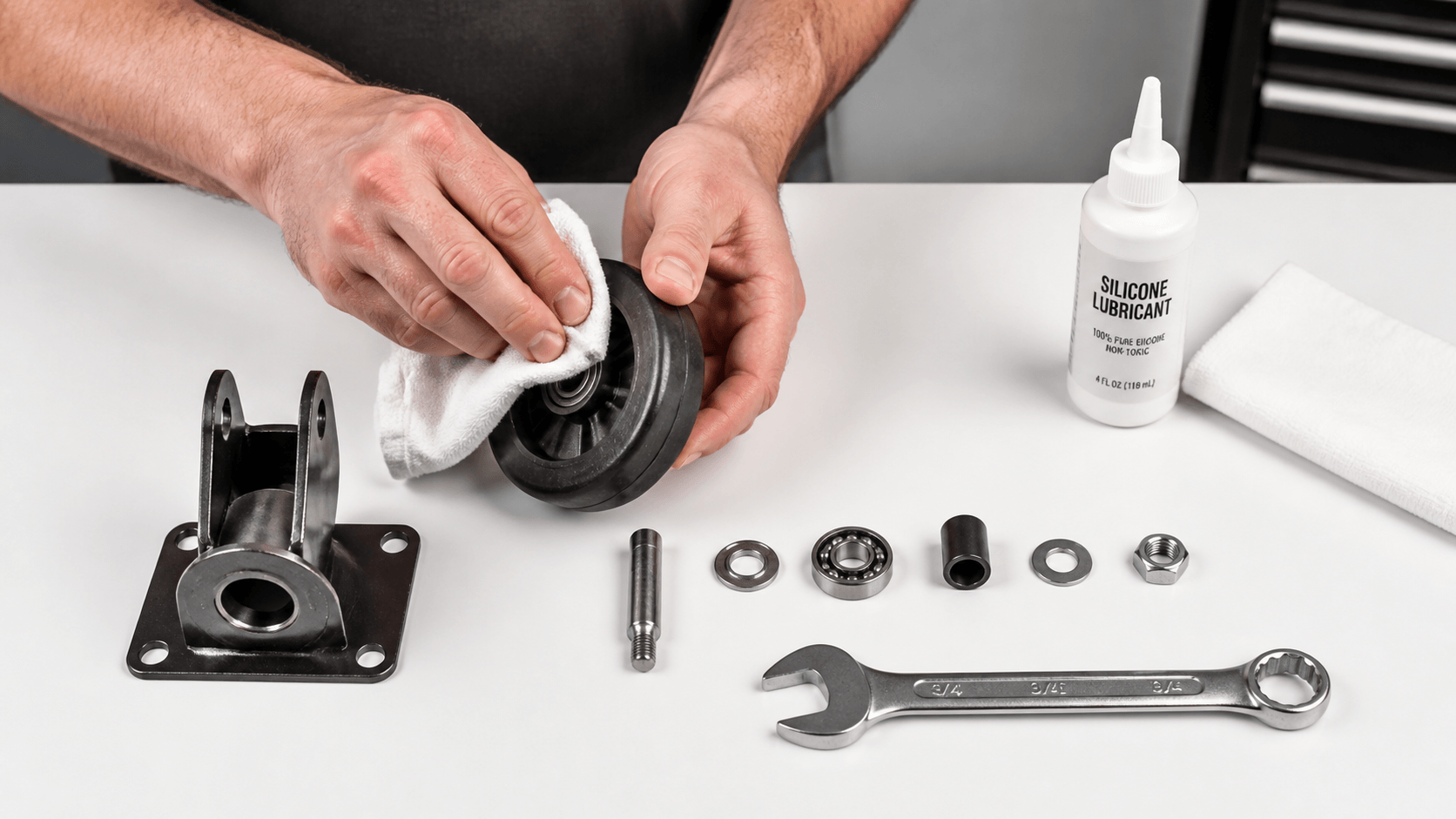
Regular Cleaning
Wipe wheels down with a dry microfiber cloth after every few uses. For accumulated grime, dampen the cloth with mild soapy water, clean gently, then dry thoroughly — especially around any metal axle components where rust can develop. Never use harsh solvents on rubber wheels; they degrade the material and cause premature cracking.
Lubrication Schedule
Lubricate axles and wheel bearings every 3–6 months depending on usage frequency. Use a silicone-based lubricant or a product specifically rated for caster bearings — avoid WD-40 as a long-term lubricant, as it evaporates quickly and can attract dust. Apply sparingly: a thin coat is sufficient, and excess lubricant draws in the very debris you’re trying to keep out.
Wear and Damage Signals to Watch For
- Flat spots on the wheel surface — caused by prolonged locking under load; indicate uneven wear
- Wobbling during movement — usually a bent axle or worn bearing
- Loud grinding or clicking — debris in the bearing or a cracked wheel
- Brake not holding — worn brake pad or a stripped locking mechanism
Replace any caster showing these signs immediately. Running a damaged wheel risks floor damage and sudden table movement during play, which is both a safety hazard and a game-ruiner.
Storage and Transportation
Storing the Table
For short-term storage (days to weeks), engage all brakes and cover the table with a fitted cover to protect the felt and wheels from dust. For longer storage:
- Place the table on a flat, even surface
- Engage all locks and place rubber chocks behind each wheel as a secondary stop
- Avoid storing in areas with high humidity, temperature extremes, or direct sunlight — these conditions cause rubber wheels to dry-crack and metal components to corrode
Transporting a Pool Table
Caster wheels make loading the table into a vehicle significantly easier, but they need to be managed carefully during the move itself:
- Secure with ratchet straps — run straps across the table frame, not over the felt, and tie-down to the vehicle floor anchors
- Use wheel chocks — place rubber chocks in front of and behind each caster to prevent rolling while in transit
- For long-distance moves — remove the caster wheels entirely and pack them in a padded box. This eliminates vibration stress on the mounting points and protects both the wheels and the leg bases
- Disassemble when possible — for a slate table, remove the slate panels separately; they’re the heaviest and most fragile component
Frequently Asked Questions
Can you put wheels on a pool table?
Yes. Aftermarket casters designed specifically for pool table legs are widely available. Ensure the load rating matches your table’s weight and choose wheel material suited to your floor type.
Can you put a pool table on casters?
Yes, and many game room owners do exactly this. A pool table on casters can be pushed against a wall when not in use, freeing the room for other activities. Just make sure locking wheels are always fully engaged during play.
How do I stop my pool table wheels from rolling during play?
Use pool table wheels with locks (locking casters). Engage all four brakes before starting a game. If your current casters don’t have brakes, consider replacing them with locking models — it’s one of the most important safety and consistency upgrades you can make.
What size casters do I need for a pool table?
For most residential slate tables, 3-inch diameter casters with a load rating of 250–300 lbs per wheel are appropriate. Heavier commercial tables may need 4-inch or larger wheels with higher load ratings.
How often should I replace pool table caster wheels?
With proper maintenance, quality casters last 5–10 years under normal residential use. Replace immediately if you notice flat spots, wobbling, brake failure, or cracking.
Can pool table rollers damage my floor?
They can if you choose the wrong type. Hard nylon wheels on hardwood floors will scratch. Always use soft polyurethane or rubber wheels on finished wood floors, and add felt pads under the wheel housing for extra protection.
Pool table caster wheels are a small component with outsized impact — on your game quality, your floor’s condition, and the long-term health of the table itself. From choosing the right wheels for your surface, to installing and removing them correctly, to using them for precision shot setups and table leveling, every detail covered in this guide translates directly into a better playing experience. Master these techniques and those unassuming little rollers will quietly become one of the most valuable tools in your game room.