
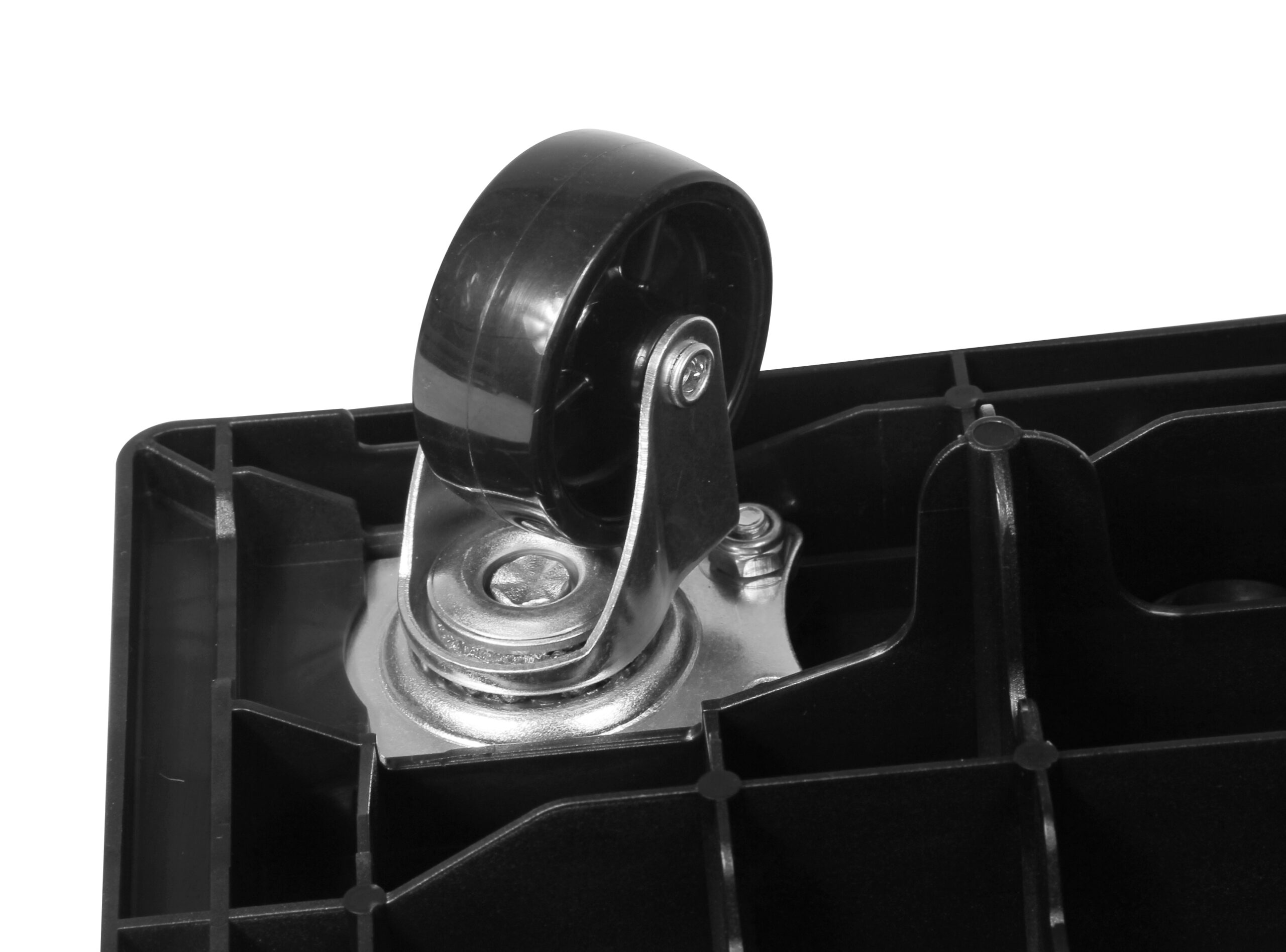
What Are Threaded Stem Casters?
Threaded stem casters use a wheel and fork assembly connected to a threaded post. The post is installed into the matching thread on the equipment or furniture base. Compared with plate-mount casters, threaded stem casters are compact and often easier to fit into chairs, display racks, carts, stands, and light equipment frames. The secure fit depends on correct thread matching and proper tightening, not simply on choosing a caster that looks similar.Types of Threaded Stem Casters
-
Light-Duty Threaded Stem Casters
-
Medium-Duty Threaded Stem Casters
-
Heavy-Duty Threaded Stem Casters
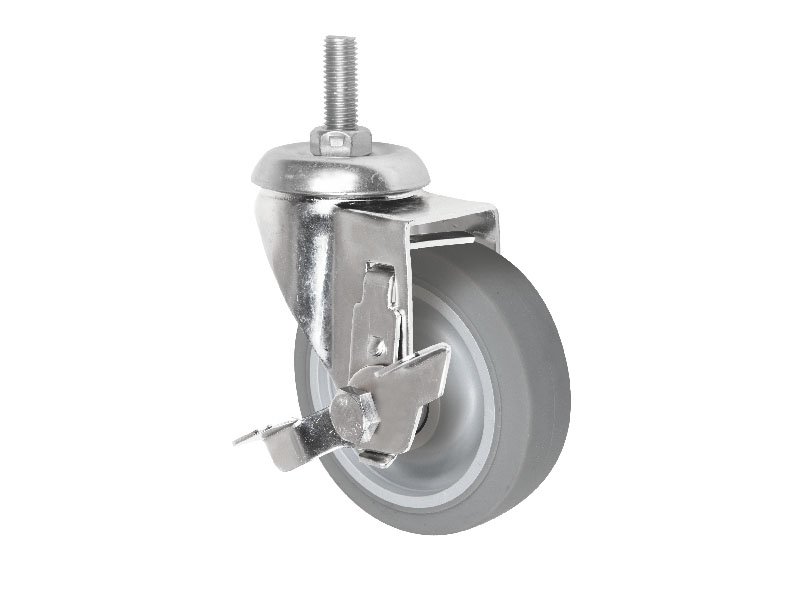
Threaded Stem Casters With Side Brake
Benefits of Using Threaded Stem Casters
Threaded stem casters offer several practical advantages when the stem size and application requirements are correctly matched:Easy Installation
The threaded stem allows quick attachment to furniture and equipment when the thread size, thread pitch, and stem length match the mounting point. For professional use, confirm whether the caster needs a lock nut, washer, or other fastening method to prevent loosening during repeated movement.Enhanced Mobility
Casters provide excellent mobility, enabling the smooth movement of heavy objects with minimal effort. This is particularly beneficial in environments where equipment needs to be frequently relocated, such as hospitals, factories, and workshops.Durability and Longevity
Constructed from high-quality materials, threaded stem casters are built to withstand rigorous use. Their durability ensures a long lifespan, providing reliable performance over time and reducing the need for frequent replacements.Versatility
Available in various sizes and materials, threaded stem casters can be used in a wide range of applications. Whether you need casters for light-duty office furniture or heavy-duty industrial equipment, there is a threaded stem caster to meet your needs.Choosing the Right Threaded Stem Casters
Selecting the appropriate threaded stem casters for your specific application is crucial for optimal performance. Consider the following factors when making your choice:Load Capacity
Determine the total weight of the equipment, the expected carried load, and the number of load-bearing casters. Choose a caster capacity with a practical safety margin, especially when the equipment is pushed over uneven floors or moved frequently. For detailed load planning, review Inford’s caster wheel load capacity guide.Stem Size and Thread Type
Ensure the stem diameter, thread pitch, stem length, and mounting depth match the attachment point on your equipment. A caster can have the right wheel but the wrong thread, so do not rely on appearance alone. Check the old caster, the insert specification, or the equipment drawing before ordering replacements.Wheel Material
The material of the caster wheel affects floor protection, noise, load capacity, and rolling resistance. See Inford’s caster wheel material selection guide when comparing rubber, polyurethane, nylon, and metal wheel options: – Rubber Wheels: Ideal for smooth, indoor surfaces and provide a quiet operation. – Polyurethane Wheels: Suitable for various surfaces, including rough and uneven floors, offering excellent durability. – Steel Wheels: Best for heavy-duty applications on hard surfaces, providing maximum strength and load capacity.Bearing Type
The bearing type influences rolling feel, push effort, maintenance, and load performance. For a deeper comparison, see Inford’s plain bearing vs ball bearing casters guide: – Plain Bearings: Simple and cost-effective, suitable for light to medium loads. – Ball Bearings: Provide smooth and effortless movement, ideal for higher load capacities. – Roller Bearings: Designed for heavy-duty applications, offering excellent strength and durability.
Applications of Threaded Stem Casters
Threaded stem casters are used in many settings, but each setting has different requirements for load, braking, wheel material, cleaning, and steering. For applications where directional control is the main question, compare rigid caster vs swivel caster selection before choosing a final configuration.Industrial and Manufacturing
In industrial settings, threaded stem casters are essential for the mobility of heavy machinery and equipment. Their ability to handle significant loads while providing smooth movement makes them indispensable in manufacturing plants and warehouses.Healthcare
Hospitals and healthcare facilities rely on threaded stem casters for the mobility of medical equipment, beds, and carts. The casters’ smooth and quiet operation ensures a calm and efficient environment for both patients and staff.Office and Commercial
Threaded stem casters are commonly found in office furniture, such as chairs and desks, providing easy rearrangement and improved workspace flexibility. In commercial settings, they facilitate the movement of displays, carts, and other equipment, enhancing operational efficiency.Home and DIY Projects
For home use, threaded stem casters are perfect for DIY furniture projects, providing mobility and ease of use. They are ideal for creating custom carts, mobile workstations, and other innovative solutions that require flexibility.Maintenance and Care of Threaded Stem Casters
To ensure the longevity and optimal performance of your threaded stem casters, regular maintenance is essential:Regular Inspection
Periodically check the casters for signs of wear and tear, such as cracks, flat spots, or loose components. Addressing these issues promptly can prevent further damage and extend the life of your casters.Lubrication
Apply lubricant to the bearings and moving parts to ensure smooth operation. This is especially important for casters used in high-movement environments, where friction can cause wear over time.Cleaning
Keep the casters clean by removing debris, dust, and grime that can accumulate and hinder performance. Use a damp cloth and mild detergent for regular cleaning, and avoid using harsh chemicals that could damage the materials.Conclusion
Threaded stem casters are versatile, durable, and essential components that enhance the mobility and functionality of various equipment and furniture. By understanding their benefits, applications, and maintenance needs, you can make informed decisions to optimize their use in your specific setting. Whether in industrial, healthcare, commercial, or home environments, threaded stem casters offer reliable performance and long-lasting value.Threaded Stem Caster Selection Checklist
Before purchasing threaded stem casters, verify the mounting and operating details below. This reduces the risk of loose installation, poor rolling performance, or early replacement.
- Thread size: confirm diameter, thread pitch, and whether the equipment uses a metric or inch thread.
- Stem length: make sure the stem reaches the threaded socket securely without bottoming out.
- Total load: calculate equipment weight, carried load, number of casters, and movement conditions.
- Wheel material: match rubber, polyurethane, nylon, or metal wheels to the floor surface and noise requirement.
- Brake requirement: choose a side brake or other locking option when the cart or equipment must stay in place.
- Replacement access: confirm there is enough room to remove and tighten the caster during maintenance.
Installation Notes for Threaded Stem Casters
Install threaded stem casters into a clean, undamaged threaded socket. If the old caster was loose, inspect the receiving thread before installing the replacement. Tighten the caster evenly and avoid cross-threading. For equipment that moves frequently, add the correct fastening method recommended for the design, such as a lock nut or washer when applicable.
A related Inford product example is the A21XPBK075TB1 threaded stem caster with side brake. For cart mobility scenarios, the shopping cart caster solution page provides additional application context.
FAQ About Threaded Stem Casters
How do I measure a threaded stem caster?
Measure the stem diameter, thread pitch, stem length, wheel diameter, wheel width, and overall mounting height. If replacing an existing caster, compare the old caster and the equipment socket before ordering.
Can I replace a threaded stem caster with any similar-looking caster?
No. The thread size and stem length must match the equipment. A similar-looking caster with a different thread can damage the socket or loosen during use.
When should I choose a threaded stem caster with brake?
Choose a brake when the cart, chair, rack, or equipment must stay in position during loading, use, storage, or display. Brake needs should be checked together with load, floor surface, and movement frequency.