
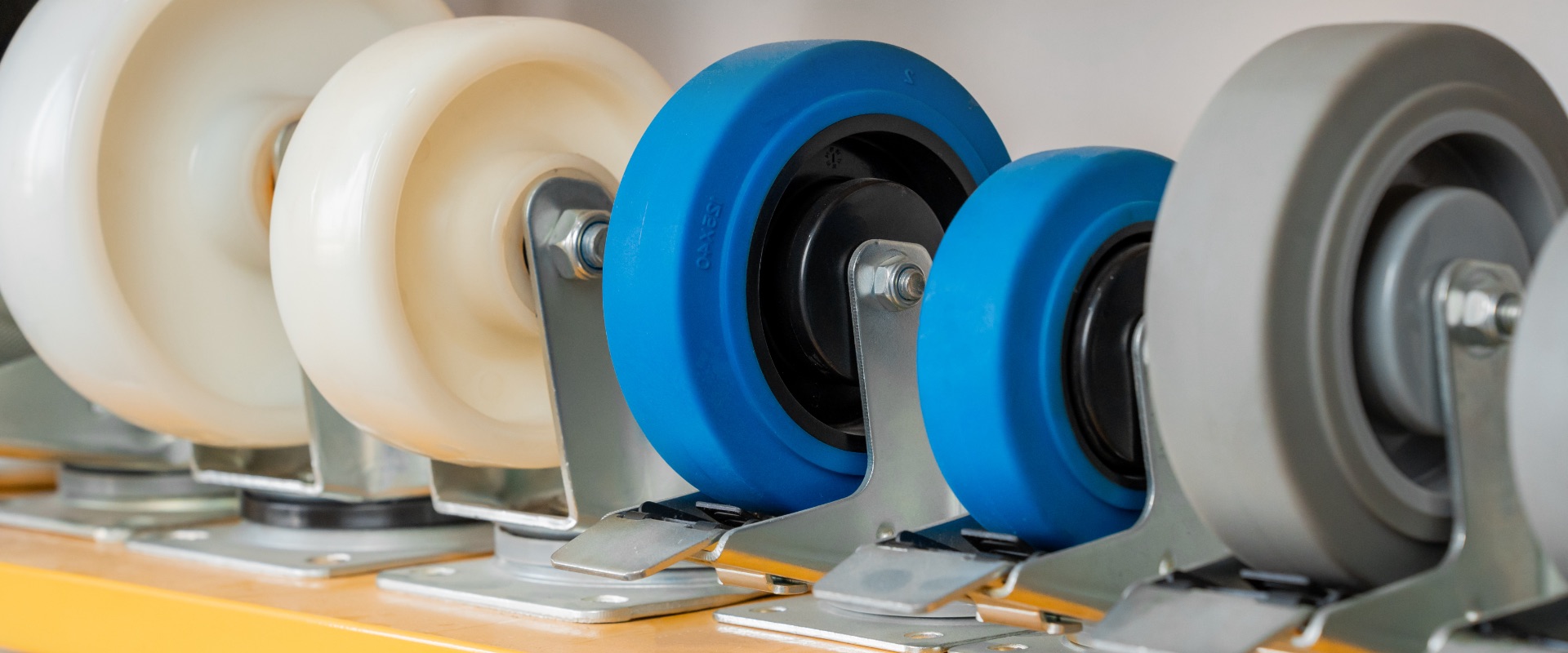
Choosing the best caster wheel material for your business starts with the real working conditions: load, floor type, noise limits, chemicals, moisture, temperature, movement frequency, and whether the equipment is pushed by hand or moved by powered equipment.
Polyurethane, rubber, nylon, and pneumatic tire casters each solve different problems. A material that protects floors may not be the best option for heavy loads or outdoor debris. A hard wheel that rolls easily may create more noise or floor wear. This guide compares common caster wheel materials and gives a practical selection process for business applications.
Different Types of Caster Wheel Materials
Polyurethane Caster Wheels
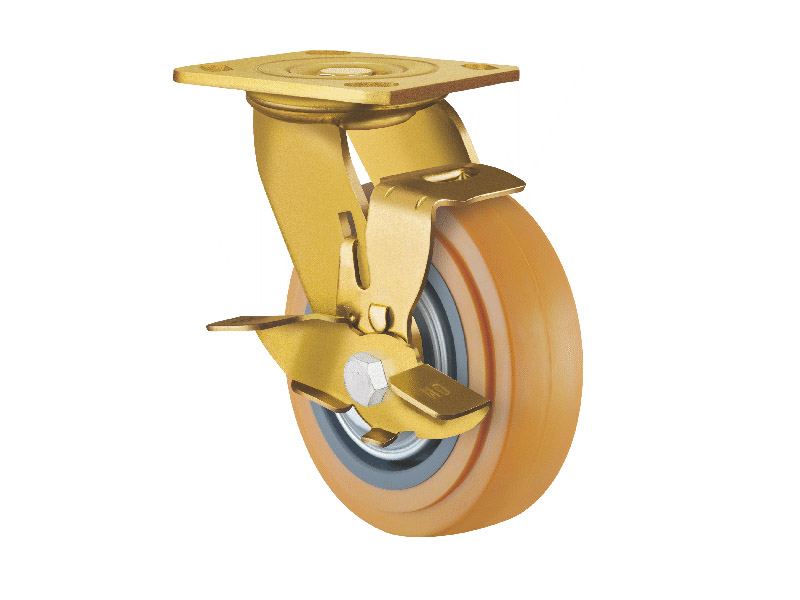
Polyurethane caster wheels are often chosen when a business needs a balance of load support, abrasion resistance, floor protection, and lower noise than many hard wheel materials. They can be useful for warehouses, carts, industrial equipment, and applications where non-marking movement is important. Polyurethane is not a universal answer. Buyers should still check load rating, floor condition, wheel diameter, chemical exposure, temperature, and movement frequency. For heavier or more demanding applications, compare this section with Inford’s high load capacity caster wheels guide.
Heavy Duty Caster With 400Kg Load Capacity
Rubber Caster Wheels
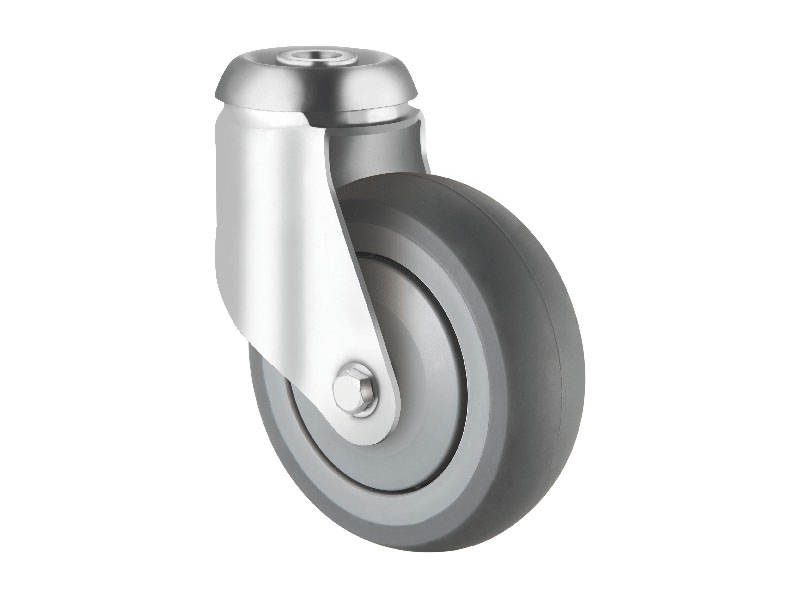
Rubber caster wheels are useful when floor protection, traction, and noise reduction matter. They can help absorb vibration on carts, furniture, medical equipment, and lighter commercial equipment. The tradeoff is that rubber wheels may wear faster than harder materials in some industrial conditions, and they may not be the best choice for high-load, oily, chemical, or sharp-debris environments. If the route includes rough outdoor ground, pneumatic tire casters may be worth comparing because air-filled tires provide additional cushioning.
Utility Cart Rubber Caster Wheel
Nylon Caster Wheels
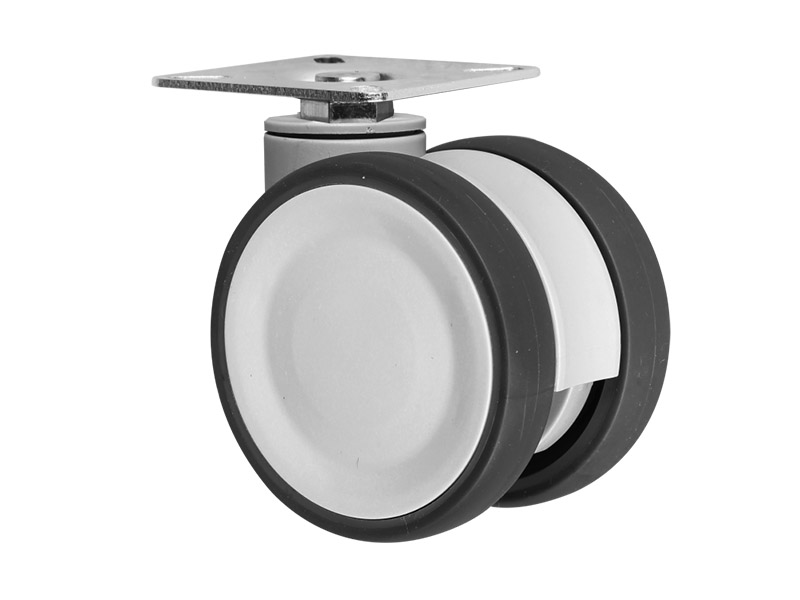
Nylon caster wheels are hard, lightweight, and often selected for low rolling resistance and resistance to moisture, oils, and some chemicals. They can be useful where floor marking is less sensitive and easier rolling under load is important. Because nylon is harder than rubber or many polyurethane wheels, it may create more noise and can be less forgiving on delicate floors. Use nylon carefully on tile, wood, or other surfaces where floor protection is a major requirement.
Swivel Caster With Nylon Wheel
Factors to Consider When Choosing Caster Material
Load Capacity
Before selecting caster wheel material, calculate the total load, number of casters, uneven load distribution, and dynamic movement. A wheel material that works for a light cart may fail early on a heavy or frequently moved machine. For calculation details, see Inford’s caster wheel load capacity guide and the caster wheel weight limits article.Flooring Type & Protection
Flooring type affects the best material choice. Rubber and polyurethane are often selected for floor protection and lower noise. Nylon and harder materials can roll efficiently but may be less suitable for delicate floors.Environmental Conditions
Moisture, chemicals, oil, debris, temperature, and outdoor exposure can all change caster performance. For mixed indoor and outdoor routes, compare the material choice with Inford’s outdoor caster wheels guidance.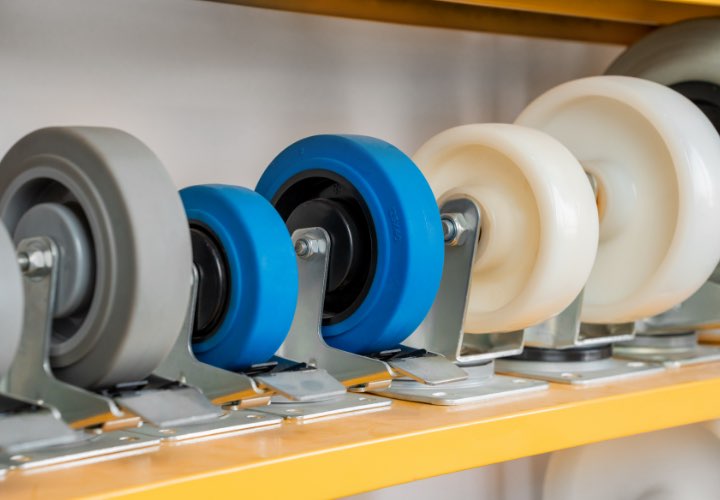
Noise Levels & Vibration
Softer materials such as rubber and polyurethane often reduce noise and vibration compared with harder wheels. If shock absorption is the main requirement, review whether pneumatic tire casters fit the route and maintenance requirements.Cost vs. Service Life
Initial cost should be compared with expected service life, maintenance frequency, floor damage risk, and downtime. The most economical caster material is the one that matches the real application, not simply the lowest-priced wheel.Conclusion
Each caster wheel material has different strengths and tradeoffs. Polyurethane is often selected for a balance of load support and floor protection. Rubber can help with traction, cushioning, and quieter movement. Nylon can support easier rolling and chemical resistance but may be harder on floors. Pneumatic tire casters can help on rough or outdoor routes but require pressure and puncture maintenance. The best material choice should be based on load, floor, route, noise, environment, maintenance, and replacement expectations. Inford can compare caster wheel materials against the actual working conditions before a final model is selected.Caster Wheel Material Comparison
| Material | Best fit | Main tradeoff |
|---|---|---|
| Polyurethane | Floor protection, abrasion resistance, industrial carts, non-marking needs | Must still be checked for load, chemicals, temperature, and duty cycle |
| Rubber | Quiet movement, traction, cushioning, lighter commercial equipment | May wear faster or flat-spot under unsuitable heavy-load conditions |
| Nylon | Low rolling resistance, moisture or chemical exposure, harder-wearing environments | Can be noisier and less protective on delicate floors |
| Pneumatic tire | Rough floors, outdoor routes, vibration-sensitive loads | Requires tire pressure and puncture maintenance |
Business Selection Process
- Define the total load, dynamic load, and number of casters.
- List the floor surfaces: concrete, tile, hardwood, outdoor ground, ramps, or thresholds.
- Decide whether floor protection, noise reduction, rolling ease, or abrasion resistance matters most.
- Check exposure to chemicals, oil, moisture, heat, cold, and debris.
- Compare maintenance requirements and expected replacement frequency.
- Match the material choice with caster layout, bearing type, brake requirement, and mounting style.
FAQ About Caster Wheel Materials
Which caster wheel material protects floors best?
Rubber and polyurethane are often considered when floor protection and lower noise matter. The exact choice depends on load, floor surface, movement frequency, and environment.
Which caster wheel material is best for heavy loads?
No material should be selected by name alone. Heavy-load applications require checking the complete caster rating, wheel diameter, bearing, bracket, mounting, and load distribution.
Which material is best for outdoor caster wheels?
Outdoor selection depends on ground type, moisture, debris, load, and shock requirements. Pneumatic tires may help on rough surfaces, while other materials may fit cleaner or lower-maintenance routes.