
Pneumatic tire casters use air-filled tires to help equipment move over rough floors, outdoor surfaces, thresholds, gravel, and other uneven routes. Their main value is shock absorption: the tire cushions vibration and can protect both the load and the equipment frame during movement.
They are not the right choice for every application. Pneumatic tire casters need tire pressure checks, puncture inspection, and proper load matching. This guide explains where they fit, what to check before selection, and how to maintain them in industrial and trolley applications.
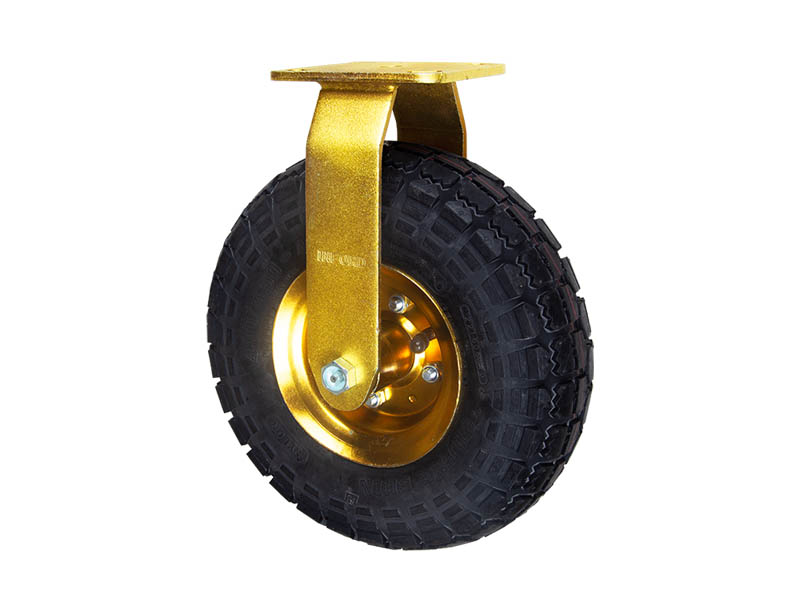
Definition of Pneumatic Tire Casters
A pneumatic tire caster is a caster assembly equipped with an air-filled tire. Compared with many solid wheels, the air chamber helps absorb shock and conform to uneven surfaces. This makes pneumatic casters useful when the route includes outdoor ground, rough concrete, workshop thresholds, or sensitive loads that should not experience excessive vibration. The caster still needs to be selected by total load, wheel diameter, tread design, mounting style, bearing type, and working environment. For load planning, use Inford’s caster wheel load capacity guide before choosing a final model.Significance in Industrial Applications
Pneumatic tire casters are valuable when the equipment must move across surfaces that would be harsh for smaller or harder wheels. They can reduce vibration, improve traction on uneven ground, and make hand-pushed equipment easier to control in mixed indoor and outdoor routes. They are commonly considered for material handling carts, service trolleys, outdoor equipment, workshop carts, and other mobile equipment where shock absorption matters. If the main challenge is outdoor movement, compare this page with Inford’s outdoor caster wheels guide.
Pneumatic Tire Casters 200Kg Load
Advantages of Pneumatic Tire Casters
Enhanced Shock Absorption
The air-filled tire helps cushion vibration from uneven floors, outdoor ground, and sudden surface changes. This can be useful when moving tools, equipment, or goods that should not be exposed to harsh impact.Terrain Adaptability
Pneumatic tire casters can handle mixed surfaces better than many small hard wheels. They are often considered for gravel, rough concrete, workshop thresholds, and outdoor service routes. Wheel material still matters, so compare options with Inford’s caster wheel material guide.Noise and Floor Comfort
Because the tire compresses during movement, pneumatic casters can reduce vibration and rolling noise in suitable applications. They may also make hand-pushed equipment feel easier to move over rougher routes.Important Tradeoffs
Pneumatic tire casters require tire pressure maintenance and puncture checks. They may not be ideal where sharp debris, strict cleanroom rules, or very low maintenance requirements are the main concern.Applications Across Industries
Industrial and Workshop Equipment
Pneumatic tire casters can be useful on workshop carts, outdoor service equipment, and mobile machinery that crosses rough concrete, ramps, or thresholds. For heavier applications, also review Inford’s high load capacity caster wheels guide.Material Handling Equipment
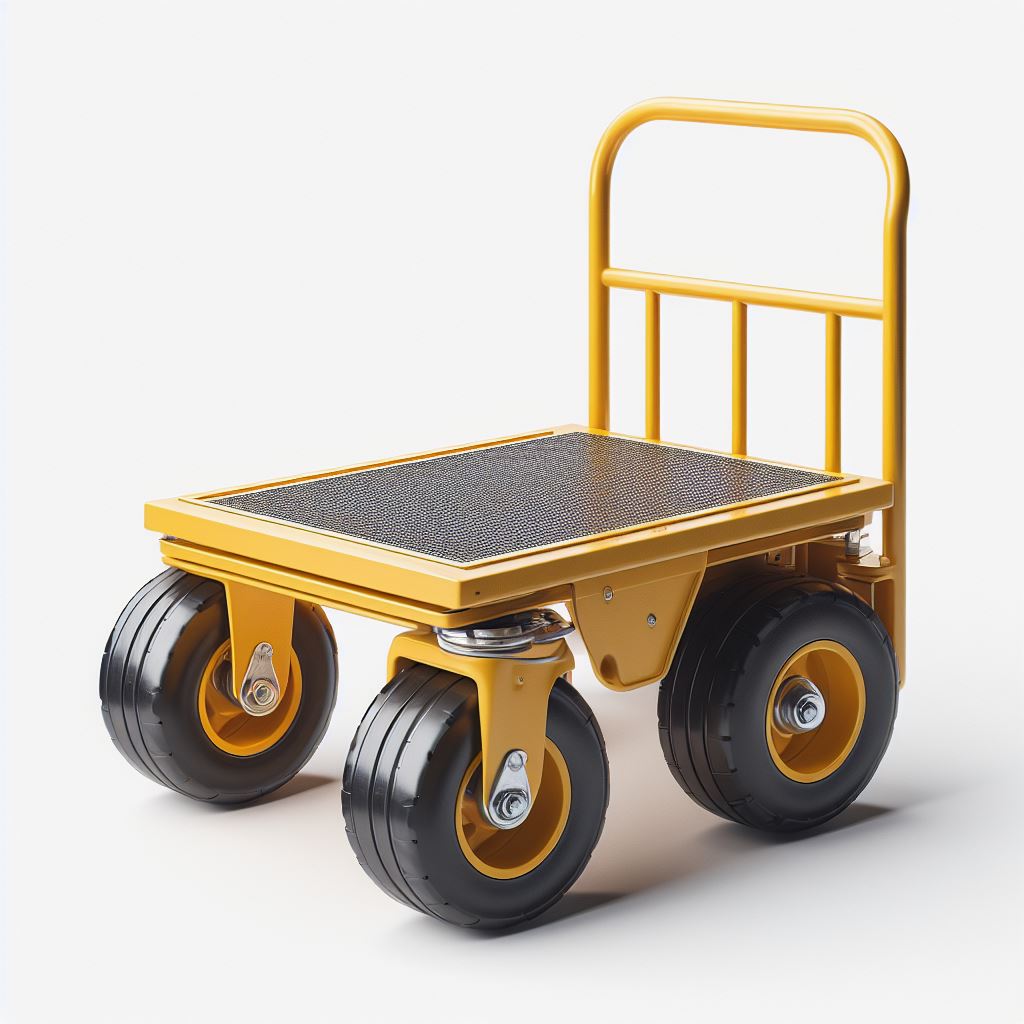
For trolleys and carts, pneumatic tire casters help when the route includes uneven floors or occasional outdoor travel. The caster layout should still balance wheel diameter, swivel or rigid design, handle height, and load distribution. For related trolley guidance, see caster wheels for push hand trolleys.Sensitive Loads and Service Routes
When tools, parts, or equipment need cushioning during transport, pneumatic tires can reduce vibration compared with harder wheel choices. This benefit should be weighed against pressure maintenance and puncture risk.
Pneumatic Tire Caster For Trolley
Maintenance and Best Practices
Tire Pressure Management
Tire pressure affects shock absorption, rolling resistance, load behavior, and tire wear. Check pressure according to the product specification and operating environment. Underinflation can make the caster harder to move and can increase tire wear; overinflation can reduce cushioning.Inspection and Replacement Schedules
Inspect the tire surface, sidewall, rim, axle, bearing, mounting plate, and fasteners. Look for punctures, cracks, embedded debris, uneven wear, wobble, air leakage, and loose hardware. Replace worn components before they affect safety or damage the equipment frame.Environmental Considerations
Pneumatic tire casters should be matched to the route. Sharp debris, oil, chemicals, moisture, temperature, and floor contamination can all affect tire life. If puncture risk is high, compare pneumatic tires with solid rubber, polyurethane, or other wheel types before final selection.Conclusion
Pneumatic tire casters are a strong option when shock absorption, uneven-floor movement, and outdoor or mixed-surface travel matter. They are less suitable when puncture risk, tire pressure maintenance, or strict cleanliness is the main concern. Before selecting a pneumatic caster, confirm total load, route surface, wheel diameter, mounting style, tire pressure requirements, and replacement access. Inford can help compare pneumatic, solid rubber, polyurethane, and other caster options based on the actual application details.Pneumatic Tire Caster Selection Checklist
- Surface: identify rough concrete, gravel, ramps, thresholds, outdoor ground, or mixed routes.
- Load: calculate total equipment and cargo weight, then account for uneven load distribution.
- Shock protection: decide whether vibration reduction is important for the load or equipment frame.
- Tire maintenance: confirm who will check pressure, inspect punctures, and replace tires.
- Mounting and layout: choose swivel, rigid, brake, stem, or plate mounting based on movement needs.
- Environment: check debris, chemicals, moisture, heat, and floor contamination before selection.
When Pneumatic Tire Casters May Not Fit
- The floor contains sharp metal scraps, glass, nails, or other puncture hazards.
- The application requires very low maintenance with no tire pressure checks.
- The environment requires strict cleanliness or avoids air-filled tires.
- The route is smooth and a solid wheel would provide enough comfort and control.
FAQ About Pneumatic Tire Casters
Are pneumatic tire casters good for outdoor use?
They can be a good choice for outdoor and mixed-surface routes because the air-filled tire helps absorb shock. The final choice should still account for load, puncture risk, moisture, debris, and tire maintenance.
Do pneumatic casters need more maintenance?
Yes. They need pressure checks and inspection for punctures, cracks, wear, and air leakage. This maintenance is part of the tradeoff for better cushioning on uneven surfaces.
What is the alternative to pneumatic tire casters?
Depending on the application, alternatives may include solid rubber, polyurethane, nylon, or other wheel materials. The best option depends on floor protection, load, shock absorption, noise, chemicals, and maintenance requirements.