
Superior Strength and Durability
Heavy duty swivel nylon casters should be evaluated by the total load they will carry, the bracket structure, the wheel diameter, the mounting method, and the floor conditions. For load planning, include the equipment weight, carried material, number of casters, movement frequency, and safety margin. Inford’s caster wheel load capacity guide explains how to think through these factors before selection.Application Fit and Versatility
Heavy duty swivel nylon casters can be used on carts, racks, workstations, storage equipment, and production support equipment. Their fit depends on whether the floor is smooth concrete, coated flooring, tile, or another hard surface. If the application needs quieter movement or more floor protection, compare nylon with rubber, polyurethane, and other wheel materials in Inford’s caster wheel material selection guide.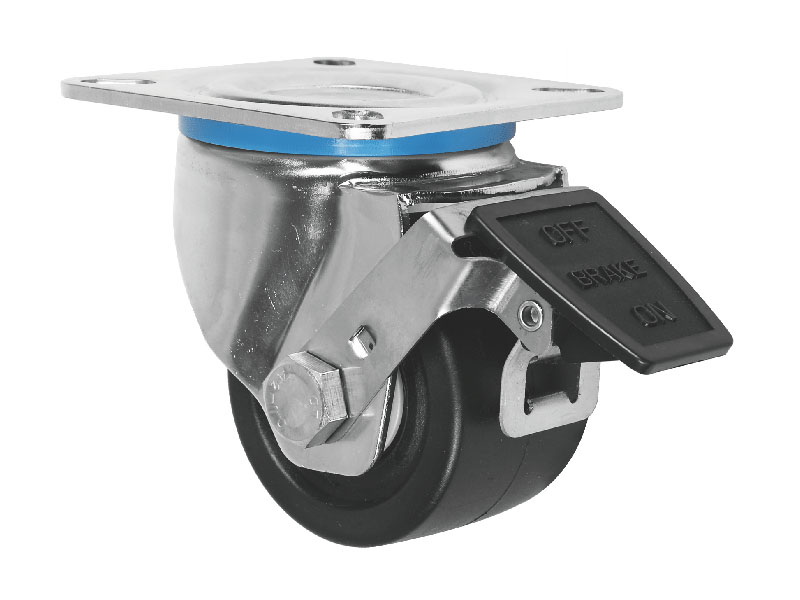
Heavy Duty Swivel Nylon Caster
Precision Engineering for Seamless Mobility
The swivel design allows the caster to rotate and change direction more easily than a rigid caster. This is useful for equipment that must turn around benches, racks, corners, or narrow work areas. If the equipment mainly travels in a straight line, a rigid caster or a mixed swivel-and-rigid layout may be more stable. See Inford’s rigid caster vs swivel caster guide for the movement tradeoff.Enhanced Safety Features
Safety depends on choosing the correct load rating, mounting style, wheel material, and brake or lock. A brake is useful when equipment must stay in position during loading, maintenance, storage, or operation. For brake-related selection, see Inford’s swivel caster with brake guide.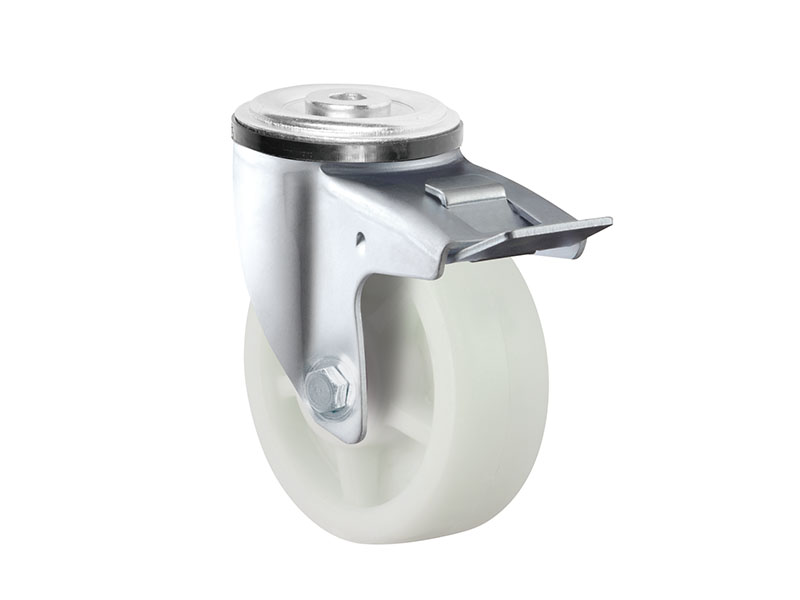
Bolt Hole Nylon Caster With Total Brake
Cost-Effective Solution
Cost should be evaluated by service life, replacement access, floor compatibility, maintenance time, and whether the caster prevents operational interruptions. A lower-price caster can become expensive if it is under-rated, difficult to replace, or unsuitable for the floor. A correctly selected nylon caster can provide good value when its material properties match the application.Conclusion
Heavy duty swivel nylon casters can be a practical choice for industrial mobility when the load, floor, brake needs, and maintenance conditions are well understood. Before ordering, compare the required capacity, wheel material, swivel performance, mounting method, and safety requirements against the actual equipment and operating environment.When to Choose Nylon Wheels
Nylon wheels are often chosen where strength, wear resistance, and easier rolling are important. They can work well on suitable hard floors, especially when the equipment must move frequently or carry heavier loads. However, nylon may not be the best fit where quiet rolling, soft floor protection, or shock absorption is the main requirement.
Heavy Duty Swivel Nylon Caster Selection Checklist
- Total load: include equipment weight, carried goods, and a safety margin.
- Floor surface: confirm whether the caster will run on smooth concrete, coated floors, tile, or rough areas.
- Wheel material: choose nylon only when its hardness, rolling resistance, and floor behavior match the job.
- Swivel requirement: use swivel casters for tight turning and consider rigid casters for straight tracking.
- Brake requirement: add a brake or lock when equipment must stay in place.
- Maintenance access: make sure the caster can be inspected, cleaned, tightened, and replaced when needed.
Maintenance Notes for Nylon Swivel Casters
Inspect the swivel section, wheel surface, mounting hardware, and brake regularly. Remove debris that can block wheel rotation, check for flat spots or cracking, and confirm that the caster still turns smoothly under load. If the caster becomes noisy, hard to turn, or unstable, check both the wheel and the mounting bracket before replacing only one component.
FAQ About Heavy Duty Swivel Nylon Casters
Are nylon casters good for heavy loads?
Nylon can be a good wheel material for heavier loads when the caster rating, bracket, floor surface, and operating environment are suitable. Always check the rated load and safety margin.
When should I choose a swivel nylon caster with brake?
Choose a brake when the equipment must stay fixed during loading, storage, assembly, maintenance, or operation. Brake choice should be reviewed together with load and floor conditions.
Are nylon wheels quiet?
Nylon wheels can roll efficiently, but they are not always the quietest option on hard floors. If noise reduction is the priority, compare nylon with rubber or polyurethane wheel options.