
Medical caster wheels should be selected around the real healthcare environment: patient movement, equipment weight, floor surface, cleaning chemicals, braking needs, noise expectations, and documentation requirements.
A hospital bed caster, an IV stand caster, an imaging-room caster, and a surgical cart caster do not solve the same problem. The right choice depends on load rating, wheel material, bearing protection, bracket material, brake design, and whether the caster will be used in a general ward, wet-cleaned area, laboratory, or MRI-controlled room.
This guide explains how to compare medical caster wheels for hospital beds, medical carts, diagnostic equipment, MRI rooms, and emergency equipment. It keeps the selection process practical for facility managers, procurement teams, and medical equipment OEMs.

What Makes Medical Casters Different from Standard Casters
Standard industrial casters are usually selected around load rating, cost, and general durability. Medical caster wheels require a broader review because they may operate around patients, staff, sensitive equipment, wet cleaning, and strict maintenance routines.
Cleanability and Infection-Control Support
Caster wheels are not sterile devices by default, but their design can support easier cleaning. Smooth housings, sealed or shielded bearing areas, corrosion-resistant brackets, and suitable tread materials reduce the number of dirt traps around the wheel assembly. Buyers should confirm whether the selected caster can tolerate the facility’s actual cleaning chemicals and cleaning frequency.
Noise and Vibration Control
Medical equipment often moves through patient rooms, corridors, wards, imaging areas, and treatment spaces. Softer tread materials such as TPR or polyurethane can help reduce rolling noise and vibration compared with harder wheels, but the final result depends on floor type, load, wheel diameter, bearing condition, and maintenance.
Controlled Movement and Braking
Medical caster wheels may need smooth start-up, predictable turning, directional control, or secure parking. Hospital beds, carts, and emergency equipment should be reviewed for brake type, swivel behavior, and operator workflow. For brake selection background, see Inford’s swivel caster with brake guide.
Documentation and Traceability
Healthcare procurement often requires documentation for materials, production quality, and intended use. Instead of relying on a generic product label, request drawings, load ratings, material information, cleaning compatibility notes, and any test reports that apply to the exact caster model.
Types of Medical Caster Wheels by Application
Medical caster wheels are application-specific. Start with the equipment, movement route, cleaning process, and stopping requirement before choosing a wheel material or bracket.
Hospital Bed Casters
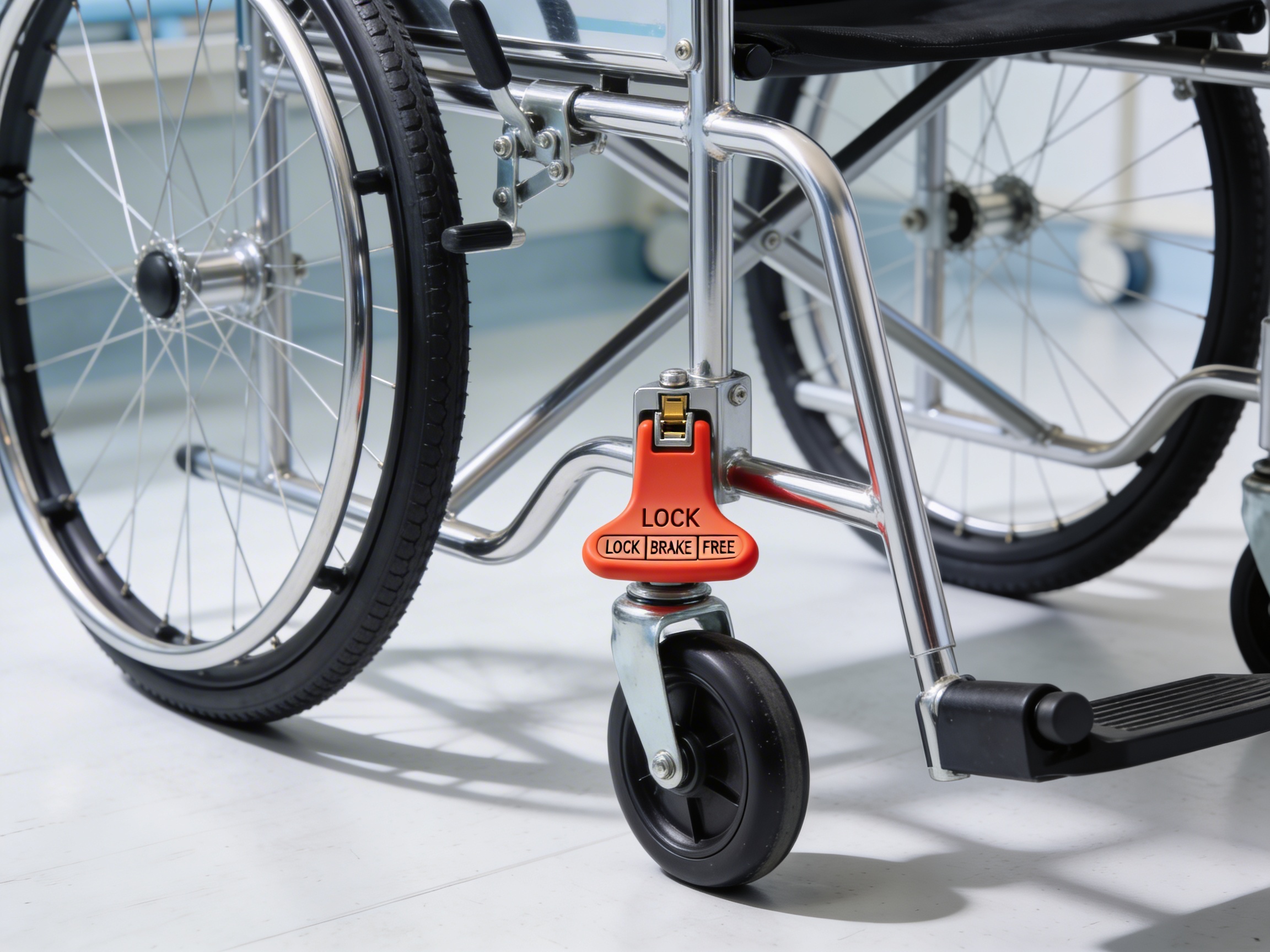
Hospital bed casters should be selected for patient movement, bed weight, mattress weight, staff handling, braking reliability, and floor protection. Key review points include:
- Central or coordinated locking when staff need to park the bed securely during transfer, treatment, or cleaning.
- Brake function that matches workflow: wheel brake, total lock, directional lock, or central locking system.
- Quiet, floor-friendly treads such as TPR or polyurethane where patient comfort and floor protection matter.
- Load planning based on bed frame, mattress, accessories, patient weight, and uneven load distribution. For calculation method, review caster wheel load capacity.
- Maintenance access so staff can inspect tread wear, wobble, braking, swivel movement, and fasteners.
Medical Equipment Casters
Diagnostic machines, ultrasound units, patient monitors, laboratory carts, and treatment trolleys need casters that protect floors while keeping equipment stable and easy to position.
- Bracket material should match cleaning frequency, corrosion risk, and required appearance.
- Bearing protection should be considered where wet cleaning, dust, or fluid exposure is expected. For bearing tradeoffs, see plain bearing vs ball bearing casters.
- Non-marking wheels can reduce visible floor marks in laboratories, wards, and imaging areas.
- Anti-static or conductive options may be needed around sensitive electronics, depending on the equipment specification.
MRI Room Casters
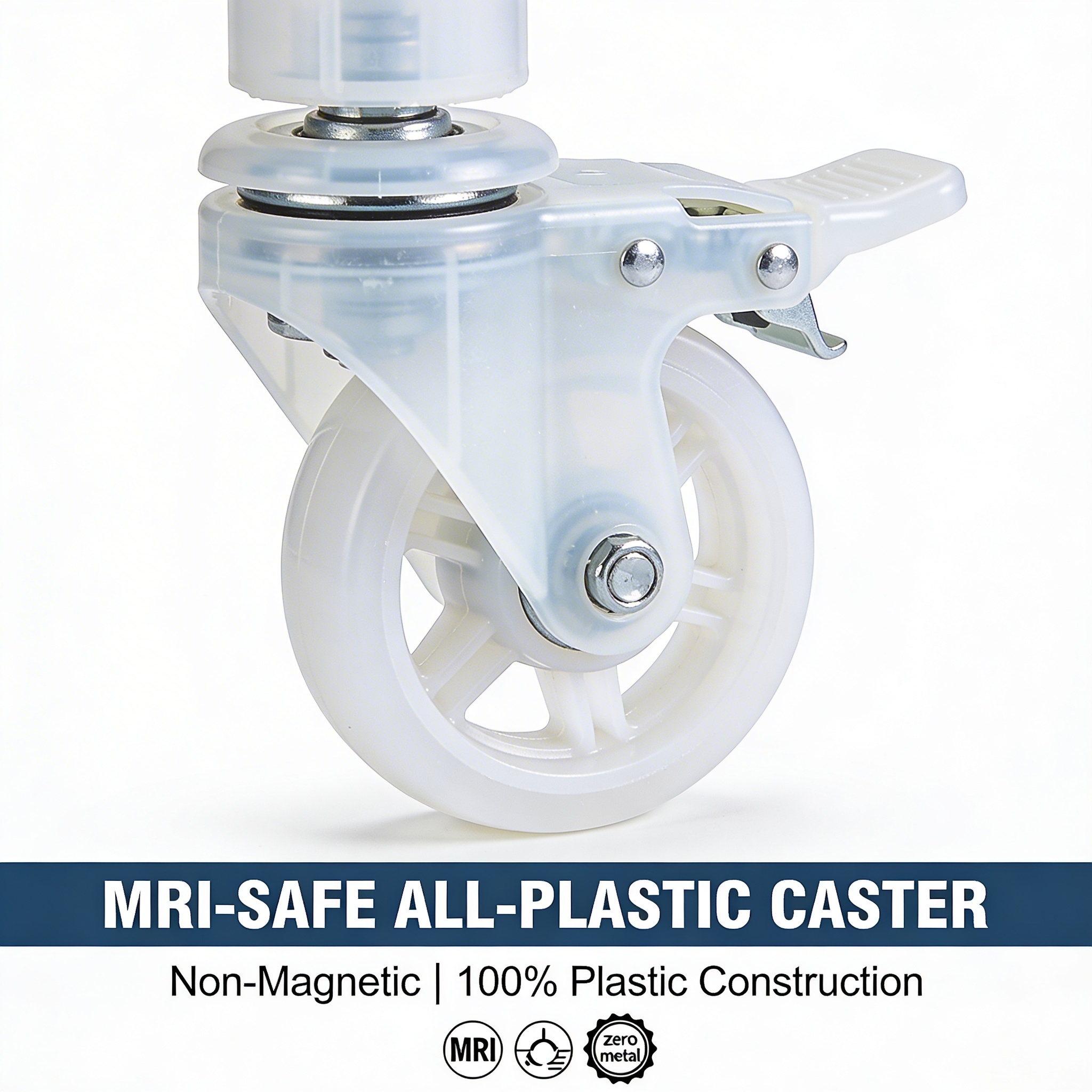
MRI-controlled areas require special review because magnetic fields can create serious risks when unsuitable components enter the room. Do not treat a general medical caster as MRI-compatible unless the complete caster assembly has been reviewed for the specific MRI environment.
- Housing and bracket material should be confirmed for the intended MRI zone.
- Axles, bearings, fasteners, and brakes should be checked as part of the whole assembly, not only the wheel tread.
- Cleaning compatibility still matters because imaging rooms may follow strict cleaning routines.
- Supplier documentation should identify the exact model and intended environment before purchase.
Surgical Cart and Emergency Equipment Casters
Operating rooms, emergency departments, and procedure areas need caster systems that help staff move, position, and stop equipment predictably.
- Low start-up effort helps staff move loaded carts without sudden jerks.
- Total-lock or directional-lock options may be useful when equipment must stay aligned or parked.
- Smooth surfaces and protected bearings make cleaning and inspection easier.
- Wheel material should match floor type, noise expectations, and the load carried by the cart.
Medical Caster Materials Compared
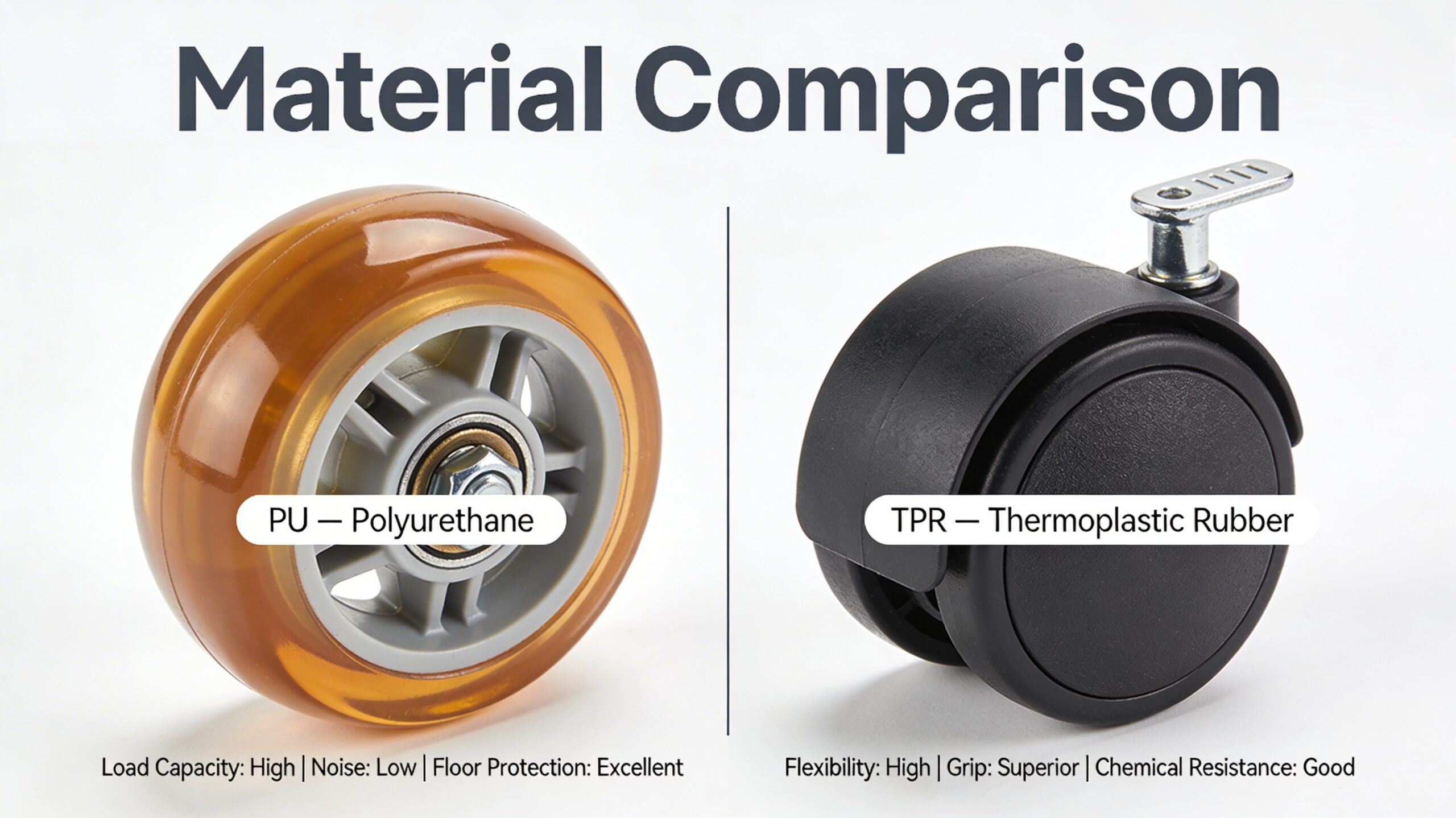
Material selection affects rolling noise, floor protection, chemical tolerance, load support, and cleaning behavior. Use the table below as a purchasing discussion guide, then confirm the exact model data before ordering. For broader material background, compare this section with Inford’s caster wheel material guide.
| Material | Where it often fits | Main checks before purchase |
|---|---|---|
| Polyurethane (PU) | Medical equipment carts, treatment trolleys, floor protection needs | Load rating, chemical exposure, floor type, rolling noise, and tread hardness |
| TPR | Hospital beds, IV stands, quieter movement, patient-adjacent areas | Load requirement, wear rate, cleaning chemicals, and floor condition |
| Nylon | Harder-wearing equipment where low rolling resistance matters | Floor marking, noise, shock absorption, and use on delicate surfaces |
| Engineering plastic | Light equipment, corrosion-sensitive areas, selected imaging applications | Complete assembly compatibility, load, cleaning, and supplier documentation |
| Stainless steel bracket | Wet cleaning, corrosion control, food or medical-adjacent equipment | Stainless grade, fastener material, wheel pairing, and cleaning routine |
Key takeaway: There is no single best medical caster material. PU and TPR are often compared for quieter, floor-friendly movement; nylon can help where rolling resistance and wear matter; stainless or engineered plastic components may be needed when corrosion, cleaning, or imaging constraints are more important.
How to Choose Medical Casters: A 5-Step Framework
Use this practical framework before approving a medical caster wheel for a healthcare or medical equipment application.
Step 1: Calculate the Real Load
Include equipment weight, accessories, stored items, patient weight where applicable, and uneven load distribution during turning or braking. Do not rely only on the empty equipment weight. Use Inford’s caster wheel load capacity guide when planning the per-caster rating.
Step 2: Match the Floor and Movement Route
- Tile, vinyl, epoxy, or coated floors: compare PU and TPR for floor protection and rolling feel.
- Thresholds, ramps, or elevator transitions: review wheel diameter, tread shape, and start-up effort.
- Long corridors: consider directional control and bearing condition so equipment tracks predictably.
Step 3: Review Cleaning and Chemical Exposure
- Routine wet cleaning: consider protected bearings, corrosion-resistant brackets, and smooth housings.
- Disinfectant exposure: ask the supplier whether the wheel and bracket materials are compatible with the facility’s actual cleaning agents.
- Clean or sensitive rooms: reduce dirt traps and confirm whether special materials or documentation are required.
Step 4: Define Braking and Positioning Needs
- Patient transfer or procedure areas: review whether wheel brake, total lock, or central locking is needed.
- Long straight movement: directional locks or a mixed caster layout may improve control.
- Frequently repositioned equipment: swivel quality, bearing type, and start-up effort matter more.
Step 5: Verify Documentation Before Purchase
Request the product drawing, mounting dimensions, load rating, material information, cleaning compatibility notes, and applicable test or quality documents for the exact caster model. For medical OEM projects, confirm documentation requirements before sampling so the caster is not rejected later in the approval process.
Frequently Asked Questions About Medical Caster Wheels
Q: What type of casters are used in hospitals?
Hospitals use different caster types depending on the equipment. Hospital beds may use coordinated locking systems, IV stands often need quiet and easy movement, carts may need total-lock or directional-lock functions, and imaging-room equipment may require special material review.
Q: How do I know if a caster is suitable for an MRI room?
Confirm with the caster manufacturer and the facility’s MRI safety process. The complete caster assembly should be reviewed, including bracket, wheel, axle, bearings, fasteners, and brake parts. Do not assume a caster is suitable because one component is plastic or non-metallic.
Q: What load capacity do hospital bed casters need?
The required rating depends on bed frame, mattress, accessories, patient weight, movement conditions, and uneven load distribution. Calculate the real operating load and confirm the per-caster rating with the bed or caster manufacturer.
Q: Can medical casters be sterilized?
Many medical caster wheels are designed for cleaning and chemical disinfection, not for every sterilization process. Confirm whether the caster materials, bearings, seals, and brackets match the facility’s cleaning method before specifying the product.
Q: When should medical caster wheels be replaced?
Replace or service casters when staff notice increased rolling noise, wobble, difficult swiveling, visible tread damage, loose mounting, corrosion, or unreliable braking. High-use equipment should be inspected on a planned maintenance schedule.
Key Takeaways
- Medical caster wheels should be selected by equipment type, patient or staff workflow, floor surface, cleaning routine, braking need, and documentation requirements.
- Hospital bed casters, medical equipment casters, MRI-room casters, and surgical cart casters require different checks.
- PU, TPR, nylon, engineering plastic, and stainless components each have different strengths and tradeoffs.
- Load rating should be calculated from the real operating load, not only the empty equipment weight.
- Before purchase, request model-specific drawings, material data, load ratings, cleaning compatibility notes, and applicable quality documents.
Procurement Checklist for Medical Caster Wheels
- Confirm the equipment type: hospital bed, IV stand, treatment cart, diagnostic machine, laboratory cart, or MRI-room equipment.
- Record the total operating load and the number of casters supporting it.
- List the floor surfaces, ramps, thresholds, corridors, and cleaning areas the equipment will cross.
- Decide whether the caster needs wheel brake, total lock, directional lock, or central locking.
- Confirm wheel material, bracket material, bearing type, mounting size, and maintenance access.
- Ask for product drawings, test information, and cleaning compatibility notes before final approval.
Need Medical Casters for Your Healthcare Facility?
Inford can help compare wheel material, bracket material, bearing protection, brake design, load rating, and mounting dimensions for healthcare and medical equipment projects.
→ Get a Medical Caster Quote | → Explore Medical Caster Solutions | → Download Product Brochure