
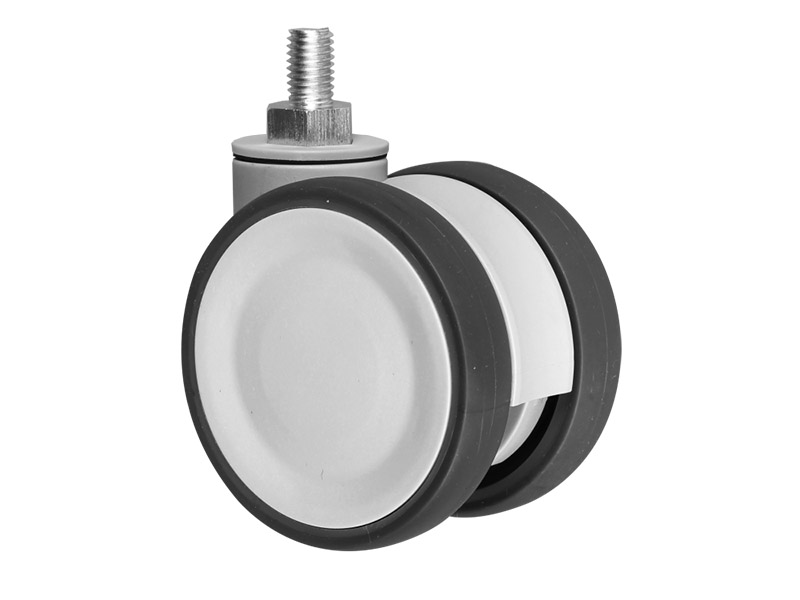
What are Plain Bearing Casters?
Plain bearing casters, also known as sleeve bearing or bushing casters, use a simple yet effective bearing design. The wheel hub rotates around a fixed axle or bolt, with a layer of lubricant between the two surfaces to reduce friction. Some key characteristics of plain bearing casters include:- Cost-effective structure compared with many ball bearing options
- Quiet operation in suitable light-duty applications
- Compact wheel hub design
- Good fit for lighter loads, slower movement, and occasional use
- Simple construction with fewer rolling elements to protect
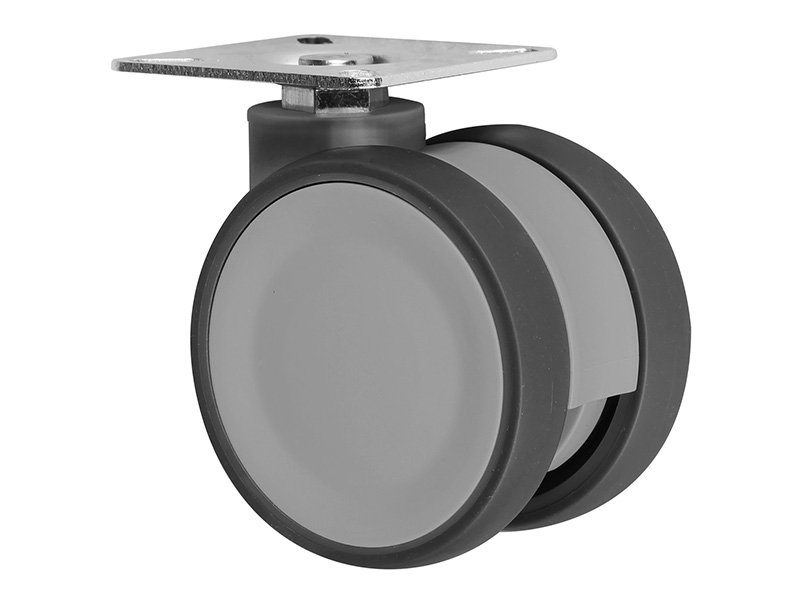
What are Ball Bearing Casters?
Ball bearing casters feature a raceway filled with precision ball bearings between the wheel and axle. The bearings help evenly distribute the load and significantly reduce rotational friction, resulting in several key benefits:- Lower rolling resistance when the bearing is matched to the load
- Smoother rolling under heavier or more frequent movement
- Better fit for carts, machinery, and equipment that change direction often
- Useful for applications where push effort and steering control matter
- Stronger performance potential in demanding industrial or commercial use
Factors to Consider When Choosing Between Plain and Ball Bearing Casters
To make the right choice for your specific application, consider the following key factors:- Load capacity: Start with the total equipment weight, carried load, number of casters, and load distribution. If the load changes during use, include that dynamic condition before choosing a bearing type.
- Rolling ease: Ball bearing casters generally reduce push effort in frequent-use or heavier-load applications. Plain bearing casters may be sufficient when movement is occasional and the load is moderate.
- Swiveling requirements: Equipment that turns often usually needs smoother swivel behavior and stable wheel rotation. Also review the overall caster layout with the rigid caster vs swivel caster comparison.
- Environment: Floor condition, moisture, dust, chemicals, temperature, and debris can all affect bearing life. Outdoor or rough-floor use should be reviewed carefully instead of assuming one bearing type will solve every condition.
- Noise level: Plain bearing casters can be quiet in light-duty indoor use, while wheel material also plays a major role. For material selection, see Inford’s caster wheel material guide.
- Budget and maintenance: Plain bearing casters may cost less upfront, while ball bearing casters can be more efficient in demanding use. The better choice is the one that matches duty cycle, maintenance access, and replacement expectations.
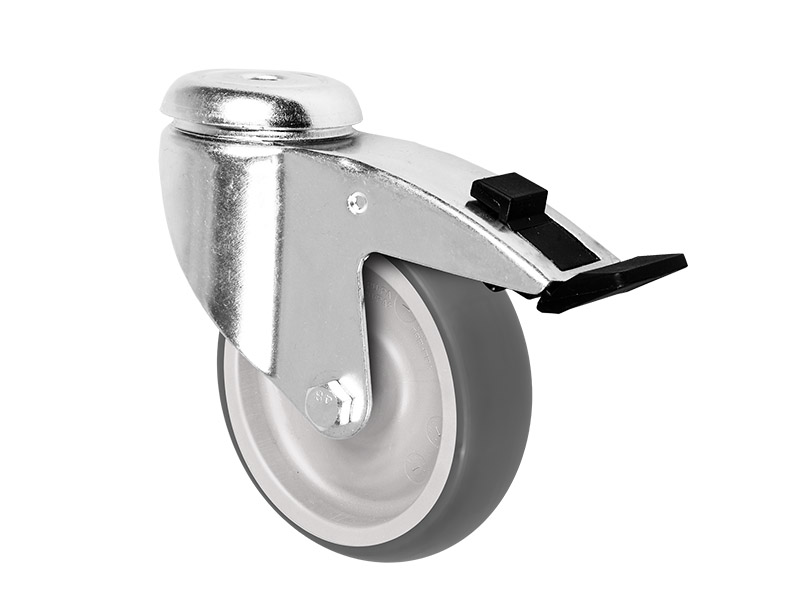
Bolt Hole Caster With Nylon Total Brake
Choosing the Right Caster with Inford
Selecting the optimal caster type is important for safety, rolling performance, and long-term maintenance. Plain bearing casters are often appropriate for simple, light-duty, lower-speed applications. Ball bearing casters are usually the stronger choice when the equipment is heavier, moved more often, or requires smoother rolling and steering. Do not evaluate the bearing by itself. A reliable caster selection should also consider the wheel tread, floor surface, mounting method, brake requirement, operating environment, and whether the load is static or frequently moving. If overload or premature wear is the main concern, use the caster wheel weight limits guide as an additional reference. Inford Caster supplies both plain bearing and ball bearing caster options for industrial, medical, furniture, apparatus, and material handling uses. For applications with stems or compact mounting requirements, the threaded stem casters guide can also help clarify mounting considerations. Browse the product catalog or contact Inford with load, floor, mounting, and operating details so the team can recommend a caster structure that fits the application.Plain Bearing vs Ball Bearing Casters: Quick Comparison
| Selection point | Plain bearing caster | Ball bearing caster |
|---|---|---|
| Best fit | Light-duty, slower, intermittent movement | Frequent movement, heavier loads, smoother rolling |
| Rolling resistance | Acceptable for moderate loads and short movement | Usually lower when matched correctly to the load |
| Maintenance focus | Lubrication, wear at the hub, axle condition | Bearing cleanliness, impact protection, lubrication where required |
| Common concern | Wear or harder pushing if overloaded | Bearing damage if exposed to debris, impact, or poor maintenance |
| Decision trigger | Choose when simplicity, low noise, and light duty matter most | Choose when push effort, steering, and duty cycle matter most |
When to Choose Plain Bearing Casters
- The equipment is moved occasionally rather than continuously.
- The load is moderate and clearly within the caster rating.
- The floor is smooth, clean, and relatively predictable.
- Quiet operation and simple construction are more important than long-distance rolling efficiency.
- The application has straightforward maintenance needs and easy replacement access.
When to Choose Ball Bearing Casters
- The equipment is moved frequently or over longer distances.
- The load is heavier or changes during operation.
- Operators need lower push force and better steering control.
- The caster must turn often, especially in narrow aisles or busy work areas.
- Downtime from difficult rolling, bearing wear, or wheel replacement is a concern.
Maintenance Checks for Bearing Caster Selection
- Check whether the wheel rolls freely when unloaded and loaded.
- Inspect for uneven tread wear, hub wear, bearing noise, or heat marks.
- Confirm that the axle, fasteners, and mounting hardware remain tight.
- Review whether debris, moisture, or chemicals are reaching the bearing area.
- Compare replacement frequency against the expected duty cycle of the equipment.
If the same caster position fails repeatedly, review load distribution, floor condition, wheel material, and mounting alignment before selecting another bearing type.
FAQ About Plain Bearing vs Ball Bearing Casters
Are ball bearing casters always better than plain bearing casters?
No. Ball bearing casters are useful for smoother rolling and frequent movement, but plain bearing casters can be the better fit for simpler, lighter, quieter, or more occasional movement.
Does bearing type determine caster load capacity?
Bearing type is only one factor. Load capacity also depends on the wheel, bracket, axle, mounting structure, material, and how the load is distributed across all casters.
Which bearing caster is better for industrial carts?
Many industrial carts benefit from ball bearing casters because they are moved frequently and may carry heavier loads. However, the final choice should still be based on floor condition, load, wheel material, and movement pattern.