
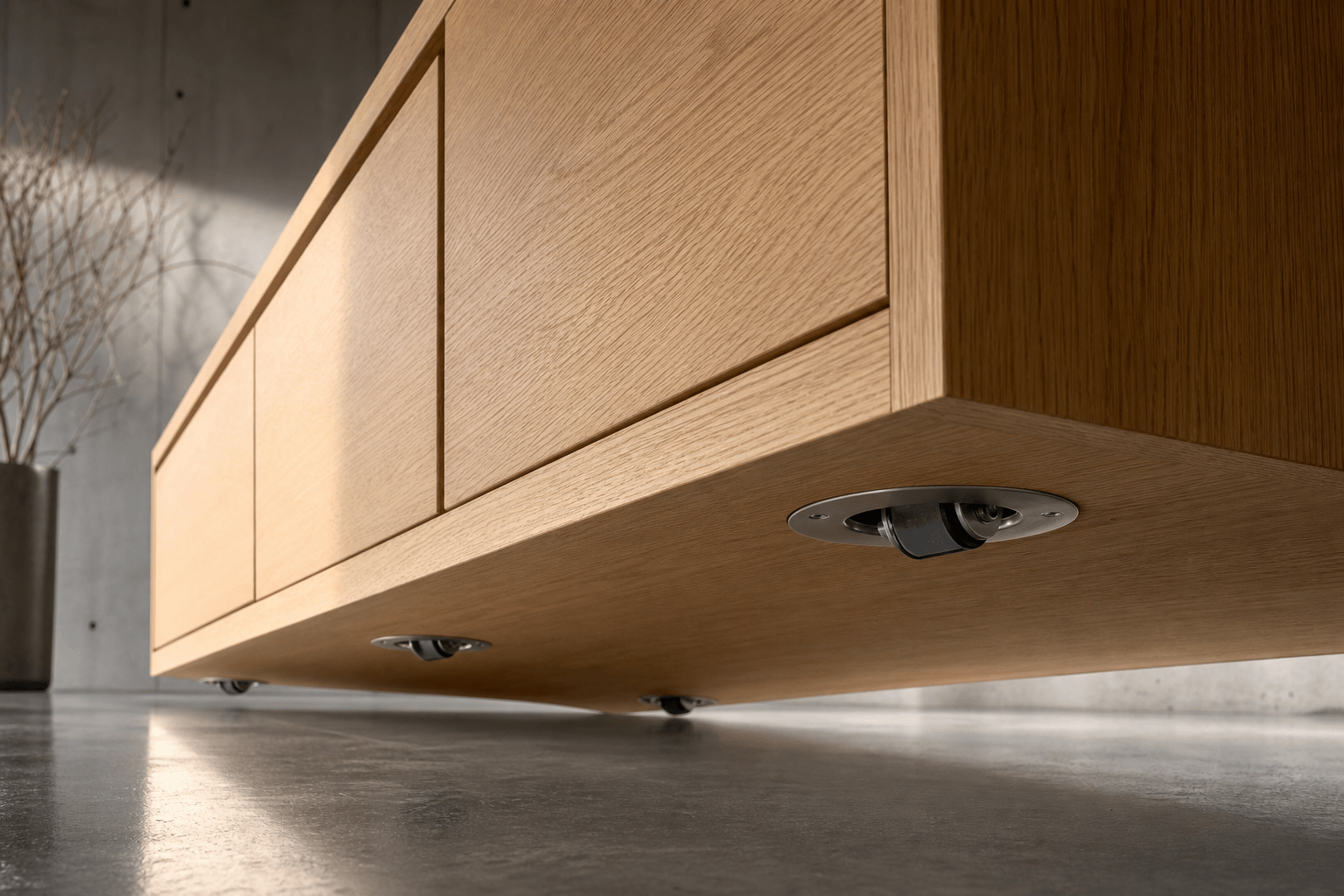
Hidden caster wheels for furniture let a table, sofa, cabinet, bed frame, display fixture, or storage unit move without showing obvious wheel hardware from normal viewing angles. They are useful when furniture needs occasional movement for cleaning, staging, maintenance, or flexible layouts, but exposed casters would weaken the design.
The best hidden caster is not simply the smallest caster available. It has to match the furniture base, available recess depth, load, floor type, wheel material, brake requirement, and installation method. This guide explains hidden caster types, where each type fits, what to measure, and how to avoid common installation problems.
What Makes a Caster Hidden?
A furniture caster is usually considered hidden when the wheel sits inside a recess, below a shadow line, behind a leg profile, or inside a low-profile housing. The goal is to reduce visual exposure while still allowing controlled movement.
Common hidden caster design methods include:
- Recessed mounting: the wheel and cup sit inside a cavity cut into the furniture base.
- Low overall height: the caster stays within the shadow line under the furniture.
- Inset or covered placement: the wheel is placed behind a skirt, panel, or leg so it is difficult to see from standing height.
- Color and material matching: black, dark, or furniture-matched finishes reduce contrast under the base.
Hidden casters work best when the furniture has enough structure to hold the caster securely. Thin panels, fragile legs, and decorative bases may need reinforcement before installation.
Types of Hidden Caster Wheels for Furniture
Recessed Cup Casters
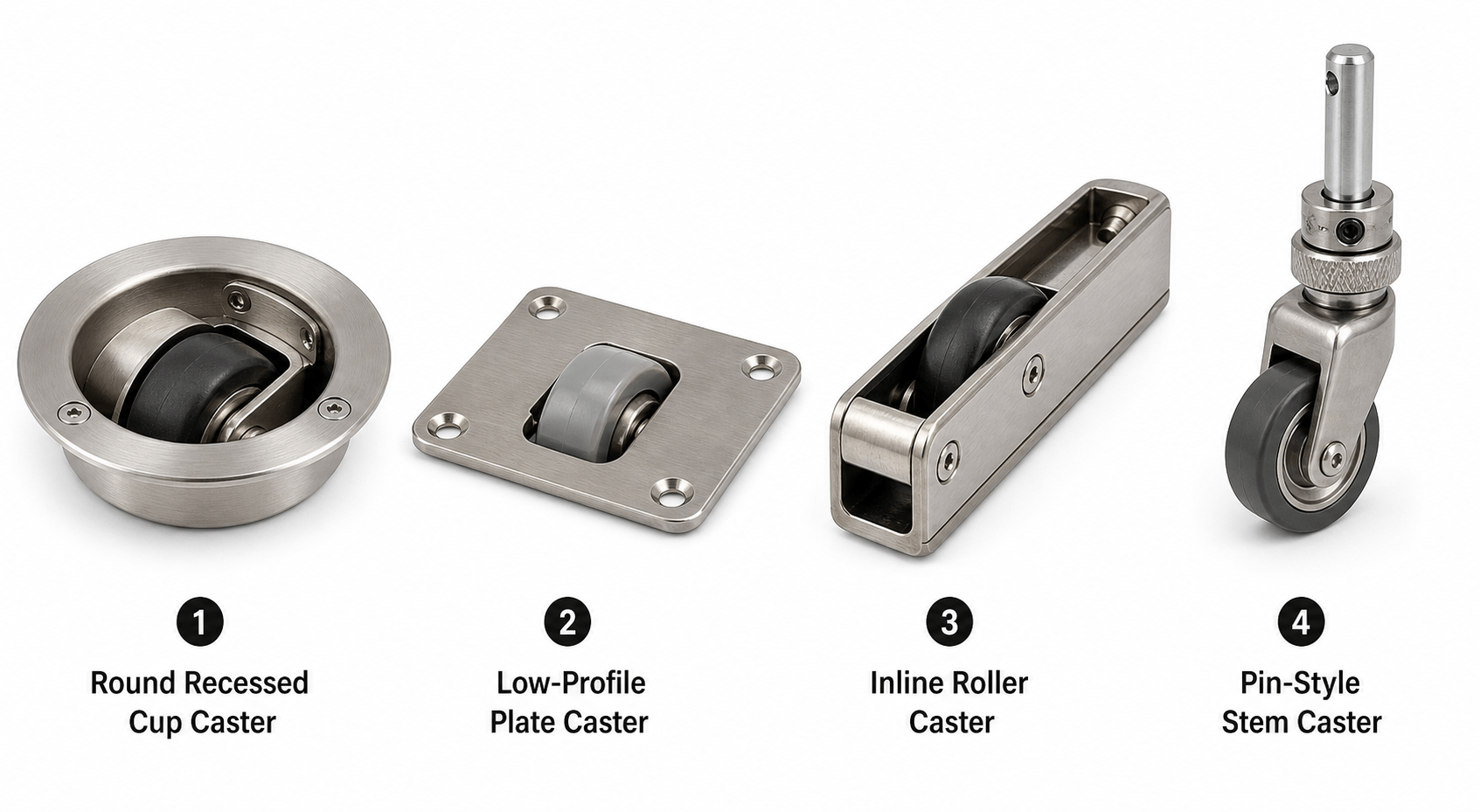
Recessed cup casters place the wheel inside a cup or housing that is installed into the underside of the furniture. They are often selected for coffee tables, storage ottomans, display bases, and flat-bottom furniture where a recess can be drilled or routed.
- Best fit: flat or thick furniture bases with enough material for a recess.
- Main checks: cup diameter, cup depth, wheel clearance, screw tab position, and bottom panel strength.
- Risk: drilling too deep can weaken the furniture or break through a visible surface.
Low-Profile Plate Casters
Low-profile plate casters attach to the underside of the furniture with screws or bolts. They are not always fully invisible, but they can remain visually quiet when installed under a sofa base, cabinet plinth, or shadowed panel.
- Best fit: upholstered furniture, TV stands, modular furniture, and cabinet bases.
- Main checks: overall height, plate size, fastener depth, wheel swivel clearance, and floor gap.
- Related guide: Inford’s low-profile recessed caster article explains where low-height designs help.
Inline Roller Casters
Inline rollers use a slim rectangular housing and one or more small wheels. They can fit into a routed channel or narrow furniture base where a conventional swivel caster is too tall.
- Best fit: light furniture, retail displays, sliding-style movement, and showroom fixtures.
- Main checks: rolling direction, wheel diameter, channel depth, and whether the furniture needs to turn freely.
- Risk: inline rollers may not steer like swivel casters, so they are better for planned movement paths.
Pin-Style Concealed Casters
Pin-style concealed casters install into a drilled hole or socket in the furniture leg. They can be useful for lighter chairs, accent tables, or furniture with individual legs.
- Best fit: legs with enough diameter and material strength around the socket.
- Main checks: hole diameter, socket depth, leg material, stem fit, and the added height below the leg.
- Related guide: if the caster uses a stem or insert, compare Inford’s threaded stem casters guide for sizing concepts.
How to Choose the Right Hidden Caster
Hidden caster selection should start with the furniture, not the caster catalog.
1. Check Furniture Weight and Load Distribution
Include the furniture weight, stored contents, mounted equipment, and people if the item is a chair, sofa, bench, or bed. Avoid assuming four casters share load evenly. Long furniture, flexible frames, uneven floors, or center-heavy loads may require more support points or a different caster position.
Use Inford’s caster wheel load capacity guide when estimating load and safety margin.
2. Match Wheel Material to Floor Type
Hidden caster wheels are often small, so floor compatibility matters. A small hard wheel can concentrate load on a narrow contact area, while a wheel that is too soft can create high rolling resistance on carpet.
- Hardwood, vinyl, and laminate: compare soft polyurethane, TPR, or suitable rubber options and test for marking.
- Tile and stone: check grout lines, edge impacts, noise, and wheel diameter.
- Carpet and rugs: check pile height and rolling resistance; very small hidden wheels may feel difficult to move.
For floor-sensitive furniture, review Inford’s furniture casters for hardwood floors article and the broader caster wheel material guide.
3. Measure the Available Installation Space
Before selecting a hidden caster, measure:
- clearance between the furniture base and floor;
- panel thickness or leg diameter at each caster location;
- recess diameter and depth if using cup casters;
- mounting plate size and screw length if using plate casters;
- stem or socket dimensions if using pin-style casters;
- turning clearance for swivel movement.
Inford’s caster wheel measurement guide can help organize replacement and sizing checks.
4. Decide Whether the Furniture Needs Brakes
Hidden mobility is useful, but some furniture should stay still during use. Desks, beds, kitchen islands, display tables, and seating may need locking or resistance.
- Recessed cup and plate casters: may offer brake versions depending on the model and available access.
- Inline rollers: often prioritize a low profile, so braking options may be limited.
- Pin-style casters: usually have limited brake access because of their small size.
For brake style comparisons, see Inford’s swivel caster with brake guide.
Installation Guide
Recessed Cup Caster Installation
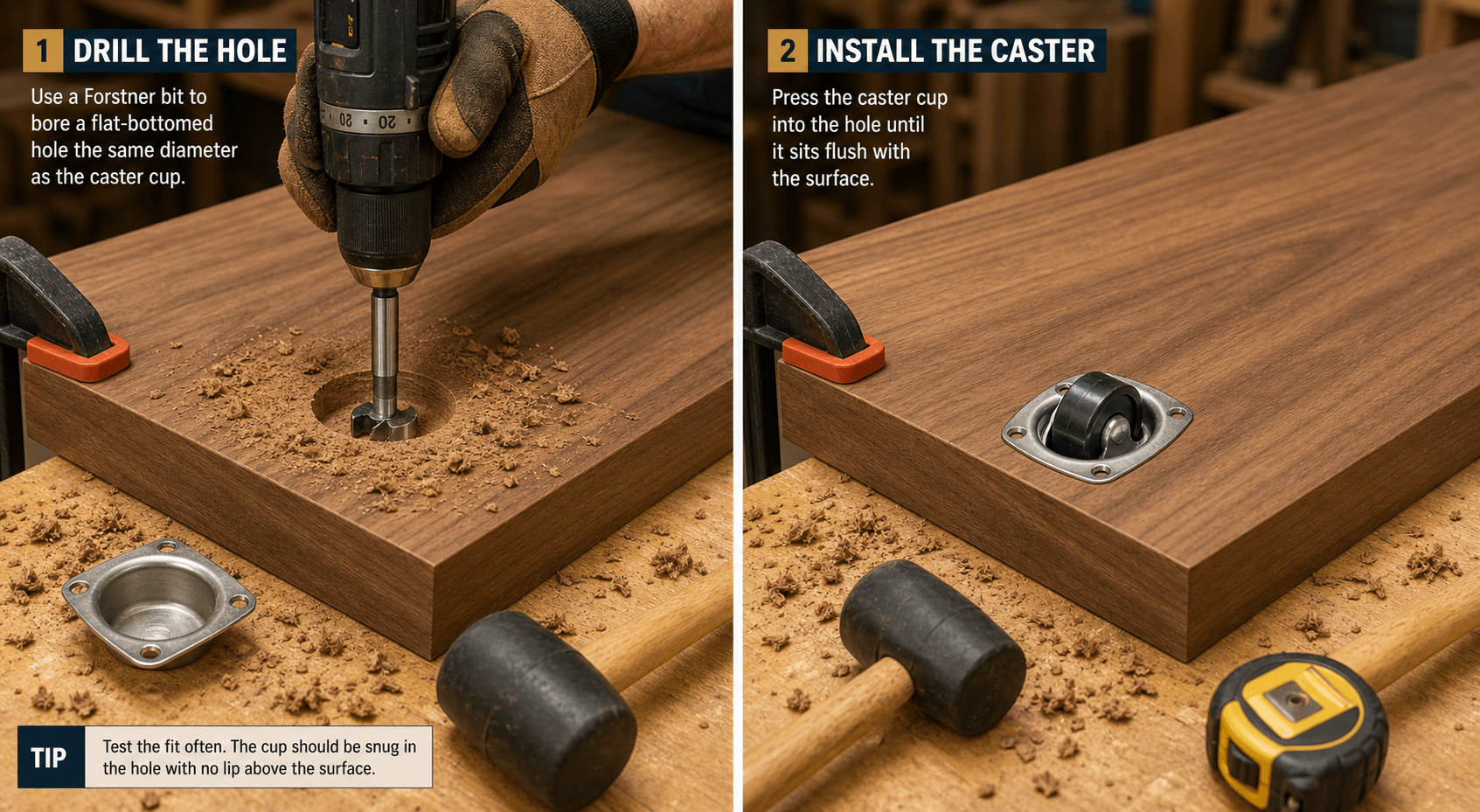
Use a recessed cup only when the furniture base has enough thickness and strength for the cutout.
- Mark caster positions: place casters far enough from edges to support the frame without splitting the material.
- Confirm recess depth: mark the drill or router depth before cutting so the bit cannot pass through the visible surface.
- Cut a test recess: test on scrap material when possible, especially for finished wood or laminated panels.
- Install the cup: press, screw, or secure the housing according to the caster design.
- Test one corner first: check wheel clearance, furniture height, and rolling behavior before cutting every location.
Low-Profile Plate Caster Installation
Plate casters are easier to install, but screw strength and clearance still matter.
- Position the plate: keep the caster aligned with load-bearing parts of the frame rather than thin decorative panels.
- Mark and pre-drill: use pilot holes to reduce splitting and choose fasteners short enough to avoid breaking through the top surface.
- Check swivel clearance: rotate the caster through its full movement before tightening every fastener.
- Test under load: place the furniture upright, add normal load, and inspect whether all casters contact the floor.
Design Ideas and Applications
Hidden caster wheels work best when the caster is planned as part of the furniture structure rather than added as an afterthought.
- Coffee tables: recessed cup casters can help a heavy table move for cleaning or flexible seating while keeping a clean base line.
- Sofas and sectionals: low-profile plate casters can support occasional repositioning when mounted to a strong base frame.
- TV stands and cabinets: concealed casters can make wiring, cleaning, and room layout changes easier.
- Retail displays: inline or recessed designs can help staff rearrange fixtures without visible industrial hardware.
- Storage ottomans and benches: hidden casters can improve movement while keeping soft furniture visually simple.
Common Hidden Caster Problems to Avoid
- Choosing only by appearance: a caster that looks hidden may still fail if load, floor, and mounting strength are ignored.
- Using wheels that are too small: very small wheels can be hard to move over carpet, thresholds, grout lines, or uneven floors.
- Cutting recesses too close to edges: this can split wood, weaken panels, or make the caster loosen over time.
- Forgetting furniture height: even a low-profile caster can change table clearance, seat height, or cabinet alignment.
- No access to brakes: a brake is only useful if someone can reach it after installation.
Frequently Asked Questions
Q: What are hidden caster wheels?
Hidden casters are wheels designed to sit inside a recess, shadow line, leg profile, or low-profile housing so the furniture remains movable without obvious caster hardware.
Q: Can hidden casters support a sofa or bed frame?
They can when the caster rating, frame strength, caster placement, and floor condition match the real load. Seating and beds need extra care because people add dynamic load and movement during use.
Q: Do hidden casters work on carpet?
They can work on low-pile carpet, but small hidden wheels may create high rolling resistance on thick carpet. For carpet, compare the largest wheel diameter and suitable tread material available in the hidden caster style.
Q: Are hidden casters lockable?
Some are lockable, especially selected recessed cup and low-profile plate designs. Inline and pin-style concealed casters may have limited brake options because of their compact shape.
Q: How do I measure for recessed cup casters?
Measure cup diameter, cup depth, bottom panel thickness, wheel projection, and safe drilling depth. The recess must hold the caster securely without weakening or penetrating the finished surface.
Key Takeaways
- Hidden caster wheels should be chosen by furniture structure, load, floor type, available recess depth, and brake needs.
- Recessed cup casters suit many flat-bottom pieces; low-profile plate casters can work well under shadowed bases and upholstered furniture.
- Very small hidden wheels may look clean but can be harder to move on carpet, thresholds, or uneven floors.
- Measure the furniture before ordering and test one caster location before committing to all installation points.
Hidden Casters from Inford
Inford can help compare hidden and low-profile caster options for furniture manufacturers, retail fixtures, interior projects, and movable storage designs.
→ View Caster Products | → Explore Low-Profile Recessed Casters | → Request Custom Sizing